Lawmakers Clash as Mexico Moves to Criminalize Sale and Promotion of Vapes

Nov.26.2025
Lawmakers Clash as Mexico Moves to Criminalize Sale and Promotion of Vapes
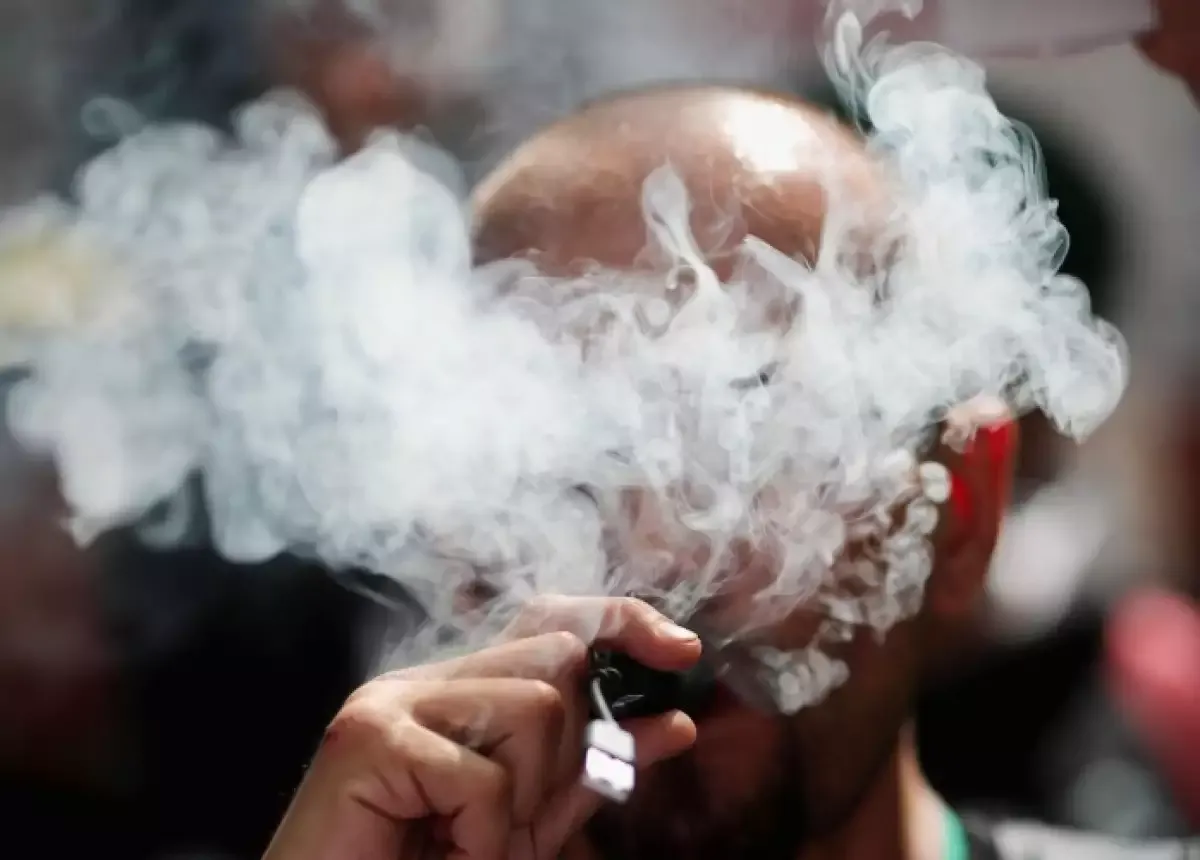
Mexico’s Chamber of Deputies Health Commission has approved a bill establishing a total ban on vapes and e-cigarettes, with penalties ranging from one to eight years in prison and fines between Mex$11,000 and Mex$226,000 (USD ≈$600–$12,300). The proposal sparked controversy among opposition lawmakers, who argued that the legislation criminalizes users rather than focusing on regulation and prevention.

Key Points


  • Institution: Health Commission of the Chamber of Deputies (Comisión de Salud de la Cámara de Diputados)
  • Decision Date: November 2025
  • Penalties:
  1. 1–8 years in prison
  2. Fines between Mex$11,000–226,000 (≈ USD $600–$12,300)
  • Opposition Stance: Against penalizing consumers; supports regulation instead
  • Supporters’ Argument: Bill targets illegal trade, not individual users
  • Critics’ Concern: Risk of fueling black markets and criminalizing young users


2Firsts, November 26, 2025 —According to the Politica, the Health Commission of the Chamber of Deputies has approved a bill that introduces an absolute prohibition on the commercialization and promotion of vapes and electronic cigarettes across Mexico.


Under the proposal, those who sell or advertise such products could face between one and eight years in prison and fines ranging from Mex$11,000 to Mex$226,000 (USD ≈$600 to $12,300).


Opposition lawmakers strongly objected to the inclusion of criminal penalties for individuals found in possession of these products, calling it an excessive and punitive approach. They argued instead for a regulatory framework that controls sales without imprisoning consumers.


Ana Isabel González, a legislator from the Institutional Revolutionary Party (PRI), warned that the proposed penalties could open the door to black markets and underground sales, endangering the same youth the bill seeks to protect.


By contrast, Fernando Castro of the ruling Morena Party defended the bill, claiming it does not punish use or possession, but aims to protect public health and dismantle clandestine sales networks.


From the Citizen Movement (Movimiento Ciudadano), deputy Juan Ignacio Zavala rejected that explanation, stating that the proposal “even criminalizes buyers of e-cigarettes.”


“This is one of the most punitive bills to come through this chamber,” Zavala said. “That’s why Movimiento Ciudadano voted against it — it criminalizes rather than regulates.”


Deputy Amancay González (Movimiento Ciudadano) echoed the criticism. While acknowledging that vapes contain toxic substances and should be restricted, she condemned the measure as a ‘criminal policy against vaping’.


She pointed out that traffickers of hard drugs such as meth or cocaine face six years in prison, meaning the new bill would make buying a vape more punishable than selling drugs.


“If this passes, Mexico will become a country where it’s more dangerous to buy a vape than to traffic narcotics,” she said.


The bill will now advance to plenary debate in the Chamber of Deputies before moving to the Senate for potential final approval.


Image source: Politica


We welcome news tips, article submissions, interview requests, or comments on this piece.

Please contact us at info@2firsts.com, or reach out to Alan Zhao, CEO of 2Firsts, on LinkedIn


Notice

1.  This article is intended solely for professional research purposes related to industry, technology, and policy. Any references to brands or products are made purely for objective description and do not constitute any form of endorsement, recommendation, or promotion by 2Firsts.

2.  The use of nicotine-containing products — including, but not limited to, cigarettes, e-cigarettes, nicotine pouchand heated tobacco products — carries significant health risks. Users are responsible for complying with all applicable laws and regulations in their respective jurisdictions.

3.  This article is not intended to serve as the basis for any investment decisions or financial advice. 2Firsts assumes no direct or indirect liability for any inaccuracies or errors in the content.

4.  Access to this article is strictly prohibited for individuals below the legal age in their jurisdiction.


Copyright


This article is either an original work created by 2Firsts or a reproduction from third-party sources with proper attribution. All copyrights and usage rights belong to 2Firsts or the original content provider. Unauthorized reproduction, distribution, or any other form of unauthorized use by any individual or organization is strictly prohibited. Violators will be held legally accountable.

For copyright-related inquiries, please contact: info@2firsts.com


AI Assistance Disclaimer


This article may have been enhanced using AI tools to improve translation and editorial efficiency. However, due to technical limitations, inaccuracies may occur. Readers are encouraged to refer to the cited sources for the most accurate information.

We welcome any corrections or feedback. Please contact us at: info@2firsts.com

China Tobacco Hubei explores staged nicotine pouch delivery, using dynamic membranes to slow early release and gradient particles to sustain later delivery
China Tobacco Hubei Industrial Co., Ltd. disclosed several oral nicotine-related patent applications in August 2026, including two that approach staged nicotine release from different directions. One uses a high-viscosity membrane that forms inside the pouch after contact with saliva to slow rapid early release, while the other uses gradient particles with a faster-disintegrating outer layer and a slower core to create a fast-to-sustained release profile. Together, the filings explore how nicotine pouches could balance initial delivery with release later in use.
Sep.03
Malaysia Liquid Nicotine Returns to Poisons List, Leaving Vape Retail and RM354 Million Tax Collection in Legal Uncertainty
Malaysia’s withdrawal of its appeal in a landmark liquid-nicotine case has left a High Court ruling that struck down the 2023 nicotine exemption in force, bringing liquid and gel nicotine used in vaping products back under the Poisons Act 1952. At the same time, the Control of Smoking Products for Public Health Act 2024 continues to provide a regulatory framework for vaping products, creating uncertainty over retail sales, taxation and existing inventory. MPs are calling for nicotine vape sales and excise collection to stop, including refunds of more than RM354 million collected since 2023, while industry and consumer groups are asking the government to clarify the current legal position.
Sep.04
JAMA Issues First U.S. Clinical Guidance on Vaping for Smoking Cessation, Urging Complete Switch From Cigarettes
JAMA has published a Special Communication offering systematic recommendations for U.S.-based clinicians on the use of nicotine e-cigarettes in adult smoking cessation. Developed by the Harm Reduction Workgroup of the Society for Research on Nicotine and Tobacco’s Treatment Research Network, the paper recommends including e-cigarettes alongside FDA-approved cessation medications in risk-benefit discussions. It cites high-certainty evidence that nicotine e-cigarettes achieve higher quit rates than nicotine replacement therapy and evidence suggesting efficacy comparable to highly effective medications such as varenicline and cytisine. For adults who choose vaping to quit, the authors recommend FDA-authorized products, sufficient nicotine delivery and a rapid, complete transition away from cigarettes rather than prolonged dual use.
Aug.13
PMI Q2 Call: ZYN Growth, IQOS Pricing and a Diverging Global Tobacco Market
Philip Morris International’s second-quarter earnings call offered new detail on its smoke-free strategy. Management said it would increase U.S. investment behind nicotine pouch brand ZYN, keep IQOS focused on volume before stronger pricing, and use SENTIA, DELIA, LEVIA, VEEV and ZYN to manage tax and regulatory pressure across Japan and Europe. Analysts from Goldman Sachs, Morgan Stanley, UBS and other firms also pressed PMI on profitability, market share, cigarette resilience and the durability of its global transformation over coming quarters.
Jul.24
Philip Morris Romania Executive on Smoke-Free Strategy: How IQOS Spaces Are Moving Beyond Retail to Consumer Connection
In an interview with Romanian marketing publication IQads, Marek Gębski, Director of Smoke-Free Products at Philip Morris Romania, said IQOS experience spaces are evolving from traditional retail locations into platforms for consumer engagement and brand connection. Through locations such as IQOS Boutique Victoriei, PMI aims to use design, culture and consumer experiences to strengthen communication with adult consumers about smoke-free products. The interview highlights how tobacco companies are expanding smoke-free strategies beyond products toward experiential marketing and consumer relationships.
Aug.11
Australia’s Tobacco Tax Debate Intensifies as One Nation’s Barnaby Joyce Warns of Illicit Market Growth
Australian One Nation MP Barnaby Joyce has criticised continued tobacco excise increases, arguing that higher taxes are driving consumers toward illicit tobacco markets and benefiting organised crime groups.
Regulations
Jul.13 by 2Firsts Perspectives