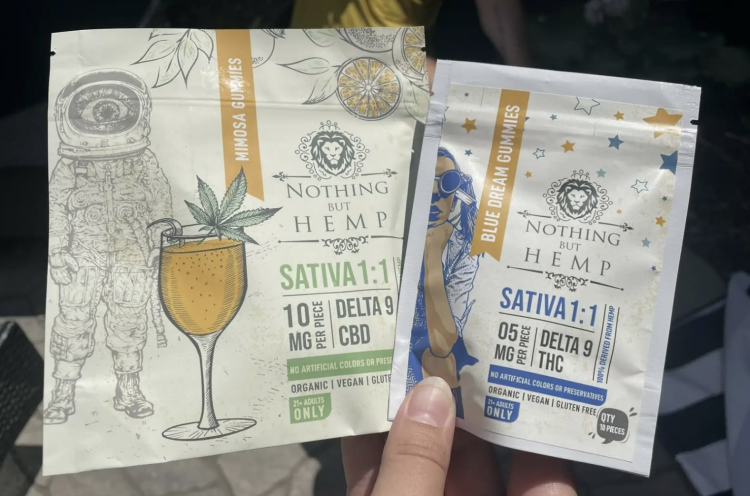
THC, which is derived from marijuana and can be used to treat or prevent nausea and vomiting caused by cancer medications, was unexpectedly legalized statewide by the State Council on July 1st.
Five companies in Alexandria Port have applied for a license to sell products containing tetrahydrocannabinol (THC), a compound that can cause marijuana to produce a state of excitement.
On Monday, December 12th, the Alexander City Council approved a submission from Ebacco after receiving additional information during a public hearing. However, approval for other applications was delayed due to incomplete submissions.
The THC licensing process is new, having only been approved by the council a few months ago.
THC, which is derived from cannabis, can be used to treat or prevent nausea and vomiting caused by cancer drugs. Surprisingly, the state legislature legalized it statewide on July 1.
This has led city leaders throughout the state to race to find answers on how to regulate the sale of THC through zoning and permits. In October, Alexandria passed a 16-page ordinance that regulates the sale and manufacture of THC-infused edibles, such as gummy bears.
This regulation mandates a license annual fee of $500 and an initial application investigation fee of $500.
Five companies have applied for licenses, including Ebacco located at 410 30th Ave. East, two locations of King Tobacco at 4617 Highway 29 South and 307 N. Nokomis St, Brothers Market at 610 McKay Ave., and Speedway gas station at 1422 Broadway.
Disclaimer
This article is provided solely for professional research, industry discussion, and informational purposes. Any references to brands, companies, products, technologies, or policies are made for factual reporting and analytical purposes only, and do not constitute endorsement, recommendation, promotion, or advertising by 2Firsts.
Nicotine-containing products, including but not limited to cigarettes, e-cigarettes, heated tobacco products, and nicotine pouches, carry significant health risks. Readers are responsible for complying with all applicable laws and regulations in their respective jurisdictions, including age restrictions and access limitations.
The information contained in this article should not be regarded as investment, legal, medical, regulatory, or commercial advice. While 2Firsts strives to ensure the accuracy and reliability of its content, it does not assume liability for any direct or indirect loss arising from errors, omissions, inaccuracies, or reliance on the information contained herein.
This article is not intended for individuals below the legal age for accessing tobacco or nicotine-related information in their jurisdiction.
Copyright Notice
This article is either original content produced by 2Firsts or content reproduced, translated, summarized, or adapted from third-party sources with attribution where applicable. The intellectual property rights of the original content remain with 2Firsts or the respective original rights holders.
No individual or organization may copy, reproduce, distribute, republish, modify, translate, or otherwise use this content without prior authorization. Any unauthorized use may result in legal action.
For copyright-related inquiries, corrections, or removal requests, please contact: info@2firsts.com.
AI-Assisted Translation and Editing Notice
Portions of this article may have been translated, edited, or reviewed with the assistance of artificial intelligence tools to improve efficiency and readability. Due to the limitations of AI-assisted translation and editing, discrepancies, omissions, or inaccuracies may exist when compared with the original source.
Where applicable, readers are advised to refer to the original source for the most complete and accurate information. If you identify any errors or believe that any content infringes upon your rights, please contact us at info@2firsts.com, and we will review and address the matter promptly.