Liberal Democrats Support UK Prime Minister's Disposable e-cigarette Ban

Jun.11.2024
Liberal Democrats Support UK Prime Minister's Disposable e-cigarette Ban
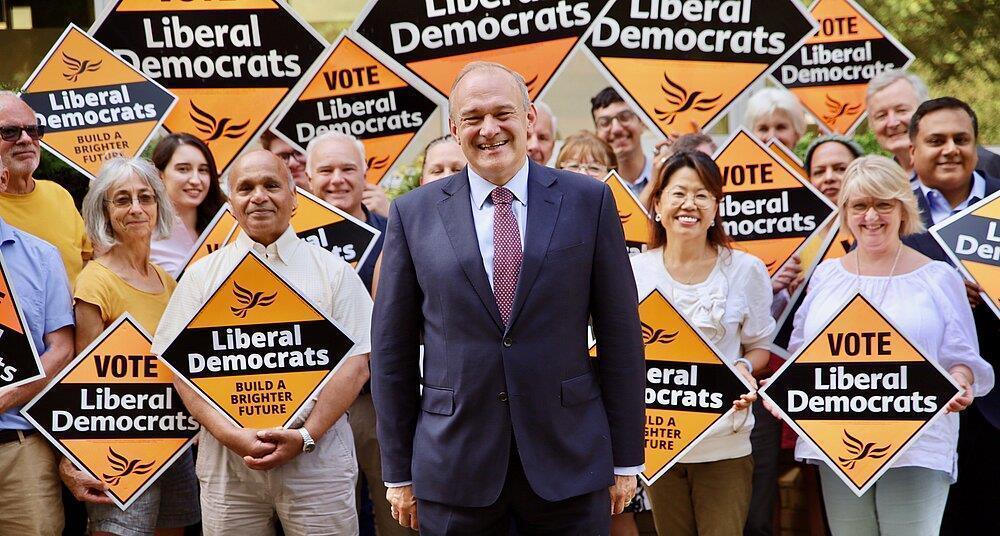
Liberal Democrats back UK PM Rishi Sunak's plan to ban disposable e-cigarettes, aiming to protect children from exposure.

According to a report on Forecourttrader on June 11th, the UK Liberal Democrats have expressed strong support for Prime Minister Rishi Sunak's plan to ban disposable e-cigarettes.


The party is led by Sir Ed Davey, and the Liberal Democrats have announced plans to ban the sale of disposable e-cigarette products and ensure that children cannot access e-cigarettes.


The latest opinion polls suggest that support for the Liberal Democratic Party is expected to be between 8% and 12% in the upcoming election. Many believe that this marginal constituency in southern England, currently controlled by the Conservative Party, could perform well, as the party hopes to gain enough seats to hold the balance of power in a hung parliament, much like it did in forming a coalition with the Conservatives under David Cameron's leadership after the 2010 election.


We welcome news tips, article submissions, interview requests, or comments on this piece.

Please contact us at info@2firsts.com, or reach out to Alan Zhao, CEO of 2Firsts, on LinkedIn


Notice

1.  This article is intended solely for professional research purposes related to industry, technology, and policy. Any references to brands or products are made purely for objective description and do not constitute any form of endorsement, recommendation, or promotion by 2Firsts.

2.  The use of nicotine-containing products — including, but not limited to, cigarettes, e-cigarettes, nicotine pouchand heated tobacco products — carries significant health risks. Users are responsible for complying with all applicable laws and regulations in their respective jurisdictions.

3.  This article is not intended to serve as the basis for any investment decisions or financial advice. 2Firsts assumes no direct or indirect liability for any inaccuracies or errors in the content.

4.  Access to this article is strictly prohibited for individuals below the legal age in their jurisdiction.


Copyright


This article is either an original work created by 2Firsts or a reproduction from third-party sources with proper attribution. All copyrights and usage rights belong to 2Firsts or the original content provider. Unauthorized reproduction, distribution, or any other form of unauthorized use by any individual or organization is strictly prohibited. Violators will be held legally accountable.

For copyright-related inquiries, please contact: info@2firsts.com


AI Assistance Disclaimer


This article may have been enhanced using AI tools to improve translation and editorial efficiency. However, due to technical limitations, inaccuracies may occur. Readers are encouraged to refer to the cited sources for the most accurate information.

We welcome any corrections or feedback. Please contact us at: info@2firsts.com

Global Tobacco Control Faces Regional Adaptation Test as Nicotine Markets Evolve, Asian Specialist Says
As e-cigarettes, heated tobacco products and nicotine pouches expand across global markets, a central question is gaining urgency: can tobacco control rely on a universal policy model? In an interview with 2Firsts, Asian public health and addiction medicine specialist Dr. Rashidi Mohamed bin Pakri Mohamed says Western experience remains relevant, but policies must be adapted to local culture, healthcare systems, enforcement capacity, illicit markets and clinical evidence.
Jul.08
PMI Oral Products Chief Says Lack of Rules May Push Nicotine Pouch Market Into Illicit Trade
Nick Ricketts, President of Oral Products at Philip Morris International (PMI), told Logos Press that nicotine pouches should be brought under clear regulatory frameworks covering nicotine limits, flavor rules, age verification, sales controls and marketing standards, arguing that the absence of clear rules or blanket bans may push consumer demand into illegal or semi-legal channels.
Jul.06
Australia’s Tobacco Tax Debate Intensifies as One Nation’s Barnaby Joyce Warns of Illicit Market Growth
Australian One Nation MP Barnaby Joyce has criticised continued tobacco excise increases, arguing that higher taxes are driving consumers toward illicit tobacco markets and benefiting organised crime groups.
Regulations
Jul.13 by 2Firsts Perspectives
South Korea Rejects 16 Trillion Won Tax-Evasion Claim Over Chinese Synthetic Nicotine
The South Korean government rejected allegations that Chinese synthetic-nicotine e-liquids were linked to about 16 trillion won in tobacco tax evasion, saying China does not ban synthetic nicotine exports and the estimate is difficult to verify, while acknowledging that pre-law synthetic-nicotine inventory is effectively difficult to tax.
Market
Jun.25
Australian State Targets Illegal Tobacco Retailers With Tougher Closure Powers
According to Reuters, Australia’s state of Victoria introduced legislation to give police and the state tobacco licensing regulator stronger powers to shut businesses selling illegal tobacco, with non-compliant operators facing fines of more than A$2.4 million and up to 20 years in prison.
Jun.05
Data|China’s May Vape Exports Fall 10.3%; January–May Shipments Slip 0.9%
China’s vape-related exports fell 10.25% year on year in May 2026, marking a second consecutive monthly decline, although exports recovered modestly from April. January-May exports totaled US$4.018 billion, down 0.86% from a year earlier and broadly in line with 2025 levels.
Special Report
Jun.29