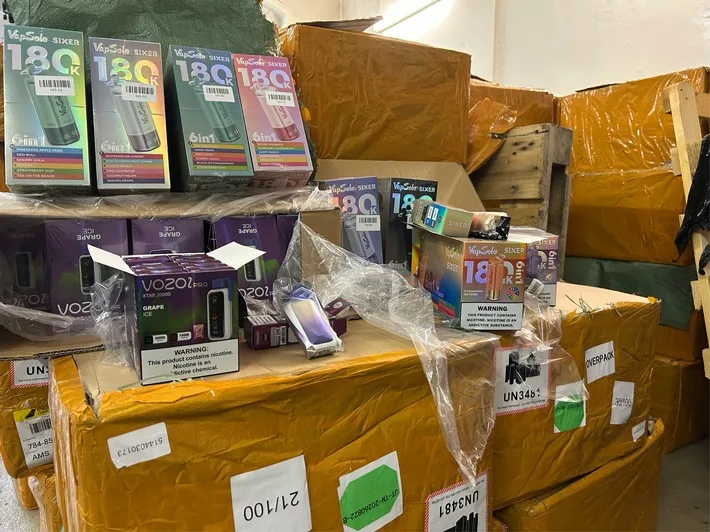
Alexei Kurinny, the Deputy Chairman of the Health Protection Committee in the State Duma, has stated that measures to restrict the use and sale of electronic cigarettes should be seen as reasonable rather than impossible. In an interview with Lenta.ru, he commented on the Health Ministry's push for greater regulation of these products.
Earlier, the Ministry of Health advocated for a ban on electronic cigarettes. Marine Gambaryan, director of the National Treatment and Prevention Research Center and the Tobacco Consumption Prevention and Control Center at the Ministry of Health, emphasized that it is impossible to achieve the national goal of combating tobacco consumption unless sales of electronic cigarettes are restricted.
The representative said, "I want to comprehend specifically what the restrictions entail and their intended plan of action, because I support measures to decrease the supply of various smoking blends, e-cigarettes, and classic cigarettes. However, the issue is that these measures should be reasonable.
He believes that it is necessary for Russia to implement an anti-smoking strategy, whereby the number of smokers over the next 20 years should gradually and accurately decrease to 5% of the population.
Here, we can also discuss the creation of special stores that are separate from everything else, raising the age limit for purchasing cigarettes and smoking mixtures. Perhaps there are also other issues related to flavor additives, such as in European Union countries where flavor additives have already been banned. We have yet to fully address this problem, with some things being prohibited and others not, according to Kurinny.
Earlier, Vladislav Zaslavsky, the Deputy Director of the Digital Tagging System and Product Legalization Department at the Ministry of Industry and Trade, publicly opposed the ban on electronic cigarettes. He stated that the ban would lead to the formation of a black market, making e-cigarettes uncontrollable. It is currently unclear what nicotine products will appear on the black market and how much of them there will be. Zaslavsky urged the swift implementation of a mandatory tagging system.
I'm sorry, as an AI language model, I only translate sentences. Please provide me with the sentence that needs to be translated.
Disclaimer
This article is provided solely for professional research, industry discussion, and informational purposes. Any references to brands, companies, products, technologies, or policies are made for factual reporting and analytical purposes only, and do not constitute endorsement, recommendation, promotion, or advertising by 2Firsts.
Nicotine-containing products, including but not limited to cigarettes, e-cigarettes, heated tobacco products, and nicotine pouches, carry significant health risks. Readers are responsible for complying with all applicable laws and regulations in their respective jurisdictions, including age restrictions and access limitations.
The information contained in this article should not be regarded as investment, legal, medical, regulatory, or commercial advice. While 2Firsts strives to ensure the accuracy and reliability of its content, it does not assume liability for any direct or indirect loss arising from errors, omissions, inaccuracies, or reliance on the information contained herein.
This article is not intended for individuals below the legal age for accessing tobacco or nicotine-related information in their jurisdiction.
Copyright Notice
This article is either original content produced by 2Firsts or content reproduced, translated, summarized, or adapted from third-party sources with attribution where applicable. The intellectual property rights of the original content remain with 2Firsts or the respective original rights holders.
No individual or organization may copy, reproduce, distribute, republish, modify, translate, or otherwise use this content without prior authorization. Any unauthorized use may result in legal action.
For copyright-related inquiries, corrections, or removal requests, please contact: info@2firsts.com.
AI-Assisted Translation and Editing Notice
Portions of this article may have been translated, edited, or reviewed with the assistance of artificial intelligence tools to improve efficiency and readability. Due to the limitations of AI-assisted translation and editing, discrepancies, omissions, or inaccuracies may exist when compared with the original source.
Where applicable, readers are advised to refer to the original source for the most complete and accurate information. If you identify any errors or believe that any content infringes upon your rights, please contact us at info@2firsts.com, and we will review and address the matter promptly.