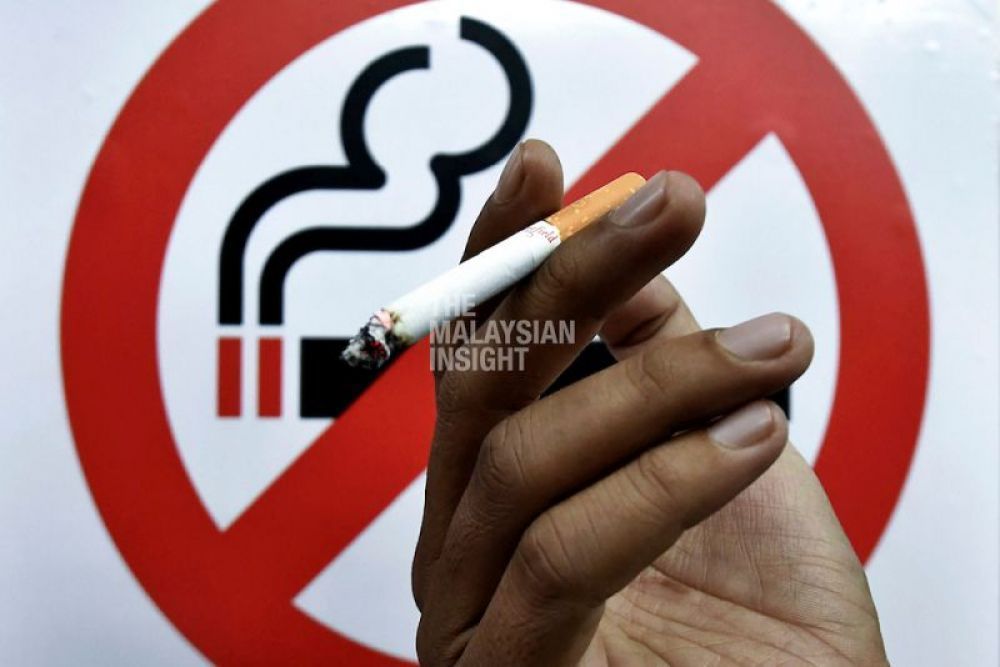
According to a report by FMT on December 14th, Malaysia's newly appointed Health Minister, Dzulkefly Ahmad, has expressed his regret to the Parliament for excluding the Transgenerational Endgame of Generation Elimination (GEG) clause from the 2023 Public Health Tobacco Control Act.
When submitting the Public Health Smoking Products Control Bill for approval by the National Assembly, Zulkifli acknowledged the public's concerns regarding the inclusion of the GEG provision, which was intended to prohibit the sale of tobacco and e-cigarette products to individuals born after 2007.
Former Chairman of the Health Affairs Congressional Committee, Zou Jifei, was responsible for overseeing the adjustments to the bill. He explained that before the bill was finally passed by the House of Representatives on November 30th, various health ministers were involved in its formulation. He also stated that prior to the finalization of the bill, there were 18 stakeholder engagement meetings and three roundtable discussions.
I offer my sincerest apologies to all of you and earnestly implore you not to underestimate the significance of the bill, and to support its passage. It has undergone extensive development and has been in the making for a considerable period of time.
One of the goals of the GEG Bill is to prohibit the sale and purchase of tobacco products, smoking paraphernalia, tobacco alternatives, or the provision of smoking services to minors.
After intense debates in the parliament, the lower house has successfully passed the bill, leaving both sides disappointed with the removal of the GEG clause.
Earlier, the Attorney General of Malaysia, Ahmad Terluddin Saleh, mentioned that the GEG clauses had violated the rights under the law for equal protection. Dr. Zailah Mohd Yusoff, the former Minister of Health, stated that the government had decided to remove the GEG clauses in the revised version of the bill as they were unconstitutional.
However, she emphasized that the Ministry of Health has not abolished these regulations. On the contrary, she said it is only temporarily set aside "for now", and the government may reintroduce this law if there is a need in the future.
Despite claims that the Ministry of Health was under pressure from lobbyists and reluctant to include GEG clauses, Zalihah emphasized that there were no other factors involved except for the views of the Attorney General.
Zulkefi also commented that although the Health Affairs Congressional Committee and the Department of Health had hoped to include GEG provisions in the bill, it was deemed impossible by the Office of the Attorney General due to its potential violation of the Eighth Amendment of the Federal Constitution, which guarantees equal protection under the law.
We welcome news tips, article submissions, interview requests, or comments on this piece.
Please contact us at info@2firsts.com, or reach out to Alan Zhao, CEO of 2Firsts, on LinkedIn
Notice
1. This article is intended solely for professional research purposes related to industry, technology, and policy. Any references to brands or products are made purely for objective description and do not constitute any form of endorsement, recommendation, or promotion by 2Firsts.
2. The use of nicotine-containing products — including, but not limited to, cigarettes, e-cigarettes, nicotine pouchand heated tobacco products — carries significant health risks. Users are responsible for complying with all applicable laws and regulations in their respective jurisdictions.
3. This article is not intended to serve as the basis for any investment decisions or financial advice. 2Firsts assumes no direct or indirect liability for any inaccuracies or errors in the content.
4. Access to this article is strictly prohibited for individuals below the legal age in their jurisdiction.
Copyright
This article is either an original work created by 2Firsts or a reproduction from third-party sources with proper attribution. All copyrights and usage rights belong to 2Firsts or the original content provider. Unauthorized reproduction, distribution, or any other form of unauthorized use by any individual or organization is strictly prohibited. Violators will be held legally accountable.
For copyright-related inquiries, please contact: info@2firsts.com
AI Assistance Disclaimer
This article may have been enhanced using AI tools to improve translation and editorial efficiency. However, due to technical limitations, inaccuracies may occur. Readers are encouraged to refer to the cited sources for the most accurate information.
We welcome any corrections or feedback. Please contact us at: info@2firsts.com