Maldives president approves new tax law, raising e-cigarette import tax to 200%

Nov.04.2024
Maldives president approves new tax law, raising e-cigarette import tax to 200%
The Maldives president approved a 200% import tax on e-cigarettes, vaping devices, and heated tobacco, starting November 1, 2024.

Maldivian President Dr. Mohamed Muizzu has approved an amendment to tax cigarettes and e-cigarettes, according to Raajje on November 3.


In mid-October, the parliament passed a proposal to tax e-cigarettes and cigarettes with a vote of 65 in favor.

President Muizzu approved the 19th amendment to the Export-Import Act, introducing significant changes to import taxes on tobacco and e-cigarettes. 


The amendment modifies Section 5 of the Export-Import Act, addressing import regulations for tobacco products, covering processed tobacco, tobacco alternatives, e-cigarettes, heated tobacco products, and their components. Adjustments were also made to Chapter 24 of Section 7.


Under the new regulations, all products in the general and processed tobacco categories will incur a 200% tariff, with exceptions for specific items. Cigarettes, Beedi (Indian hand-rolled cigarettes), and flavored chemicals for e-cigarettes, as well as heated tobacco products and consumables, will be taxed at 50%, with an additional charge of 8 Maldivian Rufiyaa (MVR) (USD 0.52) per unit or milliliter.


The president also announced amendments to Chapter 85 of Section 7, which pertains to electronic machinery, devices, and components, imposing a 200% import tax on e-cigarettes, vaping devices, and heated tobacco products. 


Other key changes include a requirement for all relevant rules and regulations to be updated, formulated, and published in the government gazette within 30 days of the amendment taking effect, which is scheduled for November 1, 2024.


Previously, the president announced on the social platform X a ban on importing e-cigarette devices and components, effective November 15, 2024. From December 15, 2024, the use, possession, production, sale, advertising, and free distribution of e-cigarette devices will be prohibited in the Maldives.


According to the new regulations, all products under the general and processed tobacco product category will be subject to a 200% tariff, with some specific items exempt. Flavouring chemicals for cigarettes, Beedi (Indian hand-rolled cigarettes), and e-cigarettes, as well as heating tobacco products and their consumables, will be subject to a 50% tariff, at a rate of 8 Maldivian Rufiyaa (MVR) (0.52 USD) per stick or per milliliter.


The president also revealed that Section 7, Chapter 85 of the amendment will impose a 200% import tax on electronic machinery, equipment, and parts, specifically targeting e-cigarettes, vaporizers, and heated tobacco products. 


Other key amendments include the requirement for all relevant rules and regulations to be developed or updated and published in the government gazette within 30 days of the amendment coming into effect. The amendment will officially take effect on November 1, 2024.


Previously, the President announced on the social media platform "X" that the import of e-cigarette devices and their components would be banned, with the ban taking effect on November 15, 2024. Starting from December 15, 2024, the use, possession, production, sale, promotion, and free distribution of e-cigarette devices will be prohibited in the Maldives.


We welcome news tips, article submissions, interview requests, or comments on this piece.

Please contact us at info@2firsts.com, or reach out to Alan Zhao, CEO of 2Firsts, on LinkedIn


Notice

1.  This article is intended solely for professional research purposes related to industry, technology, and policy. Any references to brands or products are made purely for objective description and do not constitute any form of endorsement, recommendation, or promotion by 2Firsts.

2.  The use of nicotine-containing products — including, but not limited to, cigarettes, e-cigarettes, nicotine pouchand heated tobacco products — carries significant health risks. Users are responsible for complying with all applicable laws and regulations in their respective jurisdictions.

3.  This article is not intended to serve as the basis for any investment decisions or financial advice. 2Firsts assumes no direct or indirect liability for any inaccuracies or errors in the content.

4.  Access to this article is strictly prohibited for individuals below the legal age in their jurisdiction.


Copyright


This article is either an original work created by 2Firsts or a reproduction from third-party sources with proper attribution. All copyrights and usage rights belong to 2Firsts or the original content provider. Unauthorized reproduction, distribution, or any other form of unauthorized use by any individual or organization is strictly prohibited. Violators will be held legally accountable.

For copyright-related inquiries, please contact: info@2firsts.com


AI Assistance Disclaimer


This article may have been enhanced using AI tools to improve translation and editorial efficiency. However, due to technical limitations, inaccuracies may occur. Readers are encouraged to refer to the cited sources for the most accurate information.

We welcome any corrections or feedback. Please contact us at: info@2firsts.com

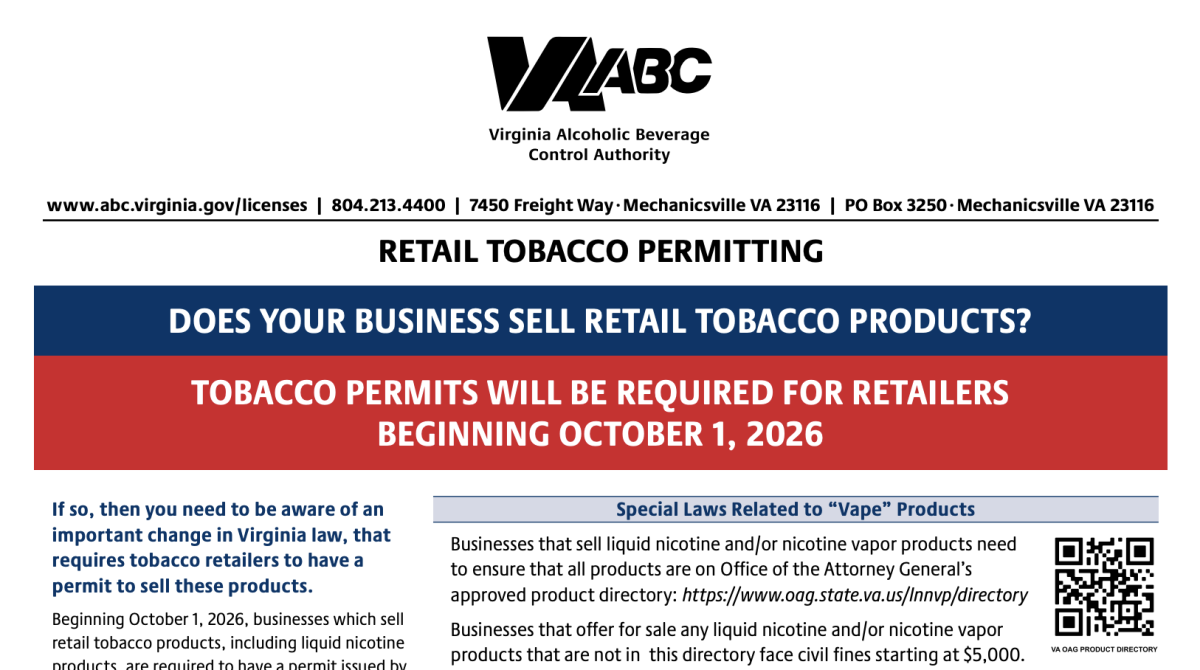
Virginia Tobacco Retail Permit Takes Effect October 1, Covering Vapes as More Than 3,000 Businesses Apply in September
Virginia's new retail tobacco permit system took effect October 1, requiring sellers of vapes, nicotine products and related devices and accessories to obtain a Retail Tobacco Permit for each business location. Virginia ABC said more than 3,000 businesses applied in September alone, creating a processing backlog. Qualifying applicants that filed before October 1 may temporarily operate under a Letter of Authorization. The new store-level permit also sits alongside Virginia's existing vape product directory, where sales of unlisted liquid nicotine or nicotine vapor products can trigger civil penalties starting at $5,000.
Regulations
Oct.03
On-Site Report | CTP Details PMTA Backlog, 180-Day Review Goal and sPMTA Process
FDA’s Center for Tobacco Products detailed new PMTA review data and process changes at the 2026 FDLI conference. Pending PMTAs fell from about 450,000 at the start of 2025 to 135,000 by September 2026. CTP also discussed its 180-day review goal, current sPMTA pilot, alternate-supplier planning, more than 50,300 pending SE reports, and lessons from the nicotine pouch pilot already being applied to ENDS review.
Regulations
Oct.07
Malaysia Liquid Nicotine Returns to Poisons List, Leaving Vape Retail and RM354 Million Tax Collection in Legal Uncertainty
Malaysia’s withdrawal of its appeal in a landmark liquid-nicotine case has left a High Court ruling that struck down the 2023 nicotine exemption in force, bringing liquid and gel nicotine used in vaping products back under the Poisons Act 1952. At the same time, the Control of Smoking Products for Public Health Act 2024 continues to provide a regulatory framework for vaping products, creating uncertainty over retail sales, taxation and existing inventory. MPs are calling for nicotine vape sales and excise collection to stop, including refunds of more than RM354 million collected since 2023, while industry and consumer groups are asking the government to clarify the current legal position.
Sep.04
Juul Sublicense Reshapes Vuse Alto Patent Bill as Court Ends R.J. Reynolds’ 5.25% Royalty Obligation to Altria
According to Law360 on August 31, 2026, a federal judge in North Carolina ruled that a patent sublicense between R.J. Reynolds Vapor Co. and Juul Labs Inc. relieves Reynolds of its obligation to continue paying royalties to Altria Client Services LLC over Vuse Alto. A jury had previously found that Vuse Alto infringed three Altria patents and awarded approximately $95.2 million in past damages, after which Reynolds was ordered to pay an ongoing royalty equal to 5.25% of positive net sales. The new ruling finds that a valid sublicense can eliminate future infringement, potentially ending what Altria described as hundreds of millions of dollars in future royalties.
Sep.01
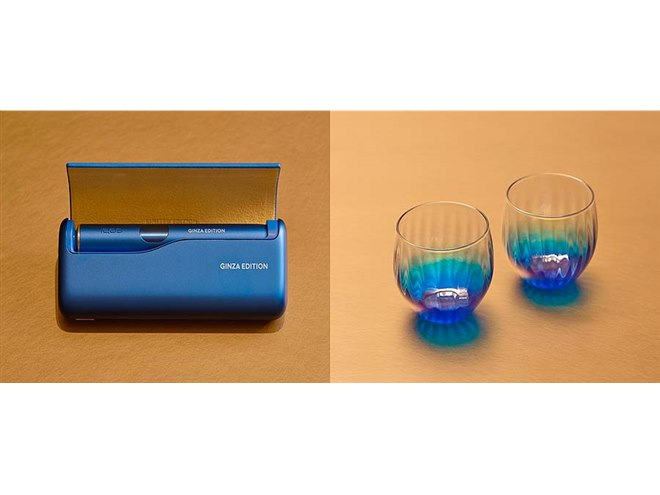
Product | Philip Morris Japan Launches Ginza-Exclusive IQOS ILUMA i PRIME, Limited to 1,814 Units at First Global Flagship
Philip Morris Japan (PMJ) launched the IQOS ILUMA i PRIME Ginza Limited Model Set in Tokyo on September 4, 2026, alongside the opening of IQOS Flagship Ginza, the brand’s first global flagship store. The Oasis Blue edition is limited to 1,814 individually numbered units, with the figure derived from the store’s address at Ginza 1-8-14. The set also includes two Yamanaka-nuri glasses and special packaging, priced at JPY 11,980 and sold exclusively at the Ginza flagship.
Sep.07
Cochrane 2026 Update Adds Nine Trials, Keeps High-Certainty Finding That Nicotine E-Cigarettes Improve Quit Rates Over NRT
Cochrane’s 2026 update of its living review on electronic cigarettes for smoking cessation included 80 randomized controlled trials involving 29,861 adult smokers, with nine trials added in this update. The review retained its high-certainty conclusion that nicotine e-cigarettes increase smoking cessation rates compared with nicotine replacement therapy. In absolute terms, about 10 in 100 people using nicotine e-cigarettes may quit smoking for at least six months, compared with about 6 in 100 using NRT. The review found no clear difference in serious adverse event rates between the two groups, while longer-term safety and the relative effectiveness of newer device types remain less certain.
Sep.07