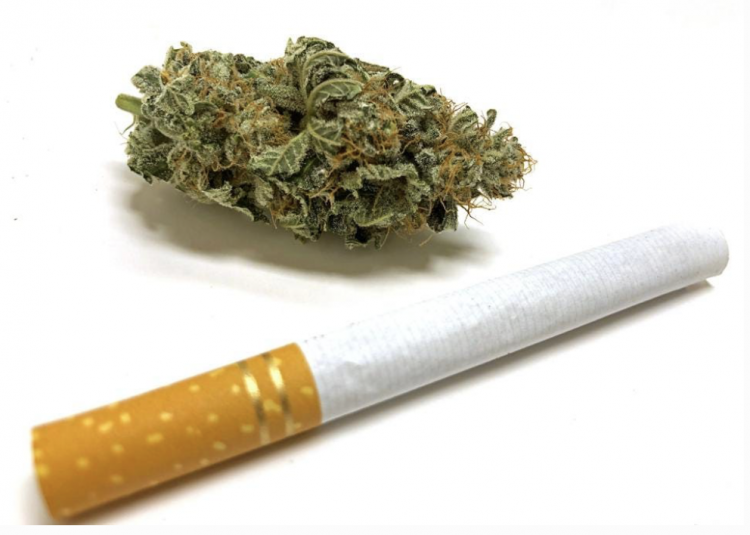
According to recent Gallup poll results, more Americans smoke marijuana than cigarettes. The survey also found that marijuana usage in the United States is at an all-time high, skyrocketing by one third in just one year.
A Gallup poll released on August 16th revealed that 16% of respondents admitted to using marijuana, up from 12% in a similar survey conducted a year ago. However, Gallup maintained that this change was not statistically significant. In contrast, a separate poll conducted in July found that only 11% of respondents had smoked cigarettes in the past week. This number has decreased from a year ago, when 16% of respondents said they had smoked a cigarette in the past week. This decline is significant compared to the peak of smoking in the 1950s, when 45% of surveyed adults claimed they were smokers.
Two poll indicators have recently hit new records. The percentage of self-identified users of marijuana is at its highest level since Gallup began tracking the issue in 2013, and the percentage of self-identified smokers hit its lowest level since 1944, when the firm began tracking smoking, according to a recent survey by a public opinion research company. Almost half (48%) of American adults say they have tried marijuana at some point in their lives, compared to just 4% when Gallup first started tracking lifetime marijuana usage in 1969. In the same year, 40% of Americans said they smoked a cigarette in the past week.
As more and more jurisdictions in the United States reform their marijuana laws, the number of consumers of the drug continues to rise. Marijuana is now legalized in some form in 38 states, with six states potentially voting on legalization measures in the November elections. According to the latest measurements from Gallup, 68% of American adults believe that marijuana should be legalized, which is at its highest historical level.
There are more young people who smoke marijuana compared to older people in the United States.
The proportion of young people in the United States who smoke marijuana is highest, with nearly one-third of adults under 35 saying they do. Among adults aged 35 to 54, 16% say they use marijuana, while only 10% of people aged 55 and older say they smoke it. Only 8% of young people say they have smoked a cigarette in the previous week, while 10% of those aged 35 to 54 and 14% of elderly Americans say they have smoked one in the past seven days.
Despite the popularity of measures to reform marijuana policies, there is a division among Americans on how marijuana affects society in the United States. The latest Gallup marijuana survey also found that half of Americans believe that marijuana has an overall negative impact, while 48% believe that marijuana has a positive impact on society.
These findings are from Gallup's annual consumer poll conducted from July 5 to July 26. The survey examined the usage of marijuana and tobacco among 1,013 American adults, with a reported margin of error of plus or minus four percentage points.
Statement
This article is compiled from third-party information and is intended for industry exchange and learning purposes only.
This article does not represent the views of 2FIRSTS and 2FIRSTS cannot confirm the authenticity and accuracy of the article's content. The translation of this article is only intended for industry exchange and research.
Due to limitations in the compiler's ability, the translated article may not fully express the original. Please refer to the original article for accuracy.
2FIRSTS is completely aligned with the Chinese government on any statements and positions related to domestic, Hong Kong, Macao, Taiwan, and foreign affairs.
The compiled information belongs to the original media and authors with regards to copyright. If there is any infringement, please contact us for deletion.
Disclaimer
This article is provided solely for professional research, industry discussion, and informational purposes. Any references to brands, companies, products, technologies, or policies are made for factual reporting and analytical purposes only, and do not constitute endorsement, recommendation, promotion, or advertising by 2Firsts.
Nicotine-containing products, including but not limited to cigarettes, e-cigarettes, heated tobacco products, and nicotine pouches, carry significant health risks. Readers are responsible for complying with all applicable laws and regulations in their respective jurisdictions, including age restrictions and access limitations.
The information contained in this article should not be regarded as investment, legal, medical, regulatory, or commercial advice. While 2Firsts strives to ensure the accuracy and reliability of its content, it does not assume liability for any direct or indirect loss arising from errors, omissions, inaccuracies, or reliance on the information contained herein.
This article is not intended for individuals below the legal age for accessing tobacco or nicotine-related information in their jurisdiction.
Copyright Notice
This article is either original content produced by 2Firsts or content reproduced, translated, summarized, or adapted from third-party sources with attribution where applicable. The intellectual property rights of the original content remain with 2Firsts or the respective original rights holders.
No individual or organization may copy, reproduce, distribute, republish, modify, translate, or otherwise use this content without prior authorization. Any unauthorized use may result in legal action.
For copyright-related inquiries, corrections, or removal requests, please contact: info@2firsts.com.
AI-Assisted Translation and Editing Notice
Portions of this article may have been translated, edited, or reviewed with the assistance of artificial intelligence tools to improve efficiency and readability. Due to the limitations of AI-assisted translation and editing, discrepancies, omissions, or inaccuracies may exist when compared with the original source.
Where applicable, readers are advised to refer to the original source for the most complete and accurate information. If you identify any errors or believe that any content infringes upon your rights, please contact us at info@2firsts.com, and we will review and address the matter promptly.