Meritz Securities Gives Positive Evaluation on KT&G Chairman Appointment

News by 2FIRSTS.ai
Feb.26.2024
Meritz Securities Gives Positive Evaluation on KT&G Chairman Appointment
Meritz Securities praises KT&G's appointment of Bang Kyung-man as new chairman, anticipating business growth and shareholder rewards under his leadership.

According to a report by the Korean news agency Yonhap on February 26, the securities company Meritz Securities gave a positive evaluation on the appointment of Bang Kyung-man as the new chairman of KT&G. Analysts expect his tenure to bring business growth and strengthened shareholder returns measures.


According to reports, KT&G announced on the 22nd of this month that Bang Kyung-man is expected to succeed as the company's president. Kim Jung-wook from the research department of Meritz Securities analyzed that Bang's extensive industry experience will play a leadership role in the company's mid- to long-term development strategy focusing on e-cigarettes, health functional products, and the global CC core businesses. The KT&G president nomination committee announced on the 22nd that Bang Kyung-man has been selected as the final candidate for the next president and recommended to the board of directors. 


The appointment of the next CEO and president will be decided at the annual shareholders meeting scheduled for the end of March. However, activist fund Flashlight Capital Partners (FCP) recently criticized KT&G's president selection process and has written to the National Pension Service urging them to exercise their voting rights in the election. This fund previously prevented the re-election of the CEO of KT Corporation in late 2022 and recently criticized the selection process for the next chairman of POSCO, raising concerns about whether they will exercise their voting rights at the upcoming shareholders meetings of KT&G next month.


We welcome news tips, article submissions, interview requests, or comments on this piece.

Please contact us at info@2firsts.com, or reach out to Alan Zhao, CEO of 2Firsts, on LinkedIn


Notice

1.  This article is intended solely for professional research purposes related to industry, technology, and policy. Any references to brands or products are made purely for objective description and do not constitute any form of endorsement, recommendation, or promotion by 2Firsts.

2.  The use of nicotine-containing products — including, but not limited to, cigarettes, e-cigarettes, nicotine pouchand heated tobacco products — carries significant health risks. Users are responsible for complying with all applicable laws and regulations in their respective jurisdictions.

3.  This article is not intended to serve as the basis for any investment decisions or financial advice. 2Firsts assumes no direct or indirect liability for any inaccuracies or errors in the content.

4.  Access to this article is strictly prohibited for individuals below the legal age in their jurisdiction.


Copyright


This article is either an original work created by 2Firsts or a reproduction from third-party sources with proper attribution. All copyrights and usage rights belong to 2Firsts or the original content provider. Unauthorized reproduction, distribution, or any other form of unauthorized use by any individual or organization is strictly prohibited. Violators will be held legally accountable.

For copyright-related inquiries, please contact: info@2firsts.com


AI Assistance Disclaimer


This article may have been enhanced using AI tools to improve translation and editorial efficiency. However, due to technical limitations, inaccuracies may occur. Readers are encouraged to refer to the cited sources for the most accurate information.

We welcome any corrections or feedback. Please contact us at: info@2firsts.com

Special Report | Vape bans and tougher rules: the South Caucasus takes different paths
Azerbaijan's sweeping e-cigarette ban has raised concerns over enforcement errors and the emergence of illicit sales, while neighboring Armenia is tightening technical rules and preparing higher excise taxes. Georgia, meanwhile, has resisted calls for broader vape restrictions and introduced preferential taxes for some domestically produced cigarettes. The divergent approaches across the South Caucasus highlight a regional policy dilemma: how to curb nicotine use and protect public health without encouraging black markets or creating unintended economic consequences for businesses and consumers.
Nov.03
Japanese Addiction Psychiatrist Says Complete Abstinence Is Not Always the Goal of Harm Reduction | 2Firsts Interview
Complete abstinence is not always the goal of addiction treatment under a harm-reduction approach, Japanese psychiatrist Tomohiro Shirasaka told 2Firsts in Manila. In the interview, he discussed patients' quality of life, Japan's shift towards heated tobacco products, and the challenges of quitting smoking for people with mental illness. Drawing on addiction treatment work in the Philippines, he advocated support rather than punishment and questioned whether fear-based health warnings effectively address the reasons people continue smoking.
Nov.10
Canada Health Minister Says She Is Not Considering Looser Nicotine Pouch Retail Rules as PMI-Linked Group Pushes for Wider Access
Canadian Health Minister Marjorie Michel says she is not considering loosening retail restrictions on nicotine pouches. Canada regulates pouches containing 4 mg or less of nicotine per unit as non-prescription nicotine replacement therapy and requires newer NRT formats such as pouches to be sold from behind pharmacy counters. Meanwhile, Unsmoke Canada, linked to Philip Morris International's Canadian business, is pushing to allow pouches in convenience stores and other general retail outlets. Health Canada also acknowledges continued unauthorized sales, while recent research shows rising pouch use among Canadian youth aged 16 to 19.
Sep.24
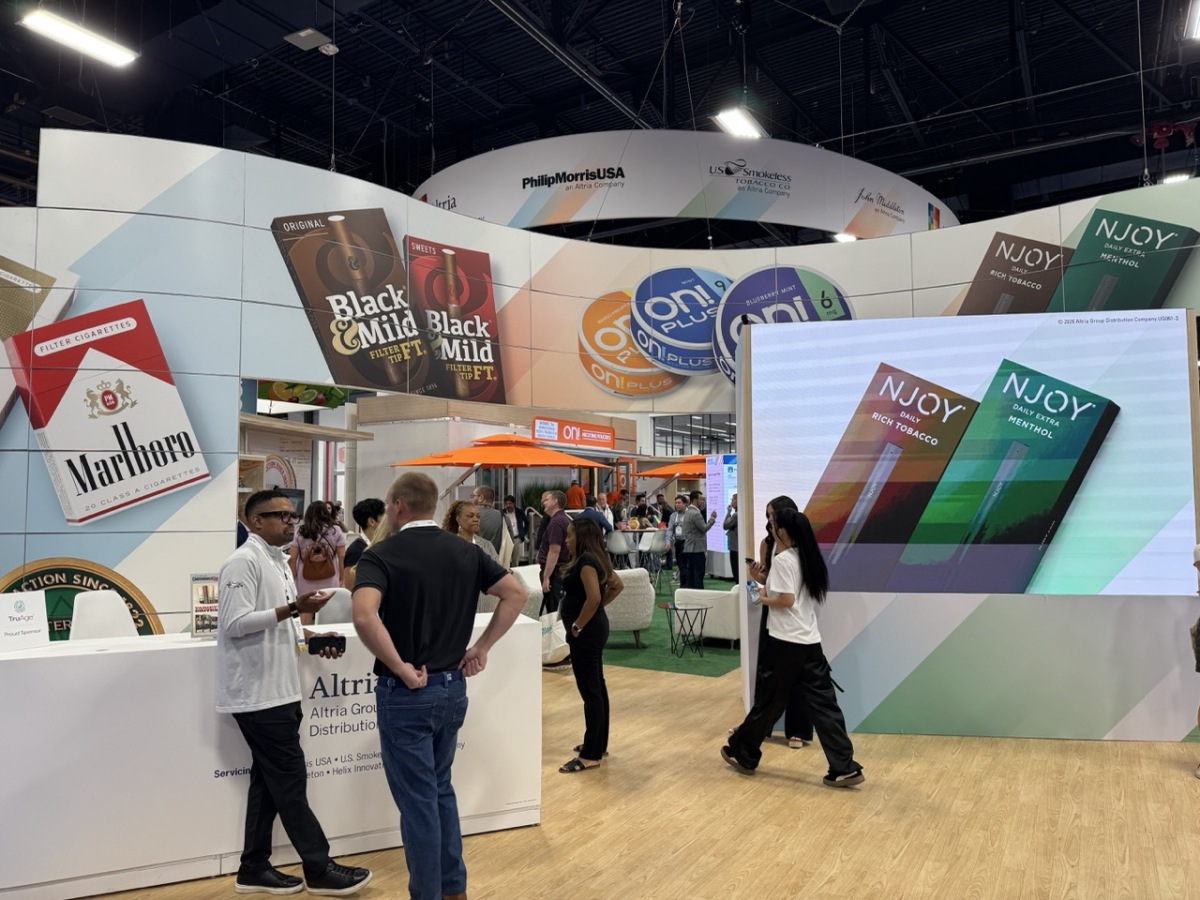
Altria Showcases Ploom, Marlboro Heated Tobacco Sticks and Non-Nicotine Energy Products at NACS Show 2026
At the 2026 NACS Show, Altria displayed Ploom devices alongside imagery of Marlboro-branded heated tobacco sticks, while also featuring RIOT Energy and Proper Wild non-nicotine products. The booth showcased on! PLUS nicotine pouches, including 12 mg variants not listed among FDA-authorized products as of October 9, and NJOY e-cigarettes. Altria also presented convenience-store traffic figures highlighting its retail presence. 2Firsts examines the company's expanded product portfolio, non-nicotine business activities and the regulatory status of products displayed at the show.
EXPO
Oct.10
Wisconsin Vape Directory One Year On: Retailer Reports Four Store Closures and 70% Staff Cuts
Wisconsin's electronic vaping device directory has been fully enforced for more than a year, and local vape retailers say the reduced range of eligible products has contributed to declining sales, store closures and layoffs. Johnny Vapes owner Ben Hall said he has closed four of seven locations and cut about 70% of his staff. State law bars the sale of vaping devices not listed on the Wisconsin Department of Revenue directory and allows penalties of $1,000 per day for each unlisted device sold or offered for sale. In April 2026, the U.S. Court of Appeals for the Seventh Circuit allowed enforcement of the law to continue.
Regulations
Oct.10
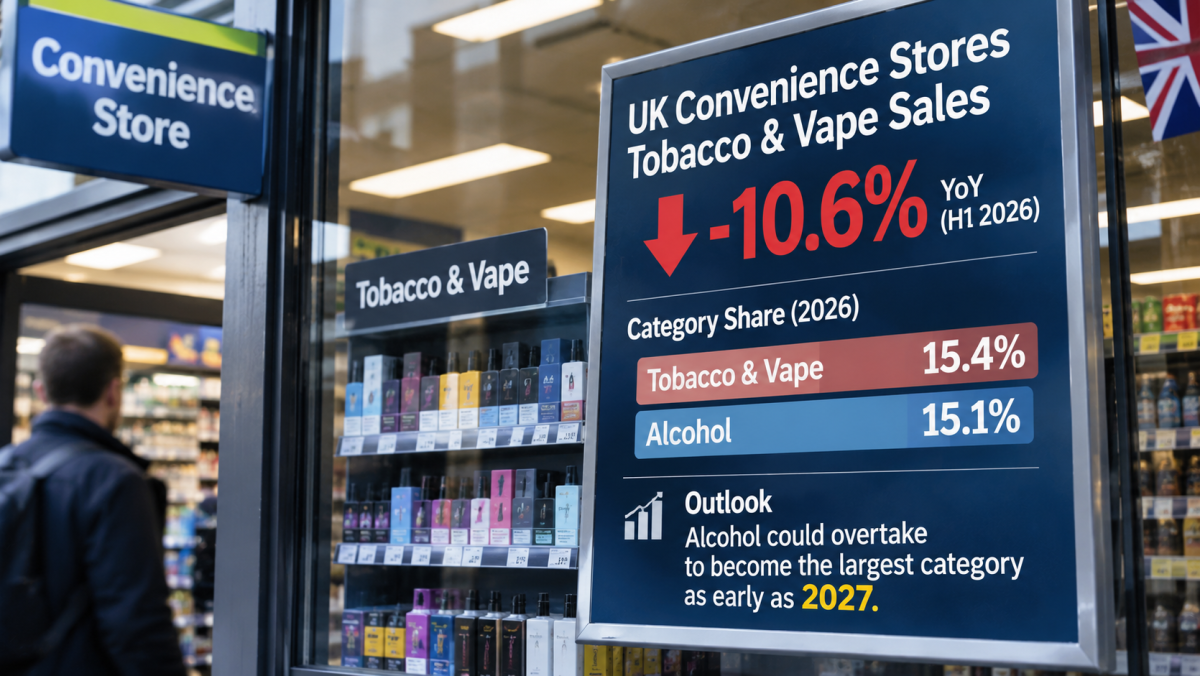
DATA|UK Retail Research Group IGD Says Convenience Tobacco and Vape Sales Fell 10.6%, With 15.4% Market Share Versus Alcohol's 15.1%; Top Rank at Risk in 2027
Combined tobacco and vaping sales in UK convenience stores fell 10.6% year over year in the first half of 2026, making the category a major drag on channel performance, according to retail research organization IGD. Total convenience sales declined 1.2%, while sales excluding tobacco and vaping increased 0.7%. IGD's 2026 category-share figures show tobacco and vaping accounting for 15.4% of convenience sales, compared with 15.1% for alcohol. The organization forecasts alcohol could overtake tobacco and vaping as the largest category by sales value as early as 2027 if current trends continue. IGD expects the convenience market to increase from £48.6 billion in 2026 to £54.9 billion in 2031, a 2.5% compound annual growth rate, or 3.4% excluding tobacco and vaping.
DATA
Nov.11