Key Points
- Effective: February 2026.
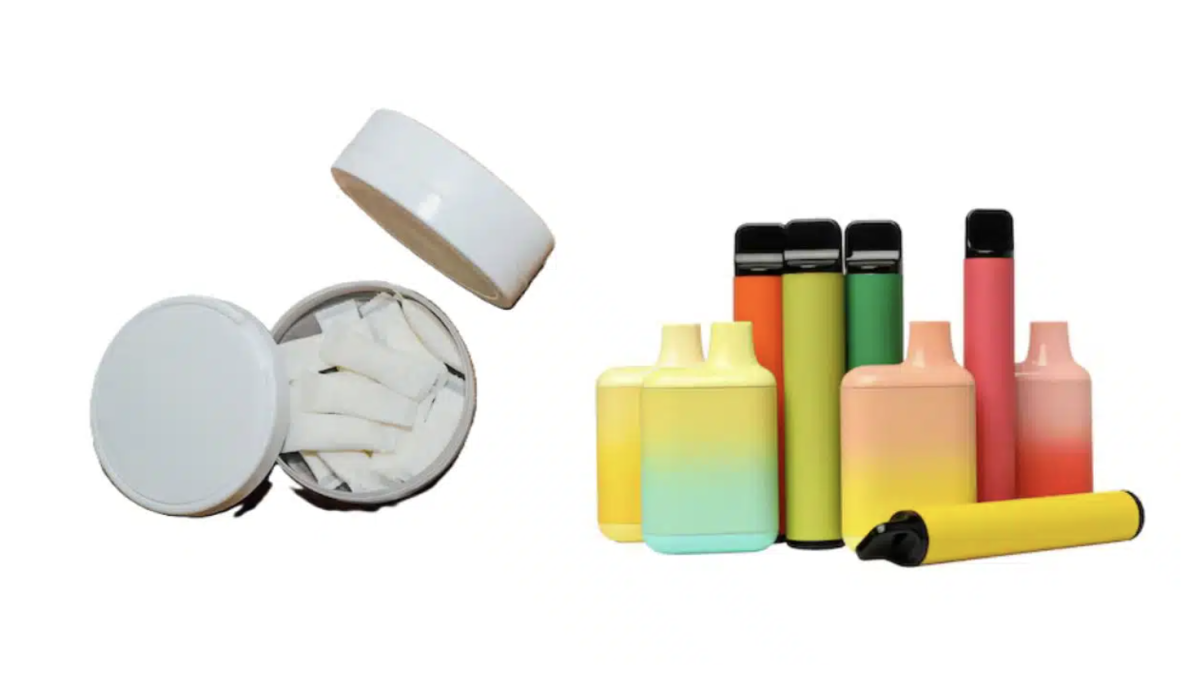
- Scope: e-cigarettes, muassel and nicotine pouches (“smoke-free” products).
- Standard-setter: IMANOR (Moroccan Institute of Standardization).
- Main requirements: composition rules, labelling, traceability, safety.
- Labelling: 11 mandatory fields (manufacturer, composition, origin, production date, etc.).
- Market impact: applies to imports, as Morocco has no local production in this segment.
- Advocacy note: consumer federation calls for more public education and awareness funding.
2Firsts, Feb. 3, 2026
Médias24 reports that Morocco will enforce, for the first time, a mandatory standard governing so-called “smoke-free” products from February 2026, covering e-cigarettes, muassel and nicotine pouches. Developed by the Moroccan Institute of Standardization (IMANOR), the measure aims to protect consumers and bring structure to a fast-growing market that has lacked a dedicated framework.
Inspired by international benchmarks, the standard introduces specific requirements on product composition, labelling, traceability and safety. Ouadi Madih (Ouadi Madih), president of the National Federation of Consumer Associations (FNAC), said the framework rests on two core pillars—labelling and traceability—arguing that while consumers cannot simply be barred from accessing these products, they must be protected through clear information and oversight.
Madih highlighted labelling as the first line of consumer protection, citing 11 mandatory pieces of information, including the manufacturer’s name, composition, origin and production date. He also urged stronger public resources for awareness campaigns about tobacco products and their alternatives, stressing that informed consumers are better able to protect themselves.
The standard is mandatory rather than voluntary. As Morocco has no local production of these smoke-free products, the requirements will apply to imported products, which will have to meet IMANOR’s criteria to enter and remain on the market.
The move also aligns with Morocco’s broader legal updates in response to emerging nicotine products, including changes linked to Law 66-20 amending Law 46-02 to incorporate heated tobacco. Madih underscored that standardization is not meant to legitimize these products, but to establish transparency and accountability—helping consumers understand what they are using and make better-informed choices.
Image source: Médias24
We welcome news tips, article submissions, interview requests, or comments on this piece.
Please contact us at info@2firsts.com, or reach out to Alan Zhao, CEO of 2Firsts, on LinkedIn
Notice
1. This article is intended solely for professional research purposes related to industry, technology, and policy. Any references to brands or products are made purely for objective description and do not constitute any form of endorsement, recommendation, or promotion by 2Firsts.
2. The use of nicotine-containing products — including, but not limited to, cigarettes, e-cigarettes, nicotine pouchand heated tobacco products — carries significant health risks. Users are responsible for complying with all applicable laws and regulations in their respective jurisdictions.
3. This article is not intended to serve as the basis for any investment decisions or financial advice. 2Firsts assumes no direct or indirect liability for any inaccuracies or errors in the content.
4. Access to this article is strictly prohibited for individuals below the legal age in their jurisdiction.
Copyright
This article is either an original work created by 2Firsts or a reproduction from third-party sources with proper attribution. All copyrights and usage rights belong to 2Firsts or the original content provider. Unauthorized reproduction, distribution, or any other form of unauthorized use by any individual or organization is strictly prohibited. Violators will be held legally accountable.
For copyright-related inquiries, please contact: info@2firsts.com
AI Assistance Disclaimer
This article may have been enhanced using AI tools to improve translation and editorial efficiency. However, due to technical limitations, inaccuracies may occur. Readers are encouraged to refer to the cited sources for the most accurate information.
We welcome any corrections or feedback. Please contact us at: info@2firsts.com