Arizona e-cigarette shops ordered to pay $460,000 for selling tobacco and nicotine products to minors

Jan.07
Arizona e-cigarette shops ordered to pay $460,000 for selling tobacco and nicotine products to minors
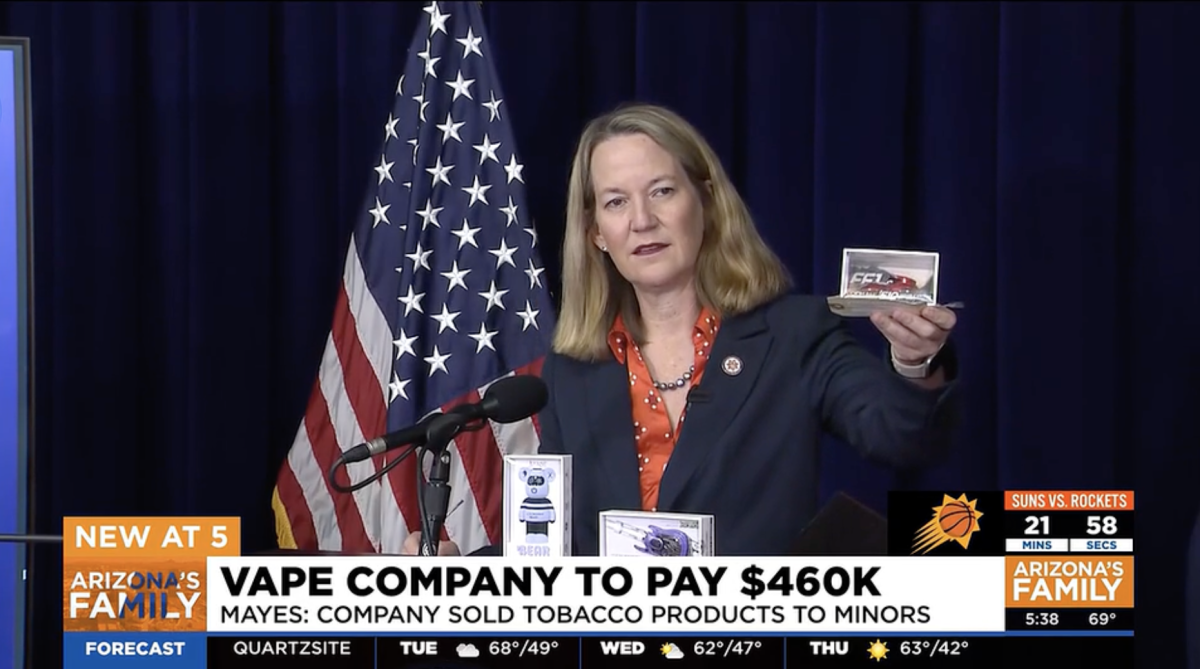
Arizona Attorney General Kris Mayes announced Pro Source Supply LLC, Pro Source Vapes LLC, Pro Source CBD LLC, and owner Timothy Kell must pay $460,000 in restitution tied to a lawsuit filed last year alleging illegal sales of tobacco and nicotine products to underage buyers.

Key points


• Restitution: $460,000

• Parties: Pro Source Supply LLC, Pro Source Vapes LLC, Pro Source CBD LLC, and owner Timothy Kell

• Allegations: refusal to check IDs and knowing underage sales; continued sales after citations and warnings

• Requirements: age verification, training, electronic ID scanning, regular and third-party random compliance checks, and bans on teen-appealing products/ads; bans on single cigarettes, flavored cigarillos at specific locations, and candy/toy/school-supply lookalike products

• Duration: agreement runs through Nov. 1, 2031


2Firsts, January 6, 2026 – According to AZFamily, a vape shop with several Valley locations must pay back thousands of dollars for illegally selling tobacco and nicotine to underage customers, Arizona Attorney General Kris Mayes said.


Mayes announced on Monday that Pro Source Supply LLC, Pro Source Vapes LLC, Pro Source CBD LLC, and owner Timothy Kell must pay $460,000 in restitution in response to a lawsuit filed last year. The lawsuit alleged the stores refused to check IDs and knowingly sold tobacco and nicotine products to underage buyers.


Mayes’ office conducted several inspections and discovered illegal sales at multiple store locations, including New York Smoke Shop in Chandler and three Pro Source locations in Scottsdale, Tempe and Glendale.


The attorney general said the shops continued selling products to minors even after receiving citations, fines and warnings. The report notes it is illegal in Arizona to sell tobacco and nicotine products to those under 18 years old, and under the age of 21 per federal law.


Under the agreement, Pro Source must implement age-verification policies, enhance employee training, use electronic ID scanning for sales, conduct regular compliance checks and ban products and advertising that appeal to teens. Mayes said the company is banned from selling single cigarettes, flavored cigarillos at specific locations and products that look like candy, toys or school supplies.


The agreement also requires Pro Source to hire a compliance officer, conduct random compliance checks by a third party company and report results directly to the attorney general’s office. The agreement will be in effect through Nov. 1, 2031.


Photo credit: AZFamily


We welcome news tips, article submissions, interview requests, or comments on this piece.

Please contact us at info@2firsts.com, or reach out to Alan Zhao, CEO of 2Firsts, on LinkedIn


Notice

1.  This article is intended solely for professional research purposes related to industry, technology, and policy. Any references to brands or products are made purely for objective description and do not constitute any form of endorsement, recommendation, or promotion by 2Firsts.

2.  The use of nicotine-containing products — including, but not limited to, cigarettes, e-cigarettes, nicotine pouchand heated tobacco products — carries significant health risks. Users are responsible for complying with all applicable laws and regulations in their respective jurisdictions.

3.  This article is not intended to serve as the basis for any investment decisions or financial advice. 2Firsts assumes no direct or indirect liability for any inaccuracies or errors in the content.

4.  Access to this article is strictly prohibited for individuals below the legal age in their jurisdiction.


Copyright


This article is either an original work created by 2Firsts or a reproduction from third-party sources with proper attribution. All copyrights and usage rights belong to 2Firsts or the original content provider. Unauthorized reproduction, distribution, or any other form of unauthorized use by any individual or organization is strictly prohibited. Violators will be held legally accountable.

For copyright-related inquiries, please contact: info@2firsts.com


AI Assistance Disclaimer


This article may have been enhanced using AI tools to improve translation and editorial efficiency. However, due to technical limitations, inaccuracies may occur. Readers are encouraged to refer to the cited sources for the most accurate information.

We welcome any corrections or feedback. Please contact us at: info@2firsts.com

Ukrainian Media: Polish Vape Distributor Evapify Allegedly Linked to Russian Businessman Named in U.S. “Russia Oligarch Report”
According to an investigative report by Euromaidan Press, a Ukrainian English-language independent media outlet, Russian businessman Oleg Boyko has been sanctioned by Ukraine, Poland, Australia and Canada, but has not been added to the European Union’s sanctions list. The report alleges that Evapify, a Polish vape distributor with financial and personal ties to Boyko, holds a significant position in Poland’s disposable vape market.
News
Jun.01
Spain Plans to Extend Smoking Ban to Terraces and Beaches, Bringing Vapes Under New Restrictions
Spain is advancing a new tobacco-control reform that would expand smoking restrictions to additional public spaces, including restaurant terraces and beaches, while bringing vaping and other nicotine products into the same regulatory framework. The proposed measures aim to reduce secondhand smoke exposure, protect young people and expand smoke-free environments. The proposal remains under legislative development, and final implementation details have not yet been confirmed.
Jul.23
  South Korea Reopens Cigarette Tax Debate as 63% Back Higher Tobacco Taxes
South Korea Reopens Cigarette Tax Debate as 63% Back Higher Tobacco Taxes
South Korea’s cigarette tax debate has resurfaced after the Ministry of Health and Welfare said tobacco price policy needed review, with a poll showing 63% of respondents support higher tobacco taxes.
Regulations
Jun.22
China Tobacco International HK Warns First-Half Revenue May Fall 25%-30%, Tobacco Leaf and Duty-Free Exposure Highlight Reliance on Traditional Tobacco
CTIHK expects first-half 2026 revenue to fall 25%-30%, mainly due to lower tobacco leaf imports and delayed cigarette shipments to China’s domestic duty-free market. Its 2025 revenue mix—nearly 90% from tobacco leaf-related businesses and less than 1% from new tobacco products—shows continued exposure to traditional supply chains and trade variables.
Jun.18
UK Local Council Proposes £5 Refundable Deposit on Vape Devices
Norwich City Council is set to debate a proposed vape deposit scheme that would require consumers to pay an extra refundable £5 per device at purchase, with the money returned when the device is handed back, as recent recycling-facility fires, including a major Widnes blaze reportedly very likely caused by a vape, draw greater attention to the risks of improperly discarded lithium-battery devices.
Jul.01
Bringing Tax and Insurance Into Nicotine Regulation: Insights From a Tobacco Harm-Reduction Report
A smoke-free nicotine policy report argues that tobacco harm reduction should move beyond product bans and health warnings into tax policy, insurance pricing and risk-based regulation. While some projections remain open to debate, the report highlights a wider challenge: nicotine products, technologies and consumer behavior have changed sharply over the past decade, and regulatory systems may need new tools to better align tobacco control with harm-reduction goals.
Jun.08