
Key Points
● Leading Journal: Ahead of World No Tobacco Day, Nature Health, a health journal in the Nature Portfolio, published a Comment article calling for smoke-free nicotine products to be more formally integrated into global tobacco-control policy.
● 2040 Goal: The authors proposed a global “smoke-free 2040” target, aiming to reduce adult daily smoking prevalence to below 5% by 2040.
● Risk-Proportionate Regulation: The article argues that public health policy should focus on the harms of combustible tobacco rather than nicotine itself, and calls for regulation that distinguishes cigarettes from lower-risk alternatives.
● Harm Reduction Pathway: The authors said products such as vapes, nicotine pouches, heated tobacco products, oral snus and nicotine-replacement therapies could help adult smokers move away from cigarettes under strict regulation and youth-access controls.
● Policy Divide: The article comes as WHO has released its first global report on nicotine pouches, highlighting a wider policy debate over youth protection, adult switching and the comparative risks of nicotine products.
2Firsts
May 20, 2026
Three global health experts have called for smoke-free nicotine products to be more formally integrated into tobacco-control policy, arguing that regulated alternatives to cigarettes could help accelerate the decline of smoking worldwide.
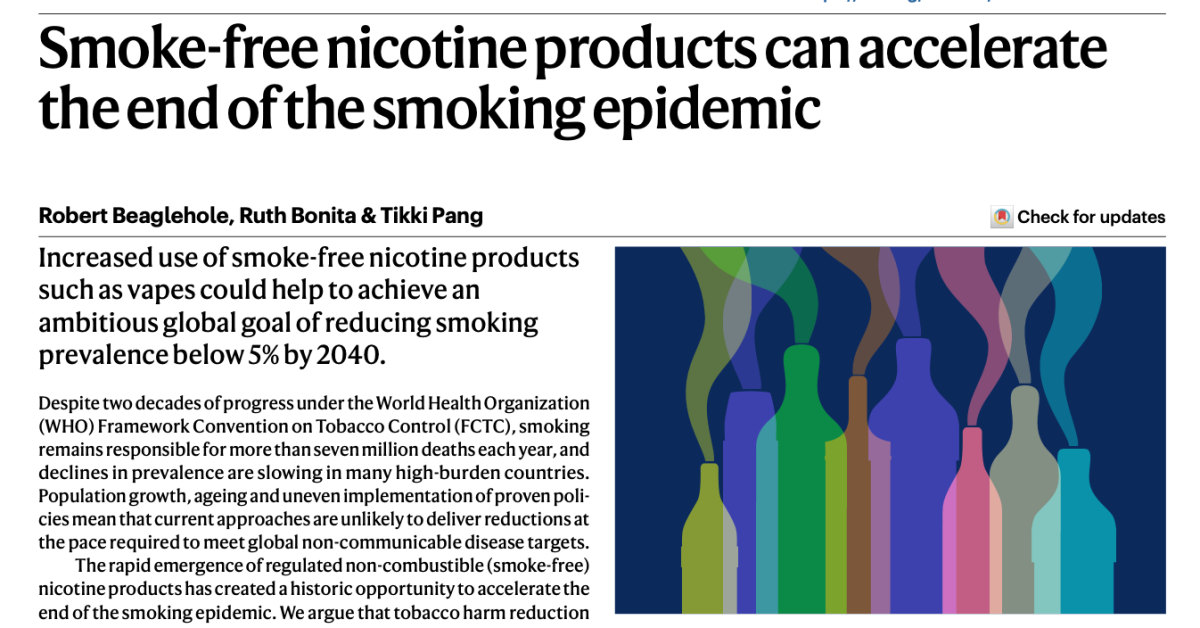
In a Comment article titled “Smoke-free nicotine products can accelerate the end of the smoking epidemic,” published online in late April 2026 in Nature Health, a new Nature Portfolio journal covering public, global and population health, Robert Beaglehole, Ruth Bonita and Tikki Pang proposed a global “smoke-free 2040” target, defined as reducing adult daily smoking prevalence to below 5% by 2040. The article was published ahead of World No Tobacco Day on May 31.
Beaglehole and Bonita are affiliated with the University of Auckland in New Zealand. Pang, a former World Health Organization official who served as director for research policy and cooperation from 1999 to 2012, is affiliated with the Center for Healthcare Policy and Reform Studies, or CHAPTERS, in Jakarta.
The authors said smoking remains responsible for more than 7 million deaths each year, despite two decades of progress under the WHO Framework Convention on Tobacco Control. They argued that existing tobacco-control measures, including taxation, advertising restrictions, smoke-free public spaces and cessation support, remain necessary but are unlikely on their own to reduce smoking fast enough in many high-burden countries.
In the article, “smoke-free nicotine products” refers to nicotine products that do not generate smoke through combustion, including vapes, nicotine pouches, oral snus, heated tobacco products and nicotine-replacement therapies. The concept focuses less on whether a product contains tobacco than on how it differs from combustible cigarettes in use and in the source of risk.
Focus on Combustion, Not Nicotine Alone
The article’s central argument is that public health policy should focus on eliminating combustible tobacco use rather than nicotine use itself.
“Decades of evidence demonstrate that it is exposure to smoke from combustion — not nicotine — that drives tobacco-related disease,” the authors wrote.
On that basis, they argued that smoke-free nicotine products should not be regulated in the same way as cigarettes.
The authors did not describe such products as risk-free. Instead, they said regulation should reflect a “continuum of risk” across nicotine products. Combustible tobacco should face the strictest restrictions and highest excise taxes, while smoke-free alternatives should be regulated for product safety, youth protection, environmental impact and marketing practices without undermining their potential to displace smoking, they said.
The framework links any wider role for smoke-free nicotine products to product-safety rules, youth-access controls and evidence that they can help adult smokers move away from cigarettes.
Harm Reduction as an Underused Strategy
The authors said tobacco harm reduction remains underdeveloped in global tobacco-control policy, even though harm reduction is recognized in Article 1(d) of the FCTC as part of comprehensive tobacco control.
In practice, they said, harm reduction is often treated as peripheral to tobacco control or as conflicting with it. They argued that it should instead be considered a complementary strategy, particularly for adult smokers who have not quit through conventional measures.
The article cited several national examples. In Sweden, widespread use of snus has been associated with low smoking rates and a lower tobacco-related disease burden. In Japan, the introduction of heated tobacco products in 2016 was followed by a sharp decline in cigarette sales. In New Zealand, smoking prevalence declined gradually for decades under FCTC-aligned measures, then fell more quickly after broader access to regulated vaping products expanded from 2018.
The authors also said the steepest smoking declines in New Zealand occurred among Māori and other disadvantaged groups, suggesting that harm reduction may help reduce health inequalities. The article presented these country cases as evidence that smoke-free alternatives can contribute to population-level smoking declines, while maintaining that established tobacco-control measures remain important.
A 2040 Smoking Target
The authors proposed reducing adult daily smoking prevalence to below 5% globally by 2040.
The authors said that in 2024, about 16% of the global population aged 15 and above smoked tobacco; among them, the smoking prevalence was about 28% for men, significantly higher than about 5% for women. If current trends continue, global smoking prevalence is projected to fall to around 10% by 2040, they said. Reaching below 5% would require a substantial acceleration in the current annual rate of decline.
The proposed target shifts the discussion from general tobacco-use reduction to whether daily smoking can be brought below low single-digit levels through a combination of established tobacco-control measures and regulated smoke-free alternatives.
The authors said such a strategy would require more coherent regulation. They argued that in many markets, cigarettes remain widely available while less harmful alternatives face heavier restrictions. This, they said, risks protecting the most dangerous products while limiting access to substitutes for adult smokers.
Youth Use, Dual Use and Uncertainty
The article also addressed concerns about youth uptake, long-term health uncertainty and dual use of cigarettes with smoke-free products.
The authors said youth use requires careful attention but should be assessed in proportion to the documented harms of continued smoking. They said some studies linking youth vaping to later smoking may be affected by shared risk factors, including sensation-seeking behaviour and social context. At the population level, they said youth smoking has continued to decline in countries where vaping has become more common.
On long-term health effects, the authors said continued surveillance and independent research are needed, particularly for newer products such as nicotine pouches. However, they argued that the absence of combustion makes these products intrinsically less hazardous than cigarettes.
On dual use, they said users are not a single group. Some may make only partial or temporary changes, while others may reduce cigarette consumption before quitting smoking entirely. The article cited biomarker studies showing lower toxicant exposure among dual users than among exclusive smokers.
Implications for Low- and Middle-Income Countries
The authors said low- and middle-income countries face distinct challenges, including high tobacco affordability, limited cessation services and uneven regulatory capacity.
They said risk-proportionate taxation — higher excise taxes on combustible tobacco and lower taxes on smoke-free alternatives — could encourage switching while maintaining government revenue and reducing long-term healthcare costs. They also said large countries with state-controlled tobacco industries, including China and Indonesia, face particular challenges that would require high-level government leadership.
The article said WHO could play a catalytic role in legitimizing harm reduction as part of comprehensive tobacco control in these settings.
Broader Debate Ahead of World No Tobacco Day
The article was published as debate over nicotine regulation intensified ahead of World No Tobacco Day.
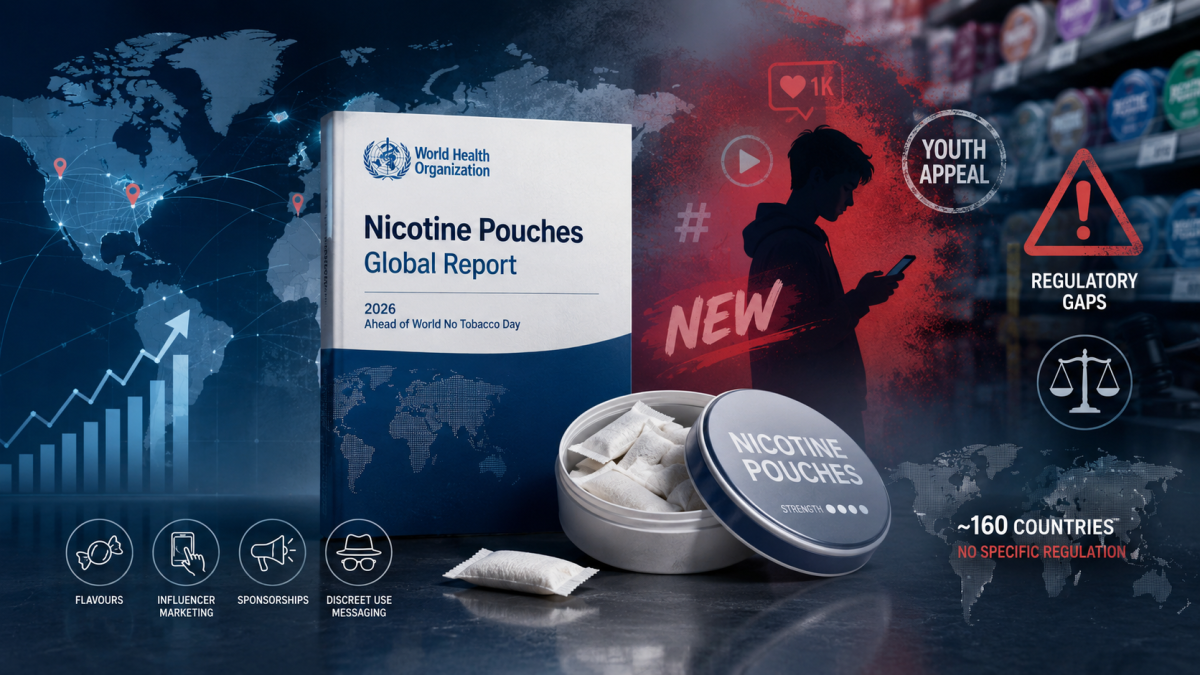
On May 15, WHO released its first global report on nicotine pouches, warning of rapid market growth, youth-oriented marketing and weak regulation. WHO said global retail sales of nicotine pouches exceeded 23 billion units in 2024, while around 160 countries had no specific rules for the category.
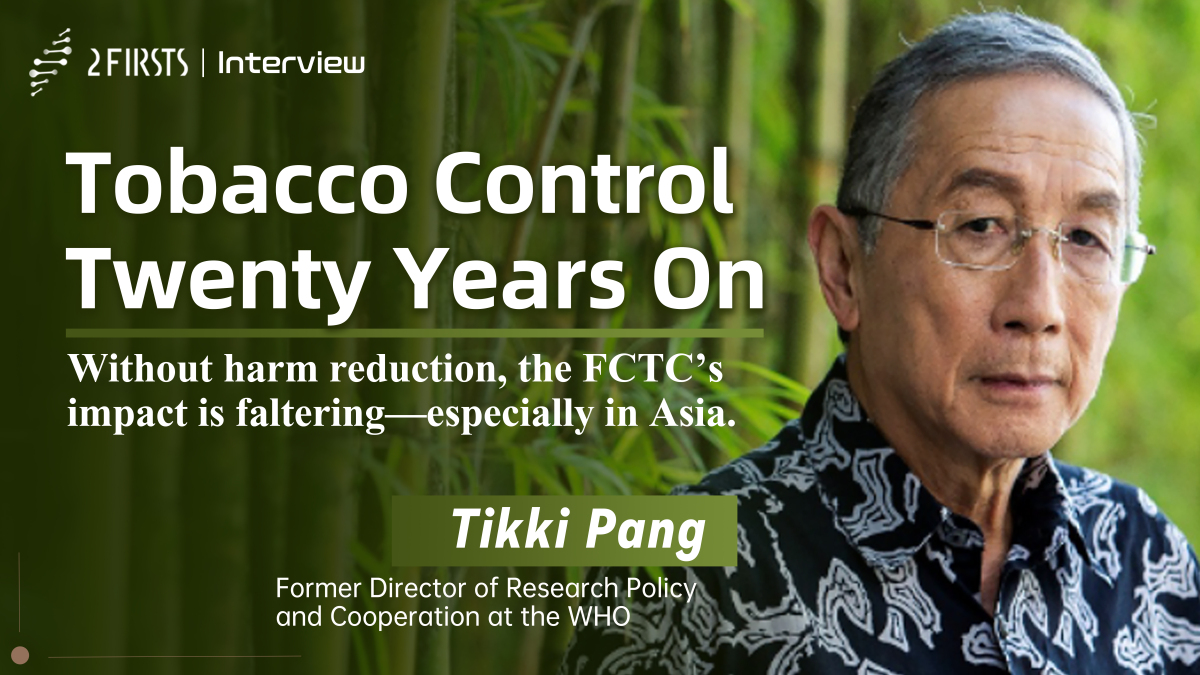
Pang made similar comments in an Aug 2025, interview with 2Firsts. In that interview, he said the FCTC had achieved early successes through taxation, advertising bans and age restrictions, but had not included tobacco harm reduction as a smoking-cessation strategy. He also said Asia, home to 70% of the world’s smokers, faces political, economic and regulatory barriers to tobacco harm reduction.
The discussion reflects a continuing divide in global nicotine policy over how governments should balance youth protection, nicotine addiction risks, adult smoker switching and the comparative harms of combustible and non-combustible products.
2Firsts will continue to follow developments in global tobacco control, nicotine science and tobacco harm reduction policy.
( Cover image from a screenshot of the Nature Health article.)
Disclaimer
This article is provided solely for professional research, industry discussion, and informational purposes. Any references to brands, companies, products, technologies, or policies are made for factual reporting and analytical purposes only, and do not constitute endorsement, recommendation, promotion, or advertising by 2Firsts.
Nicotine-containing products, including but not limited to cigarettes, e-cigarettes, heated tobacco products, and nicotine pouches, carry significant health risks. Readers are responsible for complying with all applicable laws and regulations in their respective jurisdictions, including age restrictions and access limitations.
The information contained in this article should not be regarded as investment, legal, medical, regulatory, or commercial advice. While 2Firsts strives to ensure the accuracy and reliability of its content, it does not assume liability for any direct or indirect loss arising from errors, omissions, inaccuracies, or reliance on the information contained herein.
This article is not intended for individuals below the legal age for accessing tobacco or nicotine-related information in their jurisdiction.
Copyright Notice
This article is either original content produced by 2Firsts or content reproduced, translated, summarized, or adapted from third-party sources with attribution where applicable. The intellectual property rights of the original content remain with 2Firsts or the respective original rights holders.
No individual or organization may copy, reproduce, distribute, republish, modify, translate, or otherwise use this content without prior authorization. Any unauthorized use may result in legal action.
For copyright-related inquiries, corrections, or removal requests, please contact: info@2firsts.com.
AI-Assisted Translation and Editing Notice
Portions of this article may have been translated, edited, or reviewed with the assistance of artificial intelligence tools to improve efficiency and readability. Due to the limitations of AI-assisted translation and editing, discrepancies, omissions, or inaccuracies may exist when compared with the original source.
Where applicable, readers are advised to refer to the original source for the most complete and accurate information. If you identify any errors or believe that any content infringes upon your rights, please contact us at info@2firsts.com, and we will review and address the matter promptly.



