Philippine Government Passes Comprehensive Vaping Regulation Law

Aug.30.2022
Philippine Government Passes Comprehensive Vaping Regulation Law
Joyetech Philippines welcomes the regulation of nicotine and non-nicotine vape products in the Philippines.

The Philippine branch of Yooz, a vaping company, has expressed great enthusiasm regarding the passing of the Evaporated Nicotine and Non-Nicotine Products Regulation Act or Republic Act in the country. The regulation, which will officially take effect on July 25, 2022, is the first comprehensive law in the Philippines that regulates the importation, manufacturing, sales, packaging, distribution, use, and communication of vapor and heated tobacco products.


According to Mr. Wu, the General Manager of Yooz, with this significant legislation, the electronic cigarette industry will be subjected to appropriate regulation that will benefit adult smokers who are hoping to switch to better alternatives, while keeping the products out of the hands of underage users.


According to a new law, the Department of Trade and Industry (DTI) has been given the authority to regulate the sale of new tobacco products such as vaporized nicotine and non-nicotine products, as well as their devices, both online and in physical stores.


As a responsible member of the electronic cigarette industry, Yooz is committed to working closely with regulatory authorities to comply with new implementation rules and regulations. The DTI is expected to develop these rules and regulations within the next few weeks.


Statement: 1. The content of this article is compiled from third-party information and is only for industry communication and learning. 2. This article does not represent the views of 2FIRSTS, and 2FIRSTS cannot confirm the authenticity and accuracy of the article content. The compilation of this article is only used for industry communication research. 3. Due to limited compilation level, the compiled article may not fully express the same meaning as the original text. Please refer to the original text for accuracy. 4. Regarding any statements and positions related to domestic, Hong Kong, Macao, Taiwan, and foreign affairs, 2FIRSTS fully agrees with the Chinese government. 5. Copyright of the compiled information belongs to the original media and authors. If there is any infringement, please contact us to delete it.


Disclaimer

This article is provided solely for professional research, industry discussion, and informational purposes. Any references to brands, companies, products, technologies, or policies are made for factual reporting and analytical purposes only, and do not constitute endorsement, recommendation, promotion, or advertising by 2Firsts.

Nicotine-containing products, including but not limited to cigarettes, e-cigarettes, heated tobacco products, and nicotine pouches, carry significant health risks. Readers are responsible for complying with all applicable laws and regulations in their respective jurisdictions, including age restrictions and access limitations.

The information contained in this article should not be regarded as investment, legal, medical, regulatory, or commercial advice. While 2Firsts strives to ensure the accuracy and reliability of its content, it does not assume liability for any direct or indirect loss arising from errors, omissions, inaccuracies, or reliance on the information contained herein.

This article is not intended for individuals below the legal age for accessing tobacco or nicotine-related information in their jurisdiction.


Copyright Notice

This article is either original content produced by 2Firsts or content reproduced, translated, summarized, or adapted from third-party sources with attribution where applicable. The intellectual property rights of the original content remain with 2Firsts or the respective original rights holders.

No individual or organization may copy, reproduce, distribute, republish, modify, translate, or otherwise use this content without prior authorization. Any unauthorized use may result in legal action.

For copyright-related inquiries, corrections, or removal requests, please contact: info@2firsts.com.


AI-Assisted Translation and Editing Notice

Portions of this article may have been translated, edited, or reviewed with the assistance of artificial intelligence tools to improve efficiency and readability. Due to the limitations of AI-assisted translation and editing, discrepancies, omissions, or inaccuracies may exist when compared with the original source.

Where applicable, readers are advised to refer to the original source for the most complete and accurate information. If you identify any errors or believe that any content infringes upon your rights, please contact us at info@2firsts.com, and we will review and address the matter promptly.

FDA Unifies Tobacco Registration and Product Listing Form Across Product Categories
The U.S. FDA has consolidated two tobacco establishment registration and product listing forms into a redesigned Form FDA 3741 covering all regulated product categories, including e-cigarettes, heated tobacco products and nicotine pouches. The current requirements remain limited to domestic establishments. Separately, the FDA has proposed extending registration and product listing requirements to foreign manufacturers, signaling greater regulatory attention to manufacturing entities and product-level information across the tobacco and nicotine supply chain.
FDA
Sep.30
Special Report | Vape bans and tougher rules: the South Caucasus takes different paths
Azerbaijan's sweeping e-cigarette ban has raised concerns over enforcement errors and the emergence of illicit sales, while neighboring Armenia is tightening technical rules and preparing higher excise taxes. Georgia, meanwhile, has resisted calls for broader vape restrictions and introduced preferential taxes for some domestically produced cigarettes. The divergent approaches across the South Caucasus highlight a regional policy dilemma: how to curb nicotine use and protect public health without encouraging black markets or creating unintended economic consequences for businesses and consumers.
Nov.03
Kelly White Bets on Female Consumers as Nicotine Pouch Competition Intensifies | 2Firsts Interview
Swedish nicotine pouch brand Kelly White is building its strategy around adult female consumers. Founder and CEO Sophia Wilsby told 2Firsts that women accounted for around 70% of the brand’s repeat customers on HAYPP in Sweden in 2025. The interview explores female consumer segmentation, product and design differentiation, gender stereotypes, packaging regulation, and how independent brands can compete with global players such as ZYN and VELO while considering funding, partnerships and future ownership options.
Business
Sep.24
EU TPD Revision May Slip to 2027: Parliament Backs Wider Nicotine Rules by 447 Votes as Commission Impact Assessment Reportedly Receives Negative Opinion
On Nov 12, 2026, the European Parliament adopted a resolution on implementing Europe’s Beating Cancer Plan by 447 votes to 66, with 91 abstentions, urging the European Commission to speed up revisions to the Tobacco Products Directive (TPD) and Tobacco Advertising Directive (TAD). Parliament called for broader regulation of e-cigarettes, heated tobacco, nicotine pouches and other emerging nicotine products, proposing measures on packaging, health warnings, flavors, ingredient reporting, online age verification, digital marketing and premarket health impact assessments. EUNews and others reported that the Commission’s Regulatory Scrutiny Board (RSB) issued a negative opinion on the revisions’ impact assessment on Nov 9. The Commission had scheduled the initiative for December 2026, but the reported setback could push the legislative proposal into 2027. No revised official timetable has been announced, and Parliament’s resolution does not amend existing EU law.
Regulations
Nov.19
Pennsylvania Lists 163 Vape Products Eligible for Sale, Including Vuse and JUUL; Previously Pending Chinese Brands Such as OXBAR Remain Absent, While Unlisted Products Including Geek Bar Face Enforcement From October 19
Pennsylvania begins enforcing its electronic nicotine delivery system (ENDS) directory restrictions on October 19, 2026. The October 18 directory contained 163 product records from seven manufacturers, including Vuse, JUUL, NJOY, Logic and Naked 100. Geek Bar, RAZ and Lost Mary were absent. BAT, Altria, Japan Tobacco and JUUL collectively accounted for 112 records, or 68.7%, while Imperial Brands' blu had no listings. The directory included 15 disposable vape records, 40 bottled e-liquids and 10 products labeled 0mg, but no open-system refillable devices. Twenty-two manufacturer certifications remained under review. Four Logic models corresponding to Smoore's pending records were listed under the brand owner, while LYCO, OXBAR and Boulder/Rock had no approved directory entries.
Regulations
Oct.19
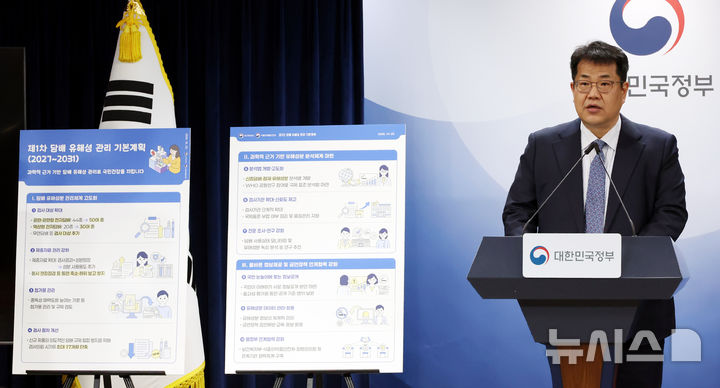
South Korea's Tobacco Plan Excludes 6-Methyl Nicotine as Customs Tightens Import Controls and Analog Liquid Imports Fall 83%
South Korea's government unveiled its first Tobacco Harm Management Basic Plan for 2027–2031 on October 29, 2026, proposing broader testing of vaping and heated tobacco products while excluding nicotine analogs such as 6-methyl nicotine. Synthetic nicotine came under tobacco regulation on April 24, and a June investigation found 6-methyl nicotine in 12 liquid inhalation products marketed as nicotine-free. Customs data released in September showed that imports of nicotine analog solutions fell 83.3%, from 12 metric tons in January–April to 2 metric tons in May–August. By September 20, imports had reached approximately 15 metric tons for the year, with 99.99% originating from China. Customs authorities have tightened pre-clearance testing and supply-chain documentation requirements, while the MFDS expects to complete its assessment of nicotine analog hazards by the end of 2026.
Regulations
Nov.04