

Key Points:
- PMI framed its smoke-free transition as a structural, irreversible shift, emphasizing that smokers rarely return to cigarettes once they adopt smoke-free alternatives.
- The company highlighted its three-platform strategy—IQOS, ZYN, and vapor—as the most effective way to replace cigarettes across all usage occasions.
- ZYN remains a core U.S. growth engine, with brand equity surging after a one-off USD 100 million activation and the brand capturing over half of category growth despite premium pricing.
- Globally, IQOS continues its eleventh consecutive year of expansion, with Japan nearing a 50/50 split between combustibles and smoke-free products and regulatory shifts seen as short-term noise, not structural risk.
- PMI strengthened its organizational model with a U.S.–International dual-engine structure, preparing for IQOS ILUMA’s future U.S. authorization and reinforcing long-term smoke-free ambitions.
|“We issued a press release reaffirming our guidance from Q3.”
2Firsts, December 3, 2025, according to Seeking Alpha,When Philip Morris International CEO Jacek Olczak walked on stage at the Morgan Stanley Global Consumer & Retail Conference on the morning of December 2, 2025, the timing already told a story. Only a few hours earlier, PMI had issued a short press release reaffirming its third-quarter guidance—a signal that the company wanted the financial backdrop settled before delivering a more important message.
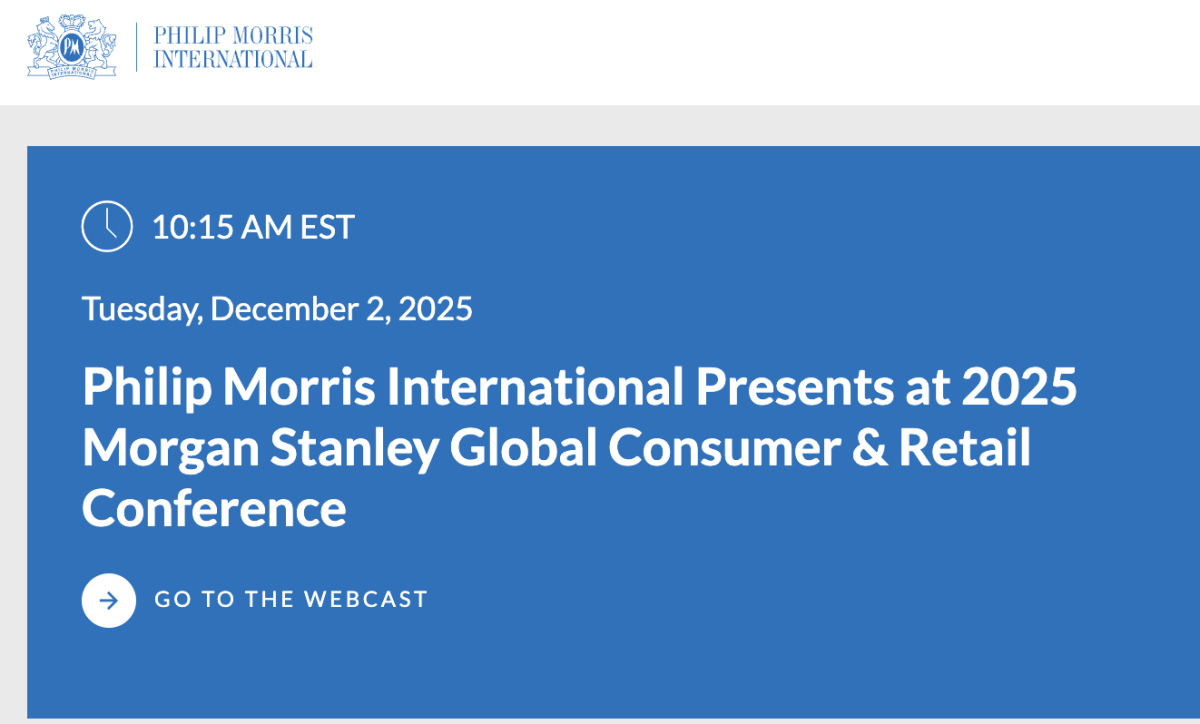
Sitting across from Morgan Stanley analyst Eric Serotta, Olczak was not there to talk about quarterly fluctuations. He was there to articulate something much broader: how PMI sees the post-combustion era unfolding, how its multi-category architecture is designed to pull smokers away from cigarettes, and why the company believes global regulatory momentum is shifting in its favor. What followed was not a typical investor Q&A, but a carefully structured narrative of PMI’s smoke-free transformation—told at a moment when the industry, regulators, and the capital markets are all recalibrating their expectations of nicotine.
A stage set for the bigger story
|“Yes, we operate in 100-plus markets, but importantly, in 30-plus markets we already have more than one smoke-free proposition.”
Olczak opened with a brief reference to the morning’s guidance reaffirmation, treating it almost as a housekeeping measure—necessary, but hardly central. What he wanted to talk about was the strategic core of PMI’s business: the rapid scaling of smoke-free products across more than 100 markets, and the deeper logic behind running three different platforms at once.
PMI’s smoke-free category—now accounting for over 40% of its sales—has been expanding faster than both the company and the industry predicted a decade ago. Across many markets, cigarette declines accelerate once smoke-free alternatives reach meaningful scale, and migration back to combustible products is, in Olczak’s words, “very rare.” The company expects smoke-free revenue to continue growing in the 10%–12% range, ahead of broader industry trends.
But numbers were not the heart of the message. Instead, Olczak used the stage to reframe what many investors still see as an unsettled competitive landscape. He argued that the future of smoke-free nicotine is not a battle between platforms, but a system built around them.
Three platforms, one objective
|“Our objective is to equip the smoker with all three platforms. This is the best way to keep them away from smoking.”
One of the most striking elements of Olczak’s remarks was his insistence that the debate over “which platform will win”—heated tobacco, nicotine pouches, or vapor—is fundamentally misplaced. The correct framing, he argued, is that all three will matter, because all three serve different needs for adult smokers.
Heat-not-burn products like IQOS are engineered to replicate the ritual of smoking: the hand-to-mouth habit, the pacing, the sense of continuity. Nicotine pouches such as ZYN are designed for discretion and convenience, offering a different nicotine release profile and a use-case for the moments when devices or smoke-like behaviors are impractical or socially restricted. Vapor products address the “on-demand” dimension of smoking—quick, adjustable nicotine delivery that suits certain environments and routines.
From the smoker’s point of view, Olczak said, none of these platforms replaces the other. Together, they replace the cigarette.
“Our objective,” he stressed, “is to equip the smoker with all three platforms. This is the best way to keep them away from smoking.”
This framing turns the conversation from platform competition to platform orchestration. PMI is building a multi-category ecosystem—not a winner-take-all race, but a portfolio designed to cover every consumption moment across the day. It is, in effect, the nicotine equivalent of a diversified consumer-tech stack, where each product anchors a specific behavioral use-case.
And the company believes the evidence is on its side: in markets where all three platforms coexist at scale, cigarette declines consistently accelerate.
ZYN: a brand regaining its voice
|“Brand equity parameters of ZYN shot up by double-digits in a very short time.”
If IQOS represents the ritual dimension of smoking, ZYN represents the cultural shift that is reshaping the U.S. nicotine market. Olczak reserved some of his most animated commentary for the brand. After months of chronic shortages, ZYN spent much of 2025 in what he called a “silent period”—a phase where PMI could not meaningfully market the product because it could not reliably supply it.
That silence broke in the third quarter. PMI injected $100 million into commercial activation, not as a new baseline, but as a corrective burst—an attempt to restore ZYN’s presence after a year of constrained visibility. Olczak was explicit: this was not a run rate, not something investors should expect to see again. It was a one-time recalibration.
The impact was immediate. ZYN’s brand equity metrics—numbers that typically drift slowly—jumped by double digits in a matter of weeks, a reaction Olczak described as rare in his career. It suggested that the brand’s momentum had not dissipated during the shortage; it had simply been waiting for the company to speak again.
ZYN’s pricing strength was another point of emphasis. At one point, the brand carried a 60%–65% price premium per pouch over its closest competitor. While that premium has moderated to the 30% range, ZYN is still capturing more than half of total category growth, even as the overall U.S. modern oral market grows roughly 30%. That combination—premium pricing plus disproportionate share of incremental demand—is unusual in consumer packaged goods, and PMI positioned it as a sign of structural brand leadership rather than temporary hype.
But the deeper message was regulatory. For the first time in years, Olczak argued, federal health authorities in the United States are showing more consistency on nicotine risk communication. He contrasted the current environment with the confusion of the EVALI era, suggesting that agencies such as the Department of Health and Human Services, the FDA, and the Center for Tobacco Products are now more aligned in emphasizing that nicotine—while addictive—is not the chemical driver of smoking-related disease.
“It is pretty clear,” he said, “that it’s not the nicotine which causes the problems caused by smoking.”
In a market where regulatory signals have historically swung widely, this shift in tone matters. For ZYN, it forms a tailwind: a more predictable policy environment for a category that has often been lumped into broader anti-nicotine rhetoric.
IQOS: navigating taxes, bans, and competition—without losing altitude
|“What looked like a slowdown in Japan was, in hindsight, just a blip on the graph.”
While ZYN dominated the U.S. discussion, IQOS remained the centerpiece of PMI’s international narrative. Here, Olczak adopted a broader historical perspective. IQOS, he reminded the audience, has now logged 11 consecutive years of growth. Temporary plateaus—such as the one in Japan several years ago—were often misinterpreted as structural limits, but in retrospect look like “blips” on a long upward trajectory.
Japan, the world’s most sophisticated heated-tobacco market, is approaching a symbolic threshold: a 50/50 split between combustible cigarettes and smoke-free products, measured in volume. Beginning in 2026, Japan will implement staged tax equalization, narrowing the gap between combustible and heated-tobacco tax rates. Depending on the brand, this will translate into approximate consumer-level increases of:
- 40 yen for TEREA
- 60 yen for SENTIA
- 100 yen for competing products
Olczak acknowledged that this would create headwinds in 2026 but argued that the category’s structural momentum—and IQOS’s share position—remains intact. Even amid aggressive competition, IQOS continues to fully participate in category growth.
Europe offers a parallel story. Flavor bans have already taken effect in most EU markets, with Poland being one of the last remaining. In Italy, PMI saw a slowdown for a couple of quarters after the ban but has since returned to growth. Germany experienced tax-driven price increases but maintained market expansion. Each example served to reinforce Olczak’s central thesis: regulatory interventions may shift the quarterly curve but rarely alter the long-term slope.
Across markets, the behavioral trend is unmistakable: smokers migrate into smoke-free products and generally do not return to cigarettes unless forced by temporary disruptions.
Rewiring the company for a dual-engine future
|“We don’t really run the business by regions anymore.”
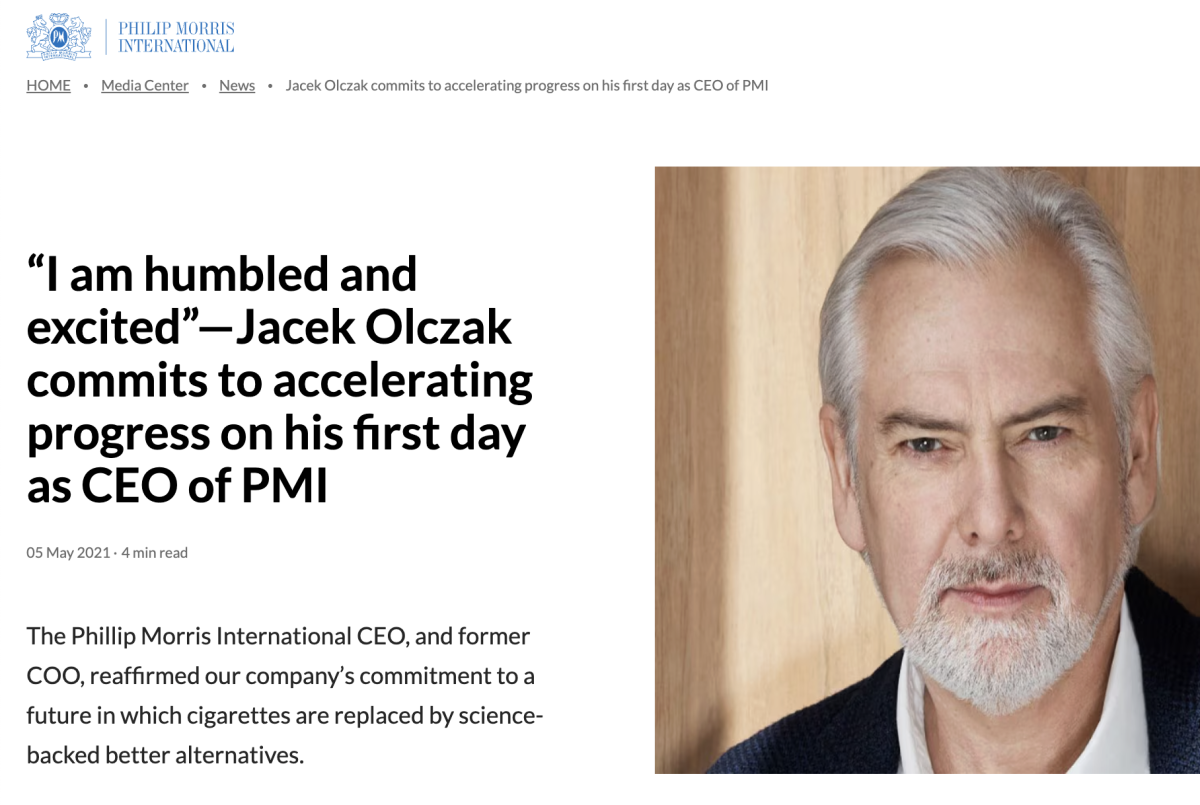
PMI’s organizational redesign—first announced in the third quarter—was another theme woven through the discussion. The company is restructuring its operating model into two business units: U.S. and International, supported by three reporting segments: International Smoke-Free, International Combustibles, and U.S.
Olczak described the change as a return to substance over form. PMI no longer manages its business through the familiar regional structure inherited from 2008. Instead, it increasingly organizes itself around strategic markets—Japan, Germany, Italy, and critically, the United States.
The shift also carries a forward-looking implication: the company is preparing for the eventual U.S. authorization of IQOS ILUMA. By separating the U.S. as a standalone engine, PMI can allocate resources, design commercialization models, and manage regulatory engagement with far greater precision. The message to investors was clear: the company is building the infrastructure for a far larger U.S. presence in smoke-free nicotine.
A capital structure built to support the long transition
|“For PMI, adding extra capacity is only a few hundred million dollars — not a disturbing factor.”
On capital allocation, Olczak’s tone was confident but measured. PMI expects to generate $11.5 billion in cash flow this year and is on track to return to its target 2x leverage in 2026 following the Swedish Match acquisition and PMI’s purchase of full U.S. IQOS rights.
Smoke-free expansion, he emphasized, is not capital-intensive. Adding capacity typically requires only “a few hundred million dollars,” modest relative to PMI’s cash-generation ability. This leaves room for continued investment in growth while preserving the company’s long-standing commitment to dividends. Once leverage normalizes, PMI will evaluate further shareholder return mechanisms with its board.
What Olczak wanted Wall Street to hear
|“Smoke-free is essentially a one-way street.”
Across the session, Olczak returned to three consistent themes that together form PMI’s smoke-free doctrine.
First, the migration from cigarettes to smoke-free products is not cyclical but structural—accumulative, sticky, and reinforced across markets. Smokers rarely return to cigarettes once they have switched, except when regulation temporarily distorts access.
Second, the future belongs to multi-category players. IQOS, ZYN, and vapor products each fill a distinct behavioral niche, and the combination—not any single platform—is what allows PMI to accelerate the decline of combustible tobacco.
Third, while regulation remains a powerful force in nicotine markets, it is increasingly becoming a manageable one. Whether through tax equalization, flavor restrictions, or PMTA pathways in the United States, PMI believes that regulatory risk today is better understood, more scientifically grounded, and less existential than in prior eras.
It was, in many ways, a message about inevitability. PMI sees the smoke-free transition not as an experiment but as a one-way street—an industrial shift with clear economic logic, consumer pull, and regulatory tailwinds.
In front of a room full of investors, Olczak’s goal was not simply to describe that future, but to make it sound orderly, predictable, and increasingly within PMI’s control.
Appendix: Speaker, Moderator and Event Profiles
Jacek Olczak — Chief Executive Officer, Philip Morris International (PMI)
Jacek Olczak has served as Chief Executive Officer of Philip Morris International since May 2021. He joined the company in 1993 and has held senior leadership roles across Europe and global functions, including Chief Financial Officer (2012–2018) and Chief Operating Officer (2018–2021). Olczak is widely regarded as the architect overseeing PMI’s accelerated transition toward smoke-free products, guiding the company’s expansion of IQOS, nicotine pouches, and vapor technologies across more than 100 markets worldwide.
Eric Serotta — Equity Research Analyst, Morgan Stanley
Eric Serotta is a senior Equity Research Analyst at Morgan Stanley, specializing in the consumer staples sector, including beverages, tobacco, and household products. His research is closely followed by institutional investors, and he regularly hosts leadership from global consumer companies at major industry and investor conferences. At the 2025 Morgan Stanley Global Consumer & Retail Conference, Serotta moderated the fireside chat with PMI’s CEO, guiding the discussion toward regulatory trends, category dynamics, financial performance, and the company’s smoke-free strategy.
Morgan Stanley Global Consumer & Retail Conference
The Morgan Stanley Global Consumer & Retail Conference is an annual flagship investor event hosted in New York, bringing together senior executives from leading global companies in consumer goods, retail, and related industries. The conference serves as a key platform for public companies to communicate strategic priorities, market outlook, and category trends directly to institutional investors and analysts. PMI’s December 2, 2025 session with CEO Jacek Olczak was broadcast via live webcast and made publicly available for later replay.
Disclaimer
This article is provided solely for professional research, industry discussion, and informational purposes. Any references to brands, companies, products, technologies, or policies are made for factual reporting and analytical purposes only, and do not constitute endorsement, recommendation, promotion, or advertising by 2Firsts.
Nicotine-containing products, including but not limited to cigarettes, e-cigarettes, heated tobacco products, and nicotine pouches, carry significant health risks. Readers are responsible for complying with all applicable laws and regulations in their respective jurisdictions, including age restrictions and access limitations.
The information contained in this article should not be regarded as investment, legal, medical, regulatory, or commercial advice. While 2Firsts strives to ensure the accuracy and reliability of its content, it does not assume liability for any direct or indirect loss arising from errors, omissions, inaccuracies, or reliance on the information contained herein.
This article is not intended for individuals below the legal age for accessing tobacco or nicotine-related information in their jurisdiction.
Copyright Notice
This article is either original content produced by 2Firsts or content reproduced, translated, summarized, or adapted from third-party sources with attribution where applicable. The intellectual property rights of the original content remain with 2Firsts or the respective original rights holders.
No individual or organization may copy, reproduce, distribute, republish, modify, translate, or otherwise use this content without prior authorization. Any unauthorized use may result in legal action.
For copyright-related inquiries, corrections, or removal requests, please contact: info@2firsts.com.
AI-Assisted Translation and Editing Notice
Portions of this article may have been translated, edited, or reviewed with the assistance of artificial intelligence tools to improve efficiency and readability. Due to the limitations of AI-assisted translation and editing, discrepancies, omissions, or inaccuracies may exist when compared with the original source.
Where applicable, readers are advised to refer to the original source for the most complete and accurate information. If you identify any errors or believe that any content infringes upon your rights, please contact us at info@2firsts.com, and we will review and address the matter promptly.


