Key Points
- Small ENDS manufacturers warned that unclear manufacturing expectations create existential financial risk, arguing that “flexibility” in testing standards shifts disproportionate cost and rejection risk onto small businesses.
- FDA officials responded that while scientific justification allows some flexibility, manufacturing review must remain grounded in reproducibility and statutory requirements, limiting the agency’s ability to set rigid benchmarks.
- Industry participants questioned documentation requirements, describing some manufacturing controls as regulatory “noise,” while FDA countered that SOPs and related records are evaluated based on whether they enable consistent production rather than formal completeness.
- Manufacturers raised concerns over responsibility in open-system products and supply chain changes, while FDA maintained that applicants must demonstrate product performance under worst-case conditions and acknowledged that post-approval change guidance remains undeveloped.
- Questions about software updates and third-party testing highlighted emerging gaps in manufacturing oversight, with FDA noting the absence of CTP-specific guidance and reliance on broader FDA device review principles.
2Firsts, February 11, 2026
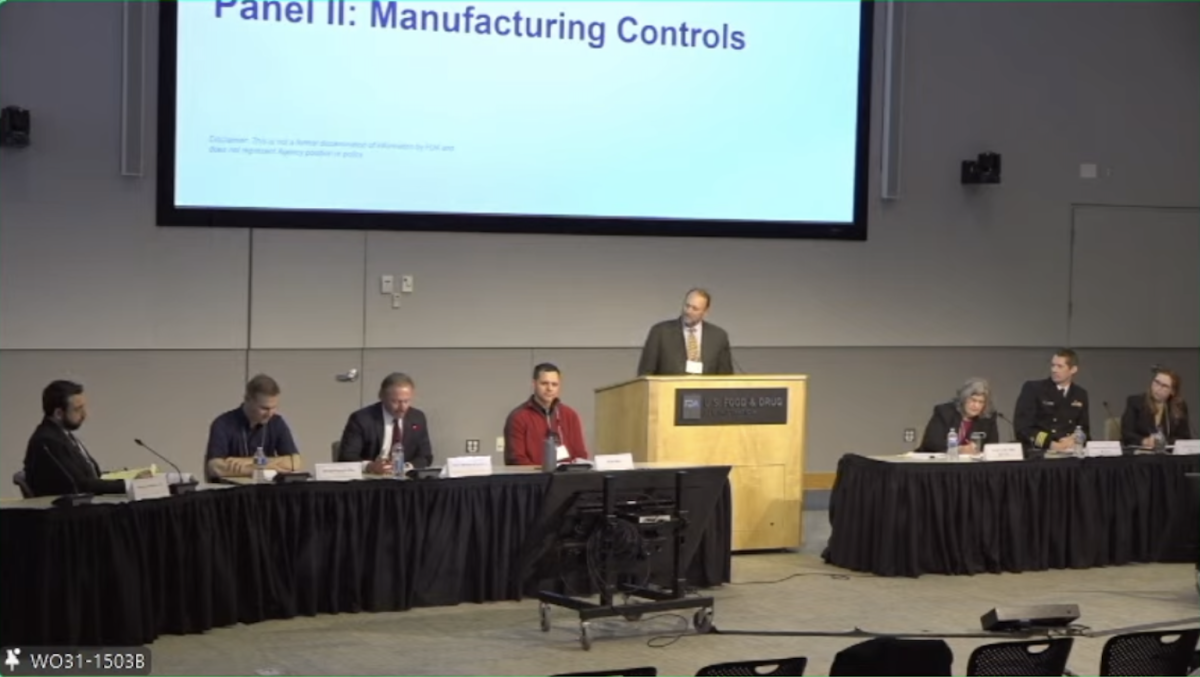
During the manufacturing controls panel of the U.S. Food and Drug Administration’s (FDA) PMTA roundtable held on February 10, 2026 (U.S. Eastern Time), small ENDS manufacturers warned that uncertainty in manufacturing expectations is translating into existential financial risk, while FDA officials emphasized that flexibility in review remains constrained by statutory and scientific boundaries.
The discussion formed the second panel of FDA’s roundtable on premarket tobacco product applications (PMTAs) for electronic nicotine delivery systems (ENDS), held in a hybrid format and limited to manufacturers with fewer than 350 employees.
Participants
The Manufacturing Controls session was moderated by Todd Cecil, PhD, of the FDA.
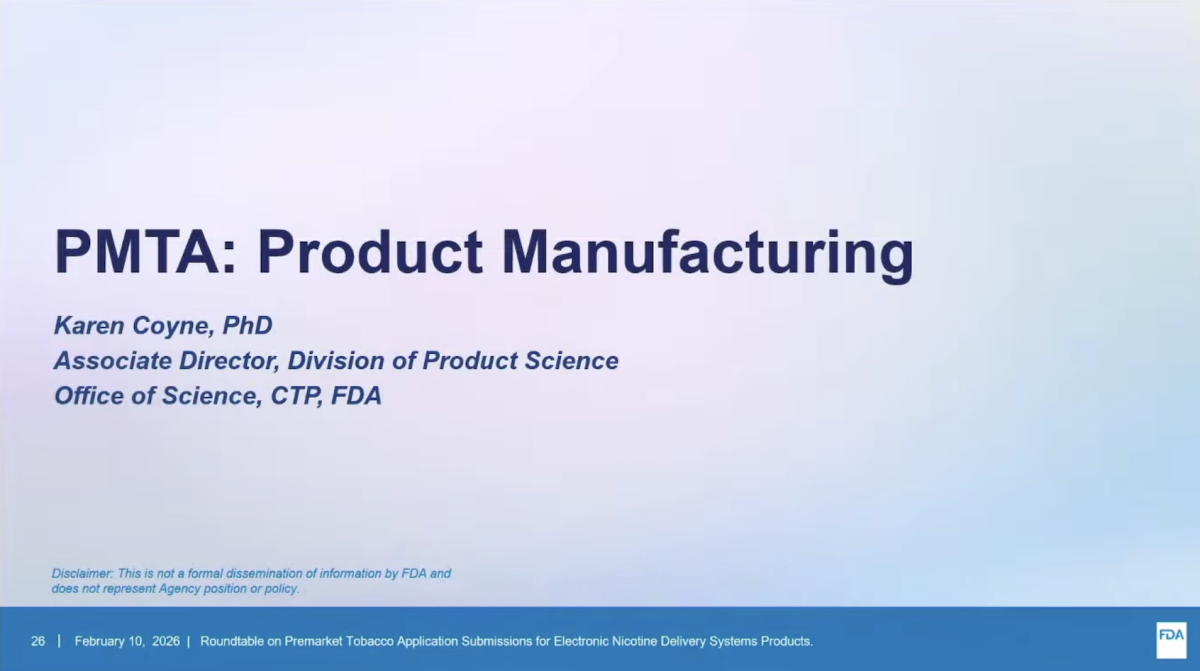
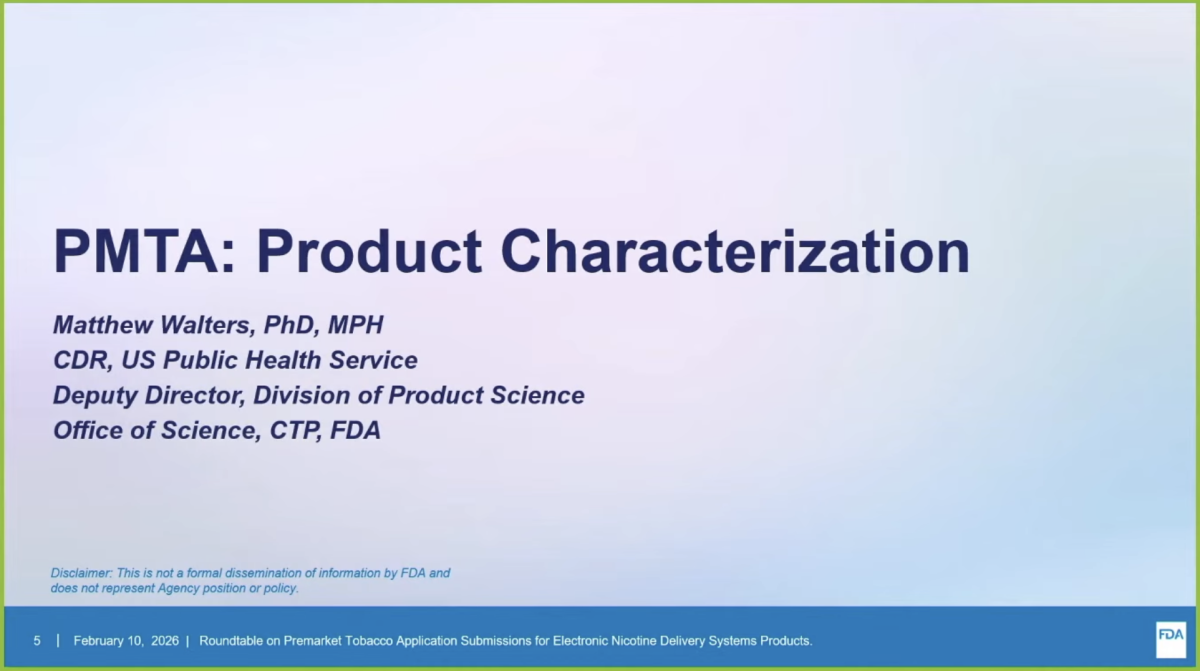
FDA panelists included Karen Coyne, PhD; Colleen Rogers, PhD; and CDR Matthew Walters, PhD, all from the Office of Science at FDA’s Center for Tobacco Products (CTP).
Industry participants included Bryan Burd of NEPA Wholesale Inc.; Charles (Chuck) Melander of Streamline Vape Co. LLC; and Steve Pryzbyla, Esq., of IKE Tech.

Manufacturers say flexibility creates fatal uncertainty
One of the most contentious exchanges arose when Chuck Melander questioned FDA’s reliance on “best practices” language in manufacturing guidance.
Melander pointed to examples where FDA guidance references testing three batches with seven replicates per batch, while also allowing applicants to justify alternative designs scientifically. For small manufacturers, he argued, that flexibility shifts risk entirely onto applicants.
Choosing a reduced testing model may conserve resources, but if FDA later finds the justification insufficient, the application could face refusal to accept (RTF) or a marketing denial order (MDO). Industry participants said a single rejection could erase investments exceeding $2 million.
Several speakers summarized the dilemma bluntly: “Unknown is death.”
Some industry representatives also framed the issue in moral terms, emphasizing that small ENDS companies do not sell combustible cigarettes or generate multibillion-dollar profits, but see their products as harm reduction tools for adult smokers—heightening the emotional stakes of regulatory uncertainty.
Requests for OSHA-style engagement meet capacity limits
Industry representatives urged FDA to consider a compliance model similar to the Occupational Safety and Health Administration (OSHA), allowing companies to invite regulators for unofficial visits to provide non-enforcement guidance.
FDA officials responded that such interactions are legally permissible but acknowledged that the agency’s review workload—driven by millions of PMTA submissions—has effectively halted such practices for years.
FDA rejects claims that documentation is mere “noise”
Some manufacturers characterized certain manufacturing documentation requirements as regulatory “noise.”
Todd Cecil rejected that characterization, explaining that FDA evaluates documentation such as standard operating procedures (SOPs) based on function rather than form. Reviewers assess whether a new employee could follow the documentation to produce a consistent product.
Missing critical steps constitute deficiencies, Cecil said, while missing entire manufacturing modules can result in refusal to accept an application.
Open systems and worst-case expectations
Industry participants questioned whether e-liquid manufacturers should bear responsibility for overheating caused by third-party hardware, and whether hardware manufacturers should be accountable for metals originating in liquids. Several urged FDA to consider a standardized reference device.
FDA officials declined to endorse that approach, reiterating that applicants must demonstrate product performance under a range of operating conditions, including worst-case scenarios, to support exposure and risk assessments.
Supply chain volatility complicates change control
Bryan Burd raised concerns over supply chain disruptions, asking whether replacing a supplier would require a new PMTA submission.
FDA officials acknowledged post-approval changes as a uniquely challenging issue for small businesses but said guidance in this area has not yet been prioritized.
Software updates highlight regulatory blind spots
Steve Pryzbyla raised questions about how software updates—common in technologically advanced ENDS devices—interact with PMTA stability requirements.
FDA officials acknowledged that CTP currently lacks product-specific guidance on software changes and said reviewers may look to general guidance from FDA’s Center for Devices and Radiological Health (CDRH) as a reference, underscoring an unresolved regulatory gap for software-driven products.
2Firsts will continue to follow the discussions and report further developments.
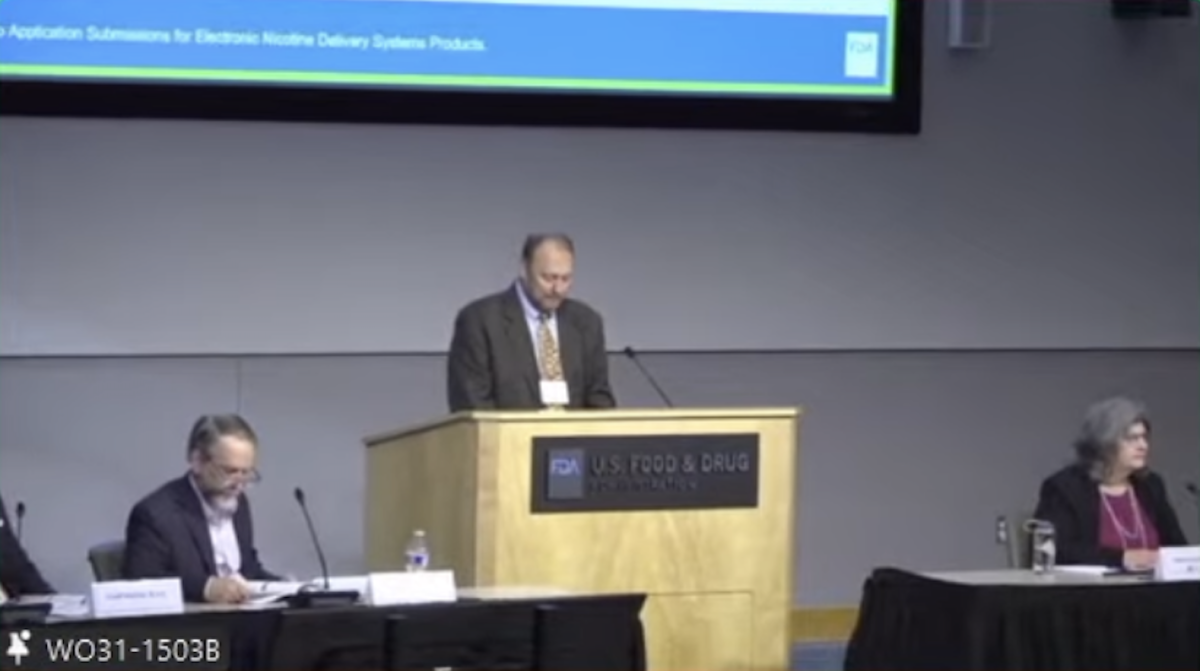
(The cover image is a screenshot from the FDA’s livestream of the PMTA roundtable.)

Click here to read the full coverage