Police Seize Over 4000 e-Cigarette Pods in Drug Raid

Regulations by 2FIRSTS.ai
Jun.20.2024
Police Seize Over 4000 e-Cigarette Pods in Drug Raid
New Taipei City police seized over 4000 e-cigarette pods in a drug raid based on a tip, leading to an arrest.

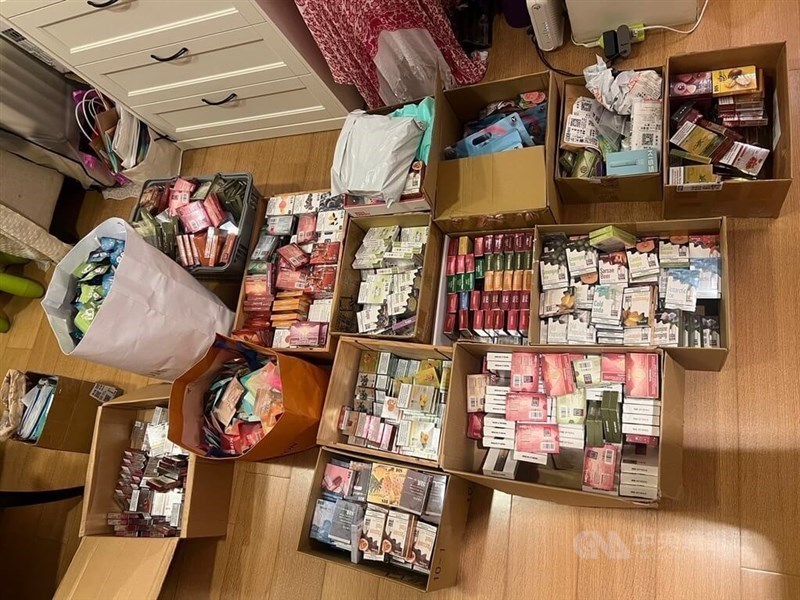
According to a report from Focustaiwan on June 20th, the police in New Taipei City, Taiwan seized over 4,000 e-cigarette replacement pods in a drug raid last week.


According to a press release from the agency, this drug bust was carried out based on an anonymous tip, which reported that a resident in Sanchong District had stockpiled a large number of e-cigarette pods at home. At 5 pm on June 13, the police raided the residence of a 24-year-old man surnamed Dong and seized thousands of replacement pods in various flavors.


According to the police, the man purchased these pods online and sold them on social media platforms, which was his main source of income. In a raid, authorities seized a total of 4,189 pods, estimated to have a market value of 1 million New Taiwan Dollars (approximately $30,868 USD).


In the testing, it was found that these pods contained "Methoxy Ma Huang Tang", a synthetic stimulant classified as a Class III drug in Taiwan, China.


Currently, the man has been arrested and transferred to the New Taipei District Prosecutors Office in Taiwan for investigation on suspicion of violating Taiwan's Harm Prevention Act.


The "Tobacco Hazards Prevention Act" in Taiwan, China prohibits the production, sale, import, supply, and advertising of "imitation tobacco products," including electronic nicotine and non-nicotine delivery systems such as e-cigarettes, pods, and vape pens.


We welcome news tips, article submissions, interview requests, or comments on this piece.

Please contact us at info@2firsts.com, or reach out to Alan Zhao, CEO of 2Firsts, on LinkedIn


Notice

1.  This article is intended solely for professional research purposes related to industry, technology, and policy. Any references to brands or products are made purely for objective description and do not constitute any form of endorsement, recommendation, or promotion by 2Firsts.

2.  The use of nicotine-containing products — including, but not limited to, cigarettes, e-cigarettes, nicotine pouchand heated tobacco products — carries significant health risks. Users are responsible for complying with all applicable laws and regulations in their respective jurisdictions.

3.  This article is not intended to serve as the basis for any investment decisions or financial advice. 2Firsts assumes no direct or indirect liability for any inaccuracies or errors in the content.

4.  Access to this article is strictly prohibited for individuals below the legal age in their jurisdiction.


Copyright


This article is either an original work created by 2Firsts or a reproduction from third-party sources with proper attribution. All copyrights and usage rights belong to 2Firsts or the original content provider. Unauthorized reproduction, distribution, or any other form of unauthorized use by any individual or organization is strictly prohibited. Violators will be held legally accountable.

For copyright-related inquiries, please contact: info@2firsts.com


AI Assistance Disclaimer


This article may have been enhanced using AI tools to improve translation and editorial efficiency. However, due to technical limitations, inaccuracies may occur. Readers are encouraged to refer to the cited sources for the most accurate information.

We welcome any corrections or feedback. Please contact us at: info@2firsts.com

South Korea Vape Strategies Diverge as BAT Reconsiders Exit and PMI Takes VEEV to About 14,000 Stores
BAT Rothmans says it previously considered exiting South Korea's vaping market because of competitive pressure from unregulated products, but is now reassessing conditions following changes to the country's nicotine regulatory framework. Vuse and other BAT vaping products remain available through existing distribution channels. The statement followed a South Korean media report that interpreted BAT's broader withdrawal from selected Vapour markets as a full exit from South Korea. Meanwhile, Philip Morris International launched VEEV inPRIME in the country in June and began expanding distribution to around 14,000 convenience stores and other retail channels in July. The contrasting moves highlight differing investment strategies as South Korea's regulated vaping market evolves.
Aug.14
2Firsts Data | China’s U.S. Vape Exports Have Yet to Regain Previous Growth Momentum in H1 2026, but Hardware Grew 15.2% and 6-Methyl Nicotine-Related Products Rose 234.7%
China’s vape exports to the U.S. reached approximately $1.58 billion in the first half of 2026, remaining broadly stable from a year earlier but still below previous growth momentum. 2Firsts’ analysis of China Customs data shows that the U.S. market has not simply returned to its previous trajectory after the enforcement shock and inventory-driven swings of 2025. Instead, export momentum is shifting across product categories. Vaping devices and atomization hardware increased 15.2% year over year, while 6-methyl nicotine-related and other nicotine substitute products surged 234.7%. Meanwhile, traditional nicotine-containing vaping products continued to face pressure.
Jul.22
Scottish Vape Display Rules Could Cost Businesses £61 Million, Affecting More Than 11,000 Retail Outlets
A Scottish government impact assessment estimates that proposed vape display and packaging rules could create up to £61 million ($82 million) in compliance costs for businesses, affecting more than 11,000 retail outlets. The estimated costs are mainly linked to inventory adjustments, retail storage changes and the resources required for businesses to understand and implement the new requirements. The measures form part of the UK’s broader efforts to tighten vape regulation, particularly around product displays, packaging and sales practices.
Aug.10
Product | SKE Launches FRESA PRO in the U.S., Introducing Fresh Lock Technology for E-Liquid Management in High-Capacity Vapes
Shenzhen SKE Technology has launched the FRESA PRO in the United States, a high-capacity rechargeable disposable vape featuring Fresh Lock electromagnetic valve supply control technology. The device combines a claimed capacity of up to 40,000 puffs, dual mesh coils, dual output modes and a transparent tank design. The launch reflects the high-capacity disposable vape segment’s shift from puff-count competition toward improved e-liquid management and device-level experience.
Aug.03
Dutch NVWA Seizes Record 277,000 Illegal Vapes; Video Shows “AL FAKHER” Cartons
The Dutch Food and Consumer Product Safety Authority, known as the NVWA, seized more than 277,000 illegal vapes near Rotterdam and nearly 150,000 boxes of nicotine pouches in Utrecht and Rotterdam, calling them the largest batches of such products it has found to date. Video footage released by the NVWA shows some cartons in the warehouse bearing the “AL FAKHER / الفاخر” name, though the agency did not identify brands.
Jul.10
WIRED Investigation: Chinese-Made Vapes Turn to 6-Methyl-Nicotine and Other Analogs, Challenging U.S. Regulation
U.S. technology and investigative publication WIRED has examined how nicotine analogs are emerging as a new challenge for the country’s vape regulatory framework. The article argues that after the U.S. expanded federal oversight of nicotine products in 2022, some manufacturers began using nicotine-like compounds such as 6-methyl-nicotine that may fall outside existing definitions. Researchers cited by WIRED said some nicotine analogs could be more potent than traditional nicotine, although human health impacts remain unclear. U.S. policymakers are considering broader definitions of nicotine to bring these compounds under federal oversight.
Jul.27