Public Health Experts Urge NSW Government to Tackle Industry Interests

Jan.30.2023
Public Health Experts Urge NSW Government to Tackle Industry Interests
Public health experts in New South Wales urge new government to prioritize health over industry interests on gambling, e-cigarettes, and junk food advertising.

Public health experts in New South Wales, Australia, are calling on the next state government to prioritize public health over industry interests by addressing issues related to gambling, e-cigarettes, and junk food advertising in order to protect the health of its citizens.


The Public Health Association of Australia's New South Wales branch has announced a new "public health vote" campaign ahead of the state elections in March. The campaign identifies five priority areas aimed at easing the pressure on the state's healthcare system by prioritizing keeping people healthy and out of hospital beds.


The President and Assoc of the PHAA branch in New South Wales stated that the industries of gambling, e-cigarettes, and unhealthy food and beverages continue to profit from harming the health of adults and children in the state. However, the incoming government can take targeted measures to prevent this harm.


Professor Kate McBride stated, "New South Wales is Australia's gambling capital, and it's ruining the lives of families. The next government should implement a universally applicable commitment with a limit on cashless card systems, an instant self-exclusion mechanism, and enforce a ban on incentives and advertisements.


Professor McBride also urges action on young people and e-cigarettes as well as preventable diseases. "In the past two years, the smoking rate among the 15-24 age group has more than doubled. We now need to take action by criminalizing the supply or sale of non-nicotine e-cigarettes to protect children and young people from the risks of smoking.


Disclaimer

This article is provided solely for professional research, industry discussion, and informational purposes. Any references to brands, companies, products, technologies, or policies are made for factual reporting and analytical purposes only, and do not constitute endorsement, recommendation, promotion, or advertising by 2Firsts.

Nicotine-containing products, including but not limited to cigarettes, e-cigarettes, heated tobacco products, and nicotine pouches, carry significant health risks. Readers are responsible for complying with all applicable laws and regulations in their respective jurisdictions, including age restrictions and access limitations.

The information contained in this article should not be regarded as investment, legal, medical, regulatory, or commercial advice. While 2Firsts strives to ensure the accuracy and reliability of its content, it does not assume liability for any direct or indirect loss arising from errors, omissions, inaccuracies, or reliance on the information contained herein.

This article is not intended for individuals below the legal age for accessing tobacco or nicotine-related information in their jurisdiction.


Copyright Notice

This article is either original content produced by 2Firsts or content reproduced, translated, summarized, or adapted from third-party sources with attribution where applicable. The intellectual property rights of the original content remain with 2Firsts or the respective original rights holders.

No individual or organization may copy, reproduce, distribute, republish, modify, translate, or otherwise use this content without prior authorization. Any unauthorized use may result in legal action.

For copyright-related inquiries, corrections, or removal requests, please contact: info@2firsts.com.


AI-Assisted Translation and Editing Notice

Portions of this article may have been translated, edited, or reviewed with the assistance of artificial intelligence tools to improve efficiency and readability. Due to the limitations of AI-assisted translation and editing, discrepancies, omissions, or inaccuracies may exist when compared with the original source.

Where applicable, readers are advised to refer to the original source for the most complete and accurate information. If you identify any errors or believe that any content infringes upon your rights, please contact us at info@2firsts.com, and we will review and address the matter promptly.


Retail Case Study | Wisconsin Vape Market One Year After New Regulations: Johnny Vapes Reports 80% Sales Decline as Consumers Shift Online and Across State Lines
According to WNCY on August 24, 2026, some independent vape retailers in Wisconsin say they have faced significant business pressure one year after new vape regulations took effect. Johnny Vapes, a retailer operating in northeast Wisconsin, said its store count fell from seven locations to four, sales declined by about 80%, and roughly 90% of its inventory was affected. Retailers said some consumers have shifted to online purchases or traveled to neighboring Michigan to buy vape products. The case highlights how local regulations can reshape retail operations, inventory management and consumer purchasing patterns.
Aug.28
Iowa Enforces Vape Registry Law as Retailers Warn Product Limits Could Increase Store Pressure
Iowa has begun enforcing its vape registry law, requiring vape products to be registered before they can be legally sold in the state. The move follows a decision by the U.S. Court of Appeals for the Eighth Circuit to lift an injunction that had blocked enforcement. Retailers have warned that tighter product availability rules could increase pressure on vape shops. One Iowa retailer said that if only a limited number of products remain available, many stores could face significant business challenges.
Aug.06
UK HMRC Urges Public to Report Suspicious Vape Shops in Crackdown on Tax Fraud, Money Laundering and Illicit Tobacco Sales
HM Revenue & Customs is urging members of the public to report vape shops, barber shops and other high-street businesses suspected of tax fraud, money laundering or other illegal activity, with informants not required to provide personal details. HMRC plans more than 30,000 interventions in 2026-27 targeting tax fraud, organised crime and illicit activity, including the sale of illegal vapes and tobacco. The push forms part of a broader UK effort to tackle organised crime on high streets, backed by a £30 million government enforcement programme.
Regulations
Aug.17 by 2Firsts Perspectives
SMOORE’s DOJO by VAPORESSO to Launch New Global Brand Identity on September 1
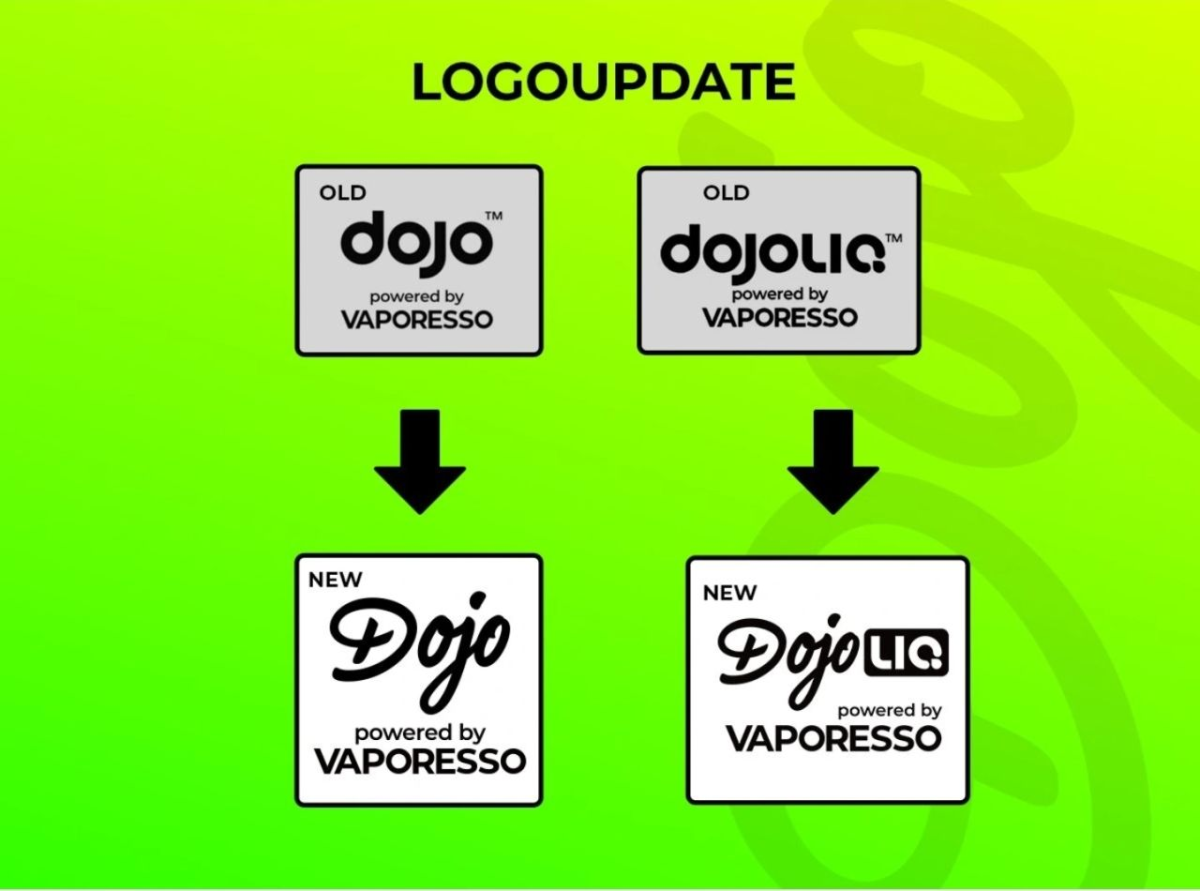
According to recent LinkedIn posts from people at VAPORESSO, SMOORE and a German distribution partner, vape brand DOJO will begin rolling out a new global brand identity on September 1, 2026, led by a redesigned handwritten logo. The new visual system will be gradually applied across product packaging, marketing materials and digital assets over the following months. Fabio Corsaro, Head of Marketing and Purchasing at MG Wesel GmbH, said the rebrand was related to trademark issues, but that explanation has not been publicly confirmed by DOJO, VAPORESSO or SMOORE. DOJO is currently promoting its Blast X product in Germany.
Aug.31
Illegal Vape Sellers Still Use TikTok and Other Platforms to Drive Sales Despite Australia’s Ad Ban
Illegal vape sellers are still promoting nicotine products on TikTok, Instagram and YouTube despite Australia’s 2024 advertising ban, while illicit tobacco sales are increasingly moving from physical stores to online marketplaces.
Jul.15
Ohio Supreme Court Weighs Whether State Consumer Law Can Restrict Flavored Vape Sales
The Ohio Supreme Court is hearing a case involving flavored vape sales and whether state authorities can use consumer protection laws to take action against retailers selling unauthorized vape products. Ohio officials argue that selling unauthorized flavored vapes may constitute consumer deception, while retailers argue that tobacco product regulation falls under federal Food and Drug Administration (FDA) authority and that states cannot impose additional restrictions through consumer laws. The case could affect the scope of state-level vape regulation across the United States.
Aug.06