Queensland, Australia Seizes 76,000 E-cigarettes and Tobacco Products Worth $20.8M

May.06.2025
Queensland, Australia Seizes 76,000 E-cigarettes and Tobacco Products Worth $20.8M
Recently, Queensland, Australia seized a record amount of illegal e-cigarettes and tobacco products, totaling 76,000 items worth about 20.8 million Australian dollars. The operation, supported by heavy fines introduced in April, collected 5.09 million Australian dollars in the first week. It aims to combat the illegal market and protect youth.

Key Points:


Queensland, Australia has launched its largest illegal tobacco and e-cigarette enforcement operation in history, seizing 76,000 e-cigarettes, 19 million illegal cigarettes, and 3.6 tons of loose tobacco, with an estimated street value of $20.8 million Australian dollars.


In coordination with the strictest national on-the-spot fine policy, which went into effect in April, a total of over 5.09 million Australian dollars in fines were issued in the first week.


Law enforcement operations covered a wide range, involving over 30 locations across the state, and were carried out jointly by multiple departments, including the Queensland Police and the Therapeutic Goods Administration (TGA).


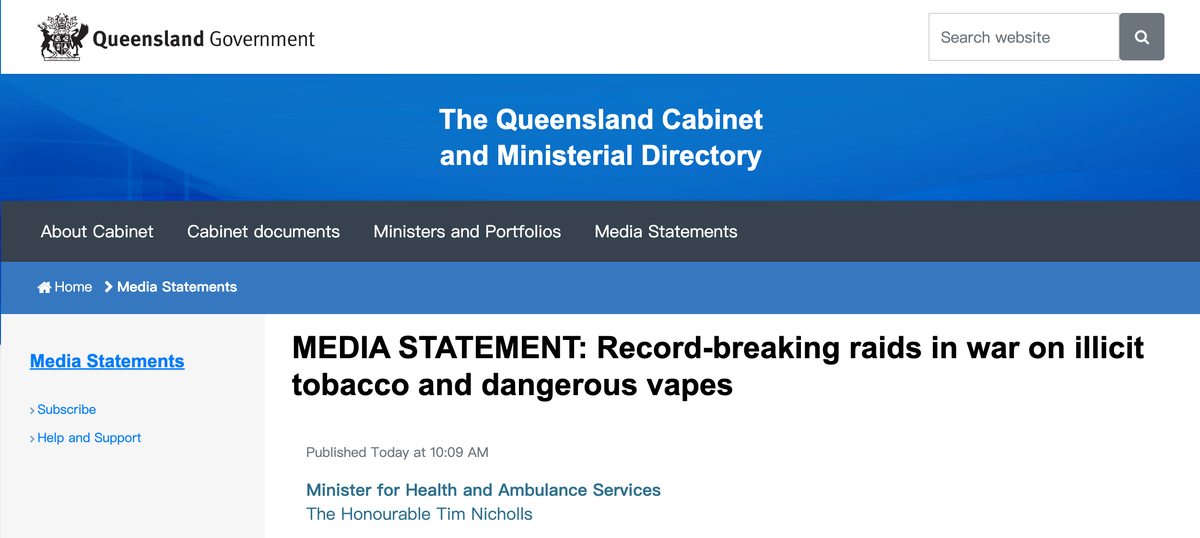
According to a statement released on May 6th by the Queensland government's official website, Queensland Health led the "Operation Appaloosa" in March, which involved a large-scale crackdown on illegal tobacco and e-cigarette products in collaboration with law enforcement agencies across the state. A total of approximately 76,000 e-cigarettes, 19 million illegal cigarettes, and 3.6 tons of loose tobacco were seized, with an estimated black market value of $20.8 million AUD, setting a national record for the highest seizure of such products in the country.


This operation covered multiple areas including Central Queensland, Wide Bay, Metro North, Metro South, and West Moreton, with more than 30 locations being raided for inspection. The operation was led by the Queensland Department of Health, in conjunction with the Queensland Police Service and the Australian Therapeutic Goods Administration (TGA).


The enforcement peak comes just before the new regulations take effect. Queensland has officially launched the strictest on-the-spot fine mechanism in the country starting from April 3, 2025. Individuals involved in illegal tobacco or e-cigarette sales can face fines of up to $32,260, while corporate entities can be fined up to $161,300.


According to official reports, during the first week of implementation of the new regulations, a total of 5,094,560 Australian dollars in fines were issued, exceeding the previous government's (Labor Party) average weekly fine amount of 25,000 Australian dollars in the final four months of their term by 20 times.


Queensland Health Minister Tim Nicholls has stated that the current state government will continue to crack down on illegal e-cigarette and tobacco sales to curb their potential harm to young people. He pointed out that lax enforcement in the past has allowed criminal gangs to set up illegal tobacco processing and sales points throughout the state, posing a challenge to public health.


"We are cutting off the profit source of illegal channels by strengthening law enforcement, confiscating illegal products, and implementing strict economic penalties. Our goal is to protect young people and prevent dangerous e-cigarette products from entering the market."


We welcome news tips, article submissions, interview requests, or comments on this piece.

Please contact us at info@2firsts.com, or reach out to Alan Zhao, CEO of 2Firsts, on LinkedIn


Notice

1.  This article is intended solely for professional research purposes related to industry, technology, and policy. Any references to brands or products are made purely for objective description and do not constitute any form of endorsement, recommendation, or promotion by 2Firsts.

2.  The use of nicotine-containing products — including, but not limited to, cigarettes, e-cigarettes, nicotine pouchand heated tobacco products — carries significant health risks. Users are responsible for complying with all applicable laws and regulations in their respective jurisdictions.

3.  This article is not intended to serve as the basis for any investment decisions or financial advice. 2Firsts assumes no direct or indirect liability for any inaccuracies or errors in the content.

4.  Access to this article is strictly prohibited for individuals below the legal age in their jurisdiction.


Copyright


This article is either an original work created by 2Firsts or a reproduction from third-party sources with proper attribution. All copyrights and usage rights belong to 2Firsts or the original content provider. Unauthorized reproduction, distribution, or any other form of unauthorized use by any individual or organization is strictly prohibited. Violators will be held legally accountable.

For copyright-related inquiries, please contact: info@2firsts.com


AI Assistance Disclaimer


This article may have been enhanced using AI tools to improve translation and editorial efficiency. However, due to technical limitations, inaccuracies may occur. Readers are encouraged to refer to the cited sources for the most accurate information.

We welcome any corrections or feedback. Please contact us at: info@2firsts.com

JUUL Purchasers Ask Ninth Circuit to Preserve Antitrust Classes in Case Over Altria’s $12.8 Billion Investment
Private antitrust litigation stemming from Altria's 2018 $12.8 billion investment for a 35% economic interest in JUUL is advancing before the U.S. Court of Appeals for the Ninth Circuit. Direct purchasers, indirect purchasers and indirect resellers of JUUL products filed answering briefs this week seeking to preserve class certifications granted by a California federal court in February. Altria and JUUL argue that individual consumers and large distributors differ too much in purchasing terms to remain in a single direct-purchaser class, while a separate dispute concerns whether California antitrust law can apply to indirect purchasers across 27 jurisdictions. A September trial has been put on hold during the appeal.
Sep.23
South Korea Imports 12,126 Kg of Nicotine Analogues From April to August After Bringing Synthetic Nicotine Under Tobacco Law
South Korea's liquid-vape market is showing changes across raw-material imports, product types and sales channels after synthetic nicotine came under the Tobacco Business Act on April 24. Customs data show nicotine-analogue imports totaled 12,126 kilograms from April through August, while synthetic-nicotine imports over the same five months totaled 231,663 kilograms, just 39.3% of the amount imported in March alone. Physical liquid-vape stores tracked in Seoul and Gyeonggi Province fell 9.9%, unmanned outlets edged higher and online sales listings increased from 27,774 to 42,437. Government testing of 105 liquid inhalation products promoted as nicotine-free separately found nicotine in 13 and 6-methylnicotine in 12.
Sep.22
STIIIZY Redesign Fails to Escape PAX Labs Patent Import Ban as Section 337 Case Also Involves China ALD
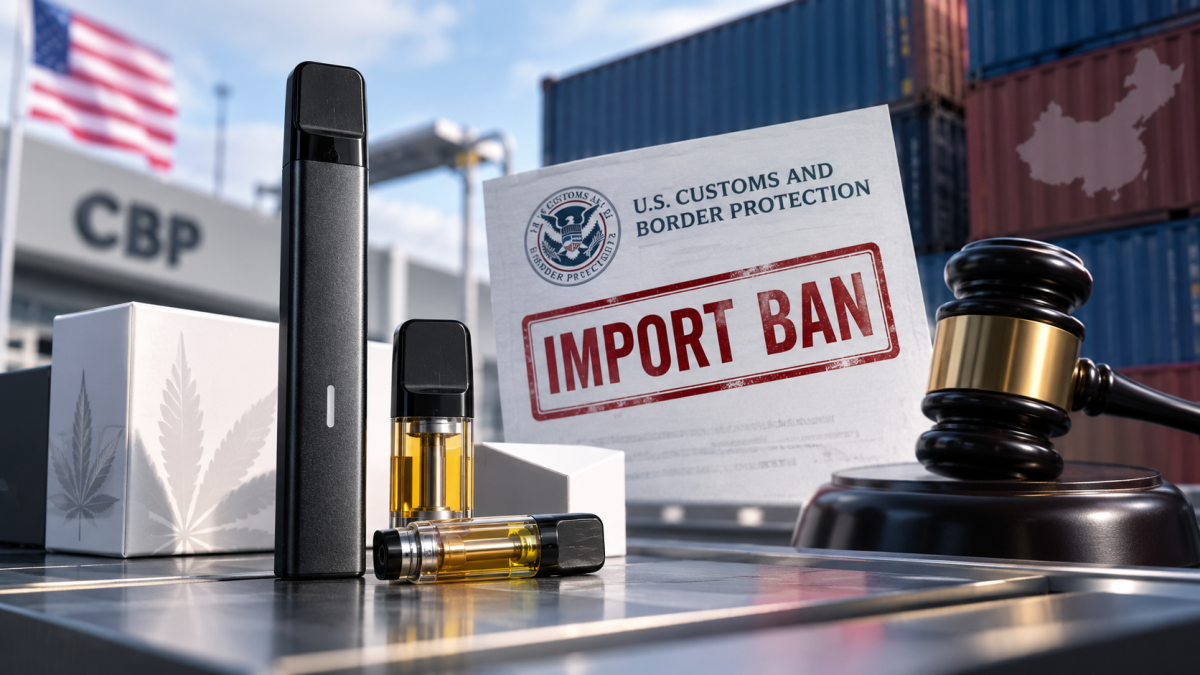
U.S. Customs and Border Protection ruled that STIIIZY had not shown that the redesigned cannabis-vape products covered by its latest request fall outside an ITC limited exclusion order tied to PAX Labs patents. CBP accepted some of STIIIZY’s claim-construction and non-infringement arguments, but the company did not address two additional claims in the same patent. Earlier STIIIZY redesigned cartridges and certain associated components imported with them had received separate CBP clearance.
Sep.16
UK-Listed Consumer Goods Group Supreme Sees Vape Duty as Potential Consolidation Opportunity, Holds FY27 Outlook
UK-listed consumer goods group Supreme plc says it continues to expect FY27 trading to meet market expectations as the Vaping Products Duty takes effect on October 1, while maintaining a comparatively positive view of the new tax and compliance regime. Supreme has said the framework could increase compliance complexity for smaller operators and contribute to market consolidation, while its manufacturing, compliance and distribution scale may allow it to gain share. Its 88Vape brand will retain its value positioning.
Sep.18
Product | Philip Morris Japan Teams Up With Renowned French Audio Brand DEVIALET for Limited-Edition IQOS Priced 60% Above Standard Model
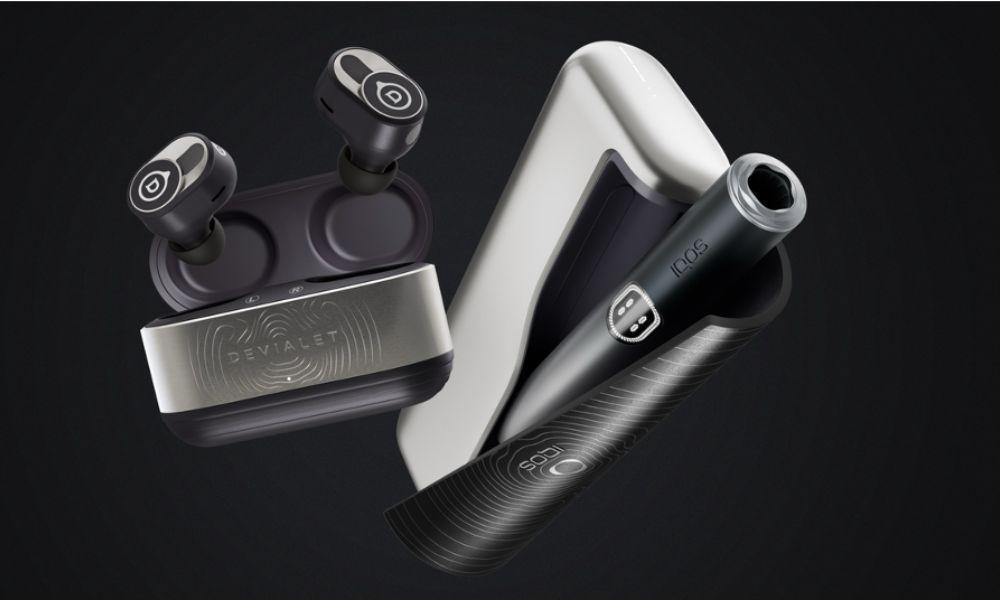
Philip Morris Japan (PMJ) launched the limited-edition IQOS ILUMA i PRIME Soundsorial Model in collaboration with French audio brand DEVIALET on October 1, 2026. Featuring sound-wave patterns, a silver-and-black finish and a gradient holder, the heated tobacco device is priced at JPY 15,980, including tax, and is available at four IQOS stores in Japan. According to Japanese media citing a PMJ representative, about 1,900 units were allocated to the Japanese retail market. A separate Soundsorial Collection, combining the device with DEVIALET Gemini II earbuds, includes 440 sets allocated to Japan for a membership prize draw.
product
Oct.23
GAO Audit Finds Nearly 132,000 FDA Tobacco Applications Waiting an Average 1,266 Days as Nicotine Pouch Pilot Practices Move Into Vape PMTA Reviews
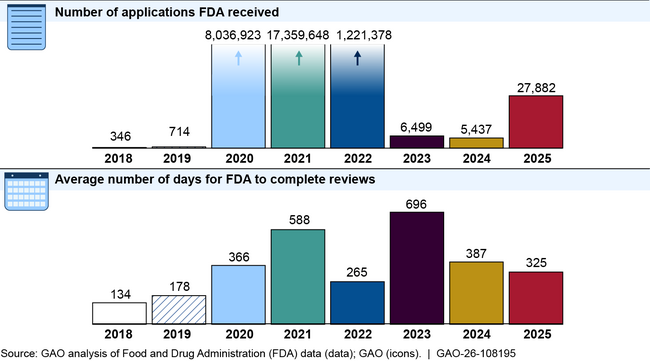
A U.S. Government Accountability Office audit found that 131,915 tobacco product applications submitted to the FDA since 2018 remained without a final review as of December 31, 2025, with pending applications waiting an average of 1,266 days. GAO also found FDA lacks the data needed to systematically determine whether scientific reviews meet applicable timelines. HHS agreed to upgrade the agency's tracking systems. At the same time, FDA has begun applying lessons from its nicotine pouch PMTA pilot to e-cigarette reviews, while changes to enforcement policy and electronic submissions are making the specific stage of a PMTA increasingly relevant to market access.
FDA
Oct.03