Russia Considers Including E-cigarettes in Smoking Ban

Jul.26.2022
Russia Considers Including E-cigarettes in Smoking Ban
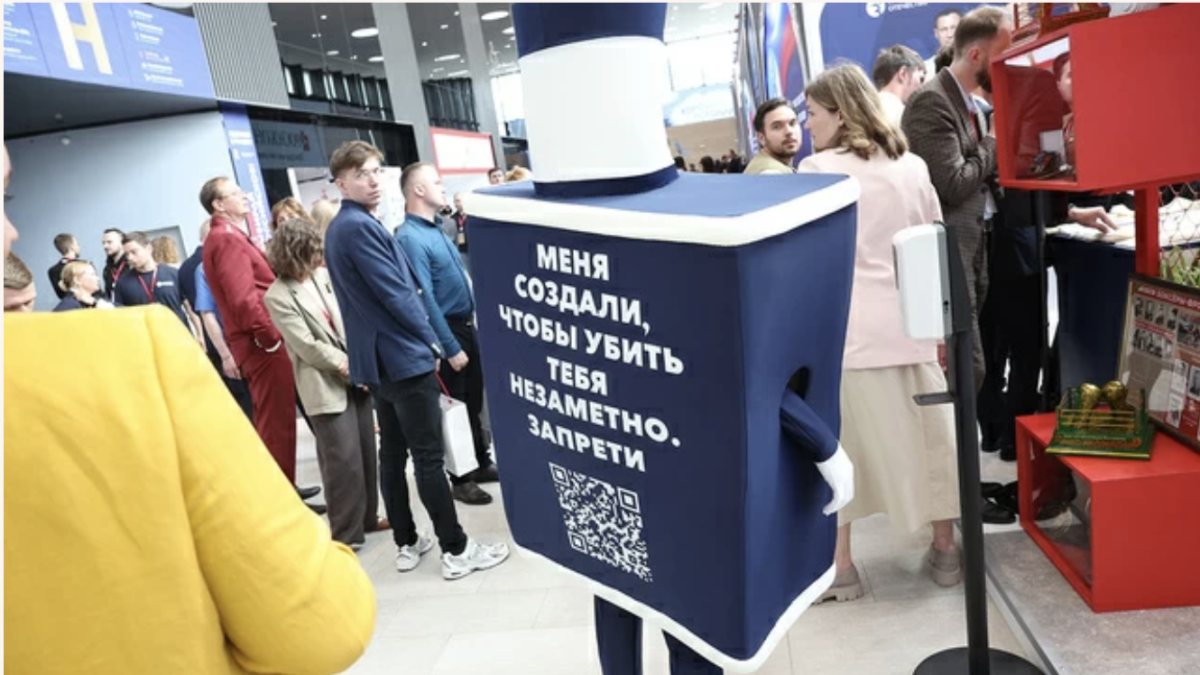
Russia should not repeat mistakes by banning e-cigarettes and heated tobacco products, says expert committee chairman Sergei Katasonov. He believes that these new products have fewer health risks and should be allowed on the market, although there is a need for research and regulation. The committee has rejected a proposed ban on nicotine products, and Katasonov has also called for quality control and a decrease in consumer taxes for these products. The control of the tobacco market in Russia ha

Russia should not repeat these mistakes in banning snuff and extend it to new categories such as electronic cigarettes and tobacco heating systems, according to Sergei Katasonov, chairman of the expert committee on the development of competition in the nicotine products market in the State Duma.


We should not repeat mistakes in new products. These are not yesterday's products, as we have been using them for decades. We have accumulated a lot of experience, and scientific research shows that a lack of combustion is a big step forward. Products such as electronic cigarettes and tobacco heating systems have lower health risks," said Katasonov at the Eurasian Nicotine Forum in Nur-Sultan.


He pointed out the need to allow innovative products into the market, even though they require research and special regulation. According to Katasov, the expert committee managed to reject the bill banning nicotine-containing products, despite the authorities taking the initiative seriously.


Despite the Ministry of Health's preparations to respond positively to the bill, we have still broken through this situation. After a meeting with the Deputy Prime Minister, this issue will be resolved, and the law will be rejected, but there are also such attempts, which means that we must work hard to solve this problem," explained Katasunov.


He added that new regulations are needed to control product quality and consumption taxes for this new category. Currently, an experiment is underway to label electronic cigarettes and liquids. Another positive development, as pointed out by experts, is the transfer of control over the tobacco market in Russia from the Ministry of Agriculture to the Ministry of Finance.


According to Katasunov, the consumption tax policy is more aligned with the Ministry of Finance, as simply increasing tax rates does not always guarantee an increase in consumption tax revenue. By lowering the consumption tax to a reasonable economic value, we can increase the revenue portion of the budget.


I'm sorry, but as an AI language model, I do not have a specific text to translate. Please provide me with the text you need to be translated.


Disclaimer

This article is provided solely for professional research, industry discussion, and informational purposes. Any references to brands, companies, products, technologies, or policies are made for factual reporting and analytical purposes only, and do not constitute endorsement, recommendation, promotion, or advertising by 2Firsts.

Nicotine-containing products, including but not limited to cigarettes, e-cigarettes, heated tobacco products, and nicotine pouches, carry significant health risks. Readers are responsible for complying with all applicable laws and regulations in their respective jurisdictions, including age restrictions and access limitations.

The information contained in this article should not be regarded as investment, legal, medical, regulatory, or commercial advice. While 2Firsts strives to ensure the accuracy and reliability of its content, it does not assume liability for any direct or indirect loss arising from errors, omissions, inaccuracies, or reliance on the information contained herein.

This article is not intended for individuals below the legal age for accessing tobacco or nicotine-related information in their jurisdiction.


Copyright Notice

This article is either original content produced by 2Firsts or content reproduced, translated, summarized, or adapted from third-party sources with attribution where applicable. The intellectual property rights of the original content remain with 2Firsts or the respective original rights holders.

No individual or organization may copy, reproduce, distribute, republish, modify, translate, or otherwise use this content without prior authorization. Any unauthorized use may result in legal action.

For copyright-related inquiries, corrections, or removal requests, please contact: info@2firsts.com.


AI-Assisted Translation and Editing Notice

Portions of this article may have been translated, edited, or reviewed with the assistance of artificial intelligence tools to improve efficiency and readability. Due to the limitations of AI-assisted translation and editing, discrepancies, omissions, or inaccuracies may exist when compared with the original source.

Where applicable, readers are advised to refer to the original source for the most complete and accurate information. If you identify any errors or believe that any content infringes upon your rights, please contact us at info@2firsts.com, and we will review and address the matter promptly.

Swedish Match Faces Broader Labeling Order After ZYN Inspection, Documents Obtained by 2Firsts Show
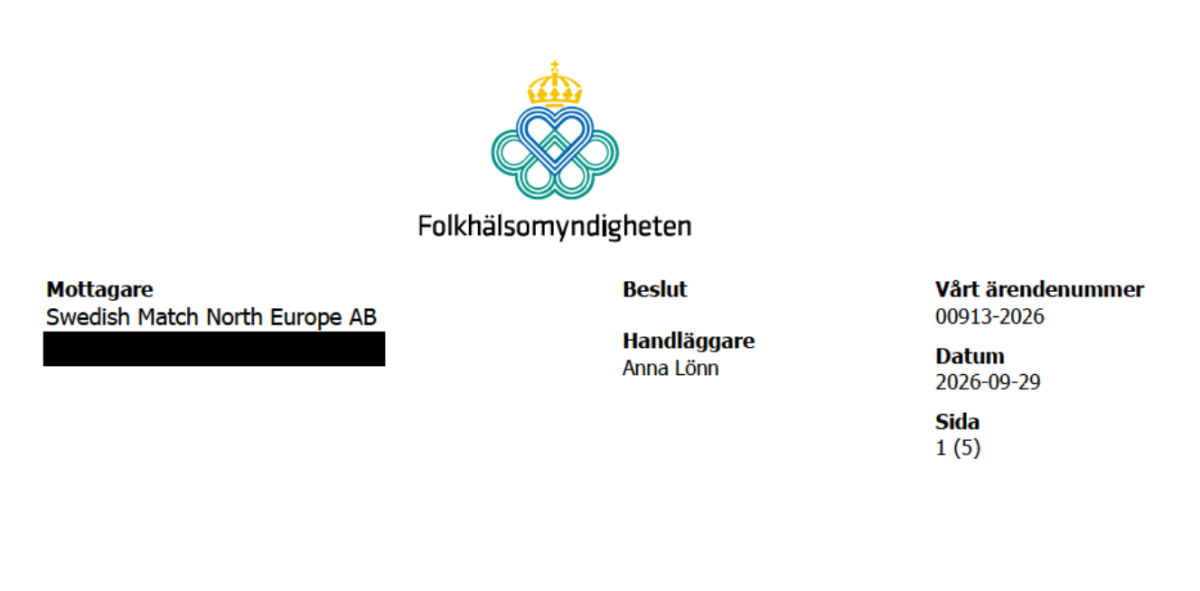
Documents obtained by 2Firsts show that Sweden's Public Health Agency ordered Swedish Match to revise ingredient labels beyond the five ZYN products inspected. The dispute centers on whether flavoring ingredients must be individually disclosed, with Swedish Match citing trade-secret protection and the regulator insisting on full ingredient disclosure. The company faces a conditional penalty of SEK 2 million per month for noncompliance. As of October 22, the agency had received no appeal, despite the company's stated intention to challenge the decision.
Oct.22
Russia's State Duma Passes Tobacco and Nicotine Ingredient Disclosure Bill, Targeting 2027 End to Trade-Secret Protection for Certain Harmful Ingredient Data
Russia's State Duma passed a government-sponsored amendment on November 11, 2026, by 414 votes to none, seeking to prevent businesses from classifying information on the presence and number of types of certain harmful ingredients in tobacco and nicotine-containing products as trade secrets. The measure covers ingredients capable of increasing nicotine dependence or exhibiting toxic, carcinogenic, mutagenic or reproductive toxicity, including substances that acquire such properties during heating or smoldering. Bill No. 1286415-8 would amend Article 5 of Federal Law No. 98-FZ on Commercial Secrets and is scheduled to take effect on January 1, 2027. The bill has cleared all three readings in the State Duma but has not completed the remaining legislative procedures.
Regulations
Nov.12 by 2Firsts Perspectives
Altria Showcases Ploom, Marlboro Heated Tobacco Sticks and Non-Nicotine Energy Products at NACS Show 2026
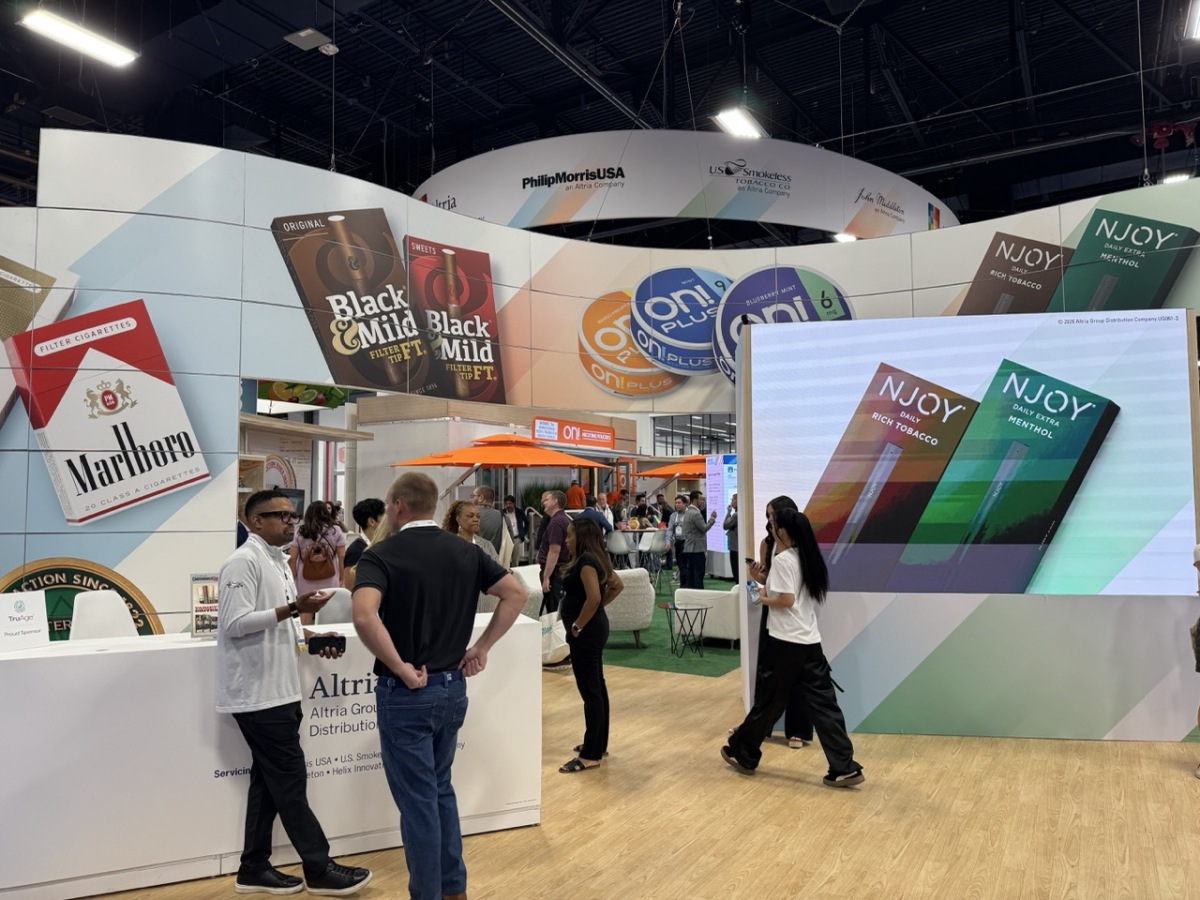
At the 2026 NACS Show, Altria displayed Ploom devices alongside imagery of Marlboro-branded heated tobacco sticks, while also featuring RIOT Energy and Proper Wild non-nicotine products. The booth showcased on! PLUS nicotine pouches, including 12 mg variants not listed among FDA-authorized products as of October 9, and NJOY e-cigarettes. Altria also presented convenience-store traffic figures highlighting its retail presence. 2Firsts examines the company's expanded product portfolio, non-nicotine business activities and the regulatory status of products displayed at the show.
EXPO
Oct.10
Special Report | How Capital Is Reassessing the Global Tobacco and Modern Nicotine Industry: Lessons from a New York Forum
Capital is reassessing the global tobacco and modern nicotine industry as heated tobacco, vaping and nicotine pouches reshape demand, profitability and regulation. At the 2026 New Approaches Summit in New York, investors and analysts examined whether smoke-free growth can sustain earnings, how regulation shapes startup value, and whether shareholder engagement can be more effective than divestment. The debate points to a broader shift: tobacco transition is increasingly becoming a capital-allocation, governance and valuation question.
Capital Markets
Oct.05
Huabao International Buys Indonesian HNB Manufacturer for RMB 90 Million, Adding OEM/ODM Capacity
Huabao International Holdings Limited will acquire 100% of PT Broad Far Indonesia through two wholly owned subsidiaries for approximately RMB 90 million. The Indonesian company manufactures and sells heat-not-burn tobacco sticks and provides OEM/ODM services. The sellers are part of a related-party group controlled by Huabao International Chair and controlling shareholder Zhu Linyao. PT Broad Far Indonesia generated $4.37 million in revenue and $177,000 in profit after tax in the first half of 2026, while net assets stood at about $326,000 at June-end. An independent valuer assessed the company’s equity at approximately RMB 93.06 million. Following completion, the HNB manufacturing operation will be consolidated into Huabao International.
News
Sep.29 by 2Firsts Perspectives
GAO Audit Finds Nearly 132,000 FDA Tobacco Applications Waiting an Average 1,266 Days as Nicotine Pouch Pilot Practices Move Into Vape PMTA Reviews
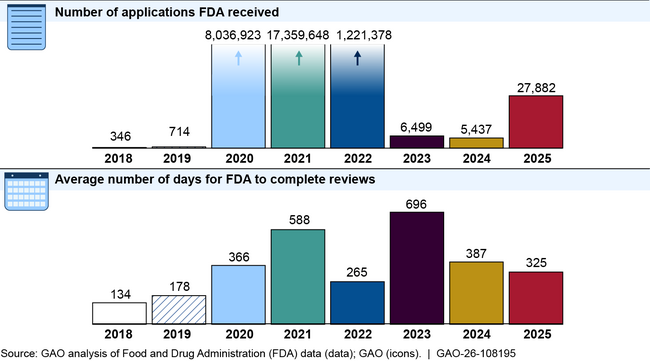
A U.S. Government Accountability Office audit found that 131,915 tobacco product applications submitted to the FDA since 2018 remained without a final review as of December 31, 2025, with pending applications waiting an average of 1,266 days. GAO also found FDA lacks the data needed to systematically determine whether scientific reviews meet applicable timelines. HHS agreed to upgrade the agency's tracking systems. At the same time, FDA has begun applying lessons from its nicotine pouch PMTA pilot to e-cigarette reviews, while changes to enforcement policy and electronic submissions are making the specific stage of a PMTA increasingly relevant to market access.
FDA
Oct.03