Russia Customs Seizes Record Amount of Drugs and Cigarettes

Dec.01.2022
Russia Customs Seizes Record Amount of Drugs and Cigarettes
Russian customs seized over 19 tons of drugs and 78 million packs of cigarettes in the past 10 months.

Over the past 10 months, the Federal Customs Service of the Russian Federation has seized over 19 tons of illegal drugs and over 78 million packs of cigarettes, surpassing last year's numbers. This was stated by the head of the Federal Customs Service, Vladimir Bulavin, during the "Government Hour" at the Federation Council.


According to a spokesperson from FCS, despite implementing all simplification and support measures, it is still possible to maintain the effectiveness of quality control and cracking down on illegal activities of companies. He said that in the span of 10 months, nearly 79 billion rubles (approximately RMB 9.13 billion) were recovered through additional control measures, an increase of 56% from the previous year.


According to Braven, they have initiated 122,000 administrative cases and 1,600 criminal cases, resulting in fines exceeding 2 billion rubles (approximately 230 million yuan).


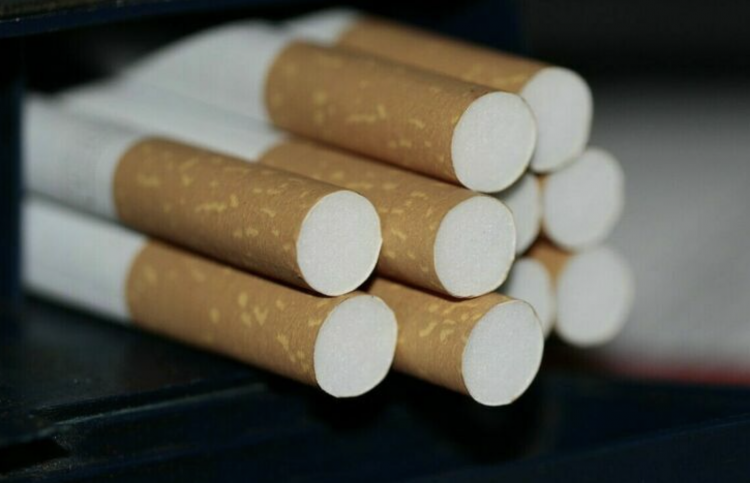
He added that over 19 tons of illicit drugs and high-proof substances and over 78 million packs of cigarettes were seized in illegal circulation. "These numbers have already exceeded the totals for the entire year of 2021," emphasized the Chief of the Federal Customs Service.


2FIRSTS will continue to report on this topic and further updates will be available on the '2FIRSTS APP.' Scan the QR code below to download the app.


Disclaimer

This article is provided solely for professional research, industry discussion, and informational purposes. Any references to brands, companies, products, technologies, or policies are made for factual reporting and analytical purposes only, and do not constitute endorsement, recommendation, promotion, or advertising by 2Firsts.

Nicotine-containing products, including but not limited to cigarettes, e-cigarettes, heated tobacco products, and nicotine pouches, carry significant health risks. Readers are responsible for complying with all applicable laws and regulations in their respective jurisdictions, including age restrictions and access limitations.

The information contained in this article should not be regarded as investment, legal, medical, regulatory, or commercial advice. While 2Firsts strives to ensure the accuracy and reliability of its content, it does not assume liability for any direct or indirect loss arising from errors, omissions, inaccuracies, or reliance on the information contained herein.

This article is not intended for individuals below the legal age for accessing tobacco or nicotine-related information in their jurisdiction.


Copyright Notice

This article is either original content produced by 2Firsts or content reproduced, translated, summarized, or adapted from third-party sources with attribution where applicable. The intellectual property rights of the original content remain with 2Firsts or the respective original rights holders.

No individual or organization may copy, reproduce, distribute, republish, modify, translate, or otherwise use this content without prior authorization. Any unauthorized use may result in legal action.

For copyright-related inquiries, corrections, or removal requests, please contact: info@2firsts.com.


AI-Assisted Translation and Editing Notice

Portions of this article may have been translated, edited, or reviewed with the assistance of artificial intelligence tools to improve efficiency and readability. Due to the limitations of AI-assisted translation and editing, discrepancies, omissions, or inaccuracies may exist when compared with the original source.

Where applicable, readers are advised to refer to the original source for the most complete and accurate information. If you identify any errors or believe that any content infringes upon your rights, please contact us at info@2firsts.com, and we will review and address the matter promptly.


Special Report|AIR H1 Revenue Rises 3.7% as Shisha Volumes Fall 9%, Testing Its Shift Beyond Traditional Hookah
AIR’s first half-year results as a listed company offer a new test of how far a traditional hookah business can transform. H1 2026 revenue rose 3.7%, even as Flavored Shisha Molasses shipments fell 9%, with pricing and mix supporting growth. Traditional shisha still generates almost all revenue, while OOKA, Crown Switch, Greentank and U.S. regulatory spending point to accelerating diversification. The next test is whether those investments can become a second business of meaningful scale and profitability.
Capital Markets
Aug.21
2FIRSTS EXCLUSIVE|China Breaks Up $6.8 Million Illegal Hookah Tobacco Operation as Market Expands
Chinese authorities have dismantled an illegal hookah tobacco operation worth more than 46 million yuan ($6.8 million), detaining five foreign suspects and seizing over 500,000 boxes of tobacco paste. The case comes as hookah expands across China’s nightlife sector and attracts overseas operators, including former vaping entrepreneurs. It also raises a central regulatory question: whether waterpipe tobacco will follow China’s private-sector e-cigarette licensing model or be reserved for the state tobacco system, as with nicotine pouches, in the years ahead.
Jul.31
Canadian Court Allows Juul and Altria Vape Class Action to Move Forward Over Youth Marketing Claims
A Quebec Superior Court has allowed a class action lawsuit against Juul Labs and Altria Group related to vaping products to proceed, involving allegations concerning marketing practices, youth exposure and corporate responsibility. The ruling only allows the case to move forward and does not represent a finding that Juul or Altria are legally liable. The case highlights continued legal risks facing vape companies regarding product marketing, youth protection and corporate accountability.
Jul.28
UK Councils Seize More Than 1.3 Million Non-Compliant Vapes One Year After Disposable Ban
One year after the UK disposable vape ban came into force, local authorities continue to seize illegal and non-compliant vaping products. FOI data compiled by nicotine retailer Northerner shows more than 1.3 million products were seized between June 2025 and May 2026, with Bolton recording the highest number of seizures and Swansea reporting the highest estimated value.
Jul.21
Malaysia Withdraws Appeal Against Liquid Nicotine Ruling as Vape Regulation Framework Enters New Phase
Malaysia’s government has withdrawn its appeal against a High Court ruling concerning the regulatory status of liquid nicotine used in vape and e-cigarette products, according to reports by New Straits Times, Free Malaysia Today and CodeBlue on August 18, 2026. The Kuala Lumpur High Court ruled on May 15 that the government’s decision to remove liquid nicotine from the scheduled poisons list under the Poisons Act 1952 was irrational and made without proper consultation with the Poisons Board. The withdrawal ends the government’s appeal process, while the future regulatory framework for nicotine vape products remains under discussion.
Aug.21
WIRED Investigation: Chinese-Made Vapes Turn to 6-Methyl-Nicotine and Other Analogs, Challenging U.S. Regulation
U.S. technology and investigative publication WIRED has examined how nicotine analogs are emerging as a new challenge for the country’s vape regulatory framework. The article argues that after the U.S. expanded federal oversight of nicotine products in 2022, some manufacturers began using nicotine-like compounds such as 6-methyl-nicotine that may fall outside existing definitions. Researchers cited by WIRED said some nicotine analogs could be more potent than traditional nicotine, although human health impacts remain unclear. U.S. policymakers are considering broader definitions of nicotine to bring these compounds under federal oversight.
Jul.27