Since 2022, law enforcement officials in the city of Rostov-on-Don in Russia have confiscated 1,983 packets of counterfeit tobacco products. Additionally, during the same period, they have also dismantled 34 illegal tobacco stalls (including cigarettes and e-cigarettes), which were the main source of distribution for these fake products.
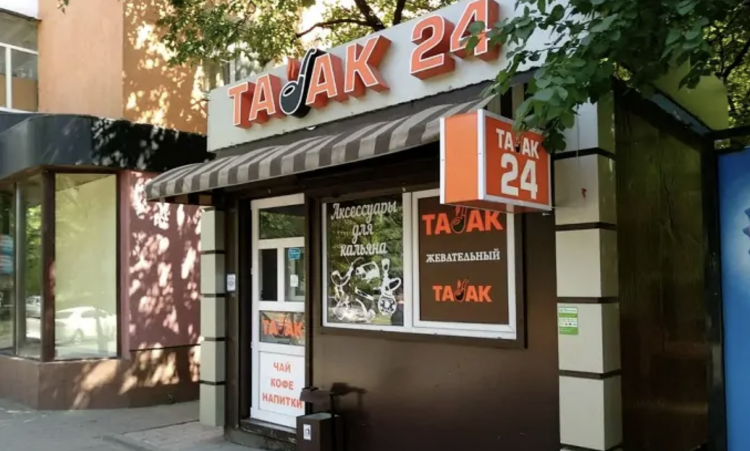
The cigarette and tobacco products vendor's location was obtained from Yandex.Maps.
At a meeting of the Economic Development Committee of the Rostov City Council, Acting Director of the City Trade Bureau Oleg Rudenko announced that it has been determined that the majority of counterfeit tobacco products sold in Rostov come from five countries: Kazakhstan, Georgia, Armenia, and the neighboring "Republics" - either officially or implied to be the Donetsk People's Republic (DPR) and the Luhansk People's Republic (LPR).
According to Ludenko from Rostov city, these data are not entirely official. Officials who seized the counterfeit goods only have a rough idea of their origin.
We are actively fighting against illegal sales points and want to dismantle them, but we don't always come out on top. This is because the number of these illegal sales points continues to increase significantly every year," said Sergei Sherepetyev, Deputy Chairman of the Duma, in his report. "If you walk down any street in Rostov, you can see 'tobacco' and 'tobacco products' being sold at every bus stop. I don't believe they are all legal.
The source of the counterfeit goods seized by Russian authorities is Evgeny Vdovinj.
Ludenko added that despite more frequent surprise inspections, the amount of seized fake cigarettes is actually lower. There are two reasons for this.
The first reason is that the number of surprise inspections has increased, and law enforcement agencies have recently seized a large number of counterfeit tobacco products.
The second reason is that there has been an increase in surprise inspections, causing illegal vendors to quickly adapt to the sudden rhythm and become more proficient at hiding their illicit tobacco. They have realized that stockpiling large quantities of goods invites theft and makes them more susceptible to being searched by enforcement authorities, so they only keep a small amount of counterfeit goods at their stalls.
According to Lutengko, "We often find that the stock on the stalls does not exceed 20 packets. That's why the reported numbers seem so insignificant.
Furthermore, some prosperous Rostov vendors have started to engage in internal competition and have learned to use complaints submitted to the regional FAS department (Federal Antimonopoly Service of the Russian Federation) as a means to eliminate rival vendors.
This article is a compilation of multiple sources of information that have been gathered, organized, and presented for the purpose of educational exchange only.
2FIRSTS maintains complete alignment with the Chinese government on any domestic, Hong Kong, Macao, Taiwan, and foreign expressions and positions.
The copyright of the information in this article belongs to the original media and author. If there is any infringement, please contact us for removal.
Disclaimer
This article is provided solely for professional research, industry discussion, and informational purposes. Any references to brands, companies, products, technologies, or policies are made for factual reporting and analytical purposes only, and do not constitute endorsement, recommendation, promotion, or advertising by 2Firsts.
Nicotine-containing products, including but not limited to cigarettes, e-cigarettes, heated tobacco products, and nicotine pouches, carry significant health risks. Readers are responsible for complying with all applicable laws and regulations in their respective jurisdictions, including age restrictions and access limitations.
The information contained in this article should not be regarded as investment, legal, medical, regulatory, or commercial advice. While 2Firsts strives to ensure the accuracy and reliability of its content, it does not assume liability for any direct or indirect loss arising from errors, omissions, inaccuracies, or reliance on the information contained herein.
This article is not intended for individuals below the legal age for accessing tobacco or nicotine-related information in their jurisdiction.
Copyright Notice
This article is either original content produced by 2Firsts or content reproduced, translated, summarized, or adapted from third-party sources with attribution where applicable. The intellectual property rights of the original content remain with 2Firsts or the respective original rights holders.
No individual or organization may copy, reproduce, distribute, republish, modify, translate, or otherwise use this content without prior authorization. Any unauthorized use may result in legal action.
For copyright-related inquiries, corrections, or removal requests, please contact: info@2firsts.com.
AI-Assisted Translation and Editing Notice
Portions of this article may have been translated, edited, or reviewed with the assistance of artificial intelligence tools to improve efficiency and readability. Due to the limitations of AI-assisted translation and editing, discrepancies, omissions, or inaccuracies may exist when compared with the original source.
Where applicable, readers are advised to refer to the original source for the most complete and accurate information. If you identify any errors or believe that any content infringes upon your rights, please contact us at info@2firsts.com, and we will review and address the matter promptly.