Russian Government Increases Fines for Selling Tobacco to Minors

Feb.08.2025
Russian Government Increases Fines for Selling Tobacco to Minors
Russian government raises fines for selling tobacco and nicotine products to minors, with penalties ranging from 200 to 12,000 USD.

According to the report from Ttelegraf on February 7th, the Russian government has recently announced a new regulation significantly increasing fines for selling tobacco and nicotine products to minors. The relevant documents have been published on the official website of legal information.


According to the new regulations, individuals will be fined between 200,000 and 300,000 rubles ($2,000 to $3,000) for selling tobacco, nicotine-containing products, and vaping devices to minors. Officials will face fines between 500,000 and 700,000 rubles ($5,000 to $7,000), while companies could be fined between 1.5 million and 2 million rubles ($15,000 to $20,000).


If caught selling products containing nicotine, such as snus and nasal snuff, individuals will face fines of 15000 to 20000 rubles (1500 to 2000 USD), officials will be fined 30000 to 50000 rubles (3000 to 5000 USD), and legal entities will be fined 100000 to 150000 rubles (10000 to 15000 USD).


For other violations in the retail of tobacco and nicotine products, fines may range from 10,000 to 20,000 rubles (100 to 200 USD) to 90,000 to 120,000 rubles (900 to 1200 USD).


We welcome news tips, article submissions, interview requests, or comments on this piece.

Please contact us at info@2firsts.com, or reach out to Alan Zhao, CEO of 2Firsts, on LinkedIn


Notice

1.  This article is intended solely for professional research purposes related to industry, technology, and policy. Any references to brands or products are made purely for objective description and do not constitute any form of endorsement, recommendation, or promotion by 2Firsts.

2.  The use of nicotine-containing products — including, but not limited to, cigarettes, e-cigarettes, nicotine pouchand heated tobacco products — carries significant health risks. Users are responsible for complying with all applicable laws and regulations in their respective jurisdictions.

3.  This article is not intended to serve as the basis for any investment decisions or financial advice. 2Firsts assumes no direct or indirect liability for any inaccuracies or errors in the content.

4.  Access to this article is strictly prohibited for individuals below the legal age in their jurisdiction.


Copyright


This article is either an original work created by 2Firsts or a reproduction from third-party sources with proper attribution. All copyrights and usage rights belong to 2Firsts or the original content provider. Unauthorized reproduction, distribution, or any other form of unauthorized use by any individual or organization is strictly prohibited. Violators will be held legally accountable.

For copyright-related inquiries, please contact: info@2firsts.com


AI Assistance Disclaimer


This article may have been enhanced using AI tools to improve translation and editorial efficiency. However, due to technical limitations, inaccuracies may occur. Readers are encouraged to refer to the cited sources for the most accurate information.

We welcome any corrections or feedback. Please contact us at: info@2firsts.com

JTI Invests ₱2.1 Billion to Upgrade Batangas Manufacturing Hub, Adds First Southeast Asia DIET Facility
JTI Asia Manufacturing Corp. has invested ₱2.1 billion, or about $37 million, in its manufacturing site in Malvar, Batangas, Philippines, to expand tobacco-processing capabilities. About ₱1.9 billion is allocated to JTI's first Dry Ice Expanded Tobacco, or DIET, facility in Southeast Asia, while more than ₱177 million has been spent on expanding its Controlled Atmosphere treatment facility. The Batangas plant supplies the Philippine market and exports to 22 overseas markets, making it one of JTI's key manufacturing hubs in Asia.
Sep.24
Nicotine Pouches Gain Ground in U.S. Convenience Stores as Vape Unit Sales Fall 14%
According to convenience retail publication CStore Decisions, U.S. convenience store tobacco categories are undergoing a structural shift. Based on Circana OmniMarket Total U.S. Convenience data for the 52 weeks ending June 14, 2026, cigarettes remained the largest category with $50.8 billion in sales, but unit sales declined 5.3%. Electronic smoking devices and vaping products also declined, while modern oral nicotine products continued to grow, with nicotine pouch sales rising 29% in dollars and 17% in units. Retailers said changing consumer preferences are reshaping tobacco product assortments at convenience stores.
Regulations
Aug.07
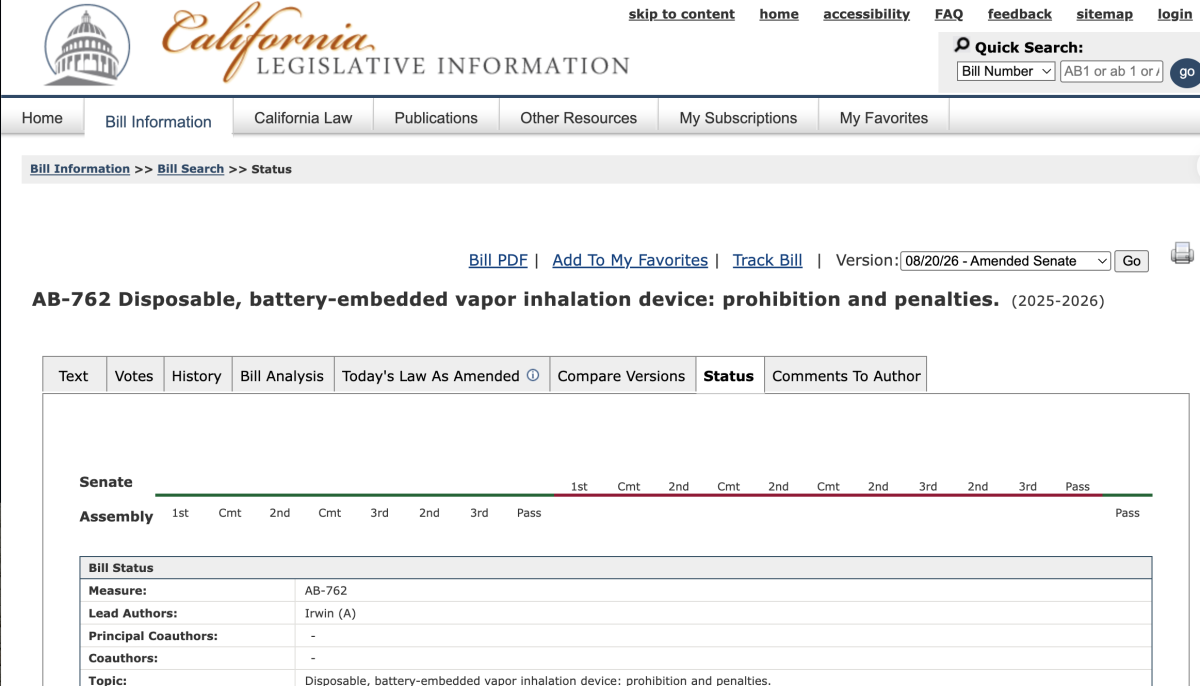
California Lawmakers Pass Disposable Nicotine Vape Ban, With Sales Prohibition Set for 2028
According to CBS Los Angeles on August 27, 2026, California lawmakers have passed Assembly Bill 762, which would phase out disposable, battery-embedded nicotine vapes in the state. If signed by Governor Gavin Newsom, manufacturing and importation of the covered products would be prohibited beginning January 1, 2027, followed by a sales ban on January 1, 2028. Driven primarily by concerns over electronic waste, lithium-battery fires and environmental pollution, the legislation would further shift California’s legal vape market toward rechargeable, refillable or replaceable-pod devices.
Aug.28
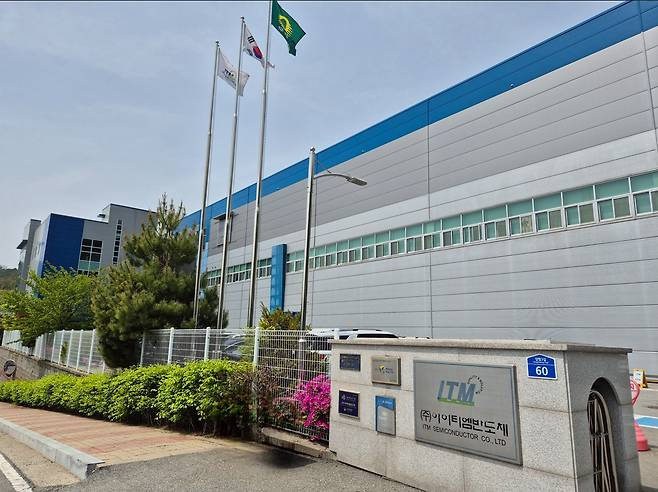
After Apple Business Decline, South Korea’s ITM Semiconductor Expands KT&G Vape Supply Chain as Vape Revenue Rises 24.8%
South Korean electronics component supplier ITM Semiconductor is reshaping its business portfolio after a decline in Apple-related protection circuit business, expanding its supply of vape devices and cartridges to KT&G. According to News1 on August 18, 2026, ITM’s vape-related revenue rose 24.8% year on year to 75.5 billion won in the first half of 2026. The company began mass production of vape devices at its Cikarang, Indonesia facility in January 2026, strengthening export manufacturing capacity. Meanwhile, Samsung-related protection circuit sales continued to grow, providing support during the transition.
Aug.20
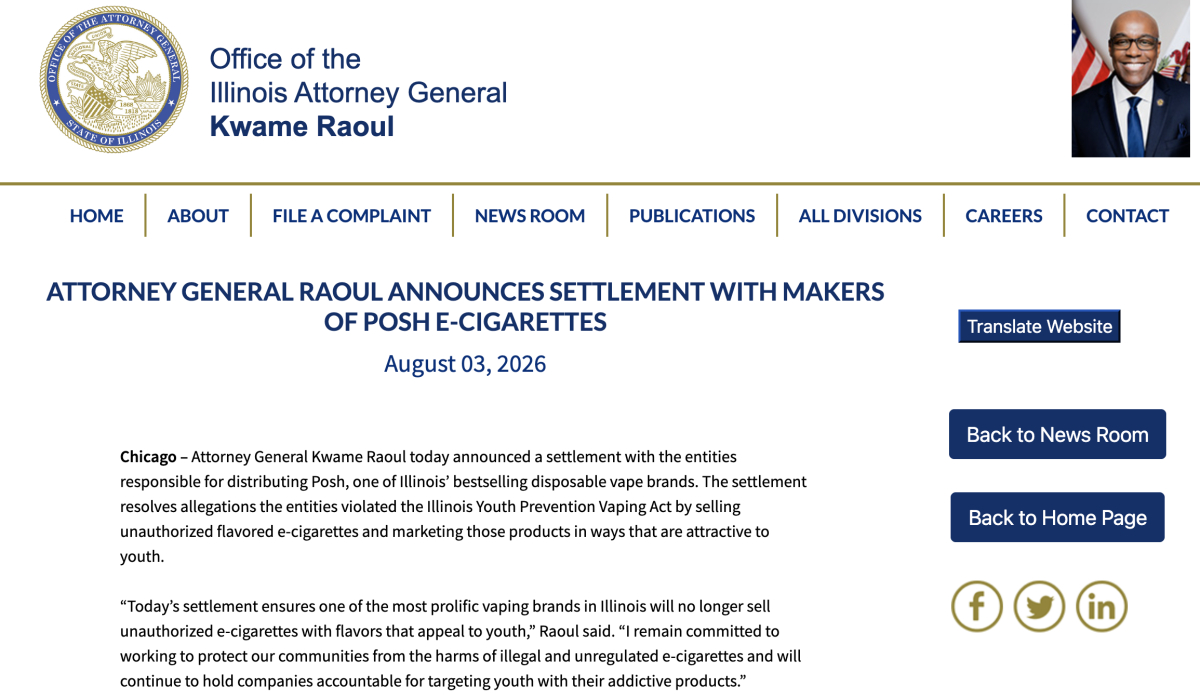
 $20 Million, a Permanent Injunction and Distributor Controls: Posh Deal Tightens Illinois Vape Compliance
$20 Million, a Permanent Injunction and Distributor Controls: Posh Deal Tightens Illinois Vape Compliance
An Illinois court ordered three companies tied to Posh vapes to pay $20 million and permanently restricted the sale, marketing and distribution in Illinois of products lacking required FDA authorization. The consent order also imposes downstream distributor controls, age-verification measures and social-media marketing limits, creating a new state-level compliance benchmark for disposable vape businesses.
Regulations
Aug.05
PMI Global Communications Chief Moira Gilchrist: Why AI Matters More Than Ever in the Smoke-Free Transition
Philip Morris International (PMI) Chief Global Communications Officer Moira Gilchrist said artificial intelligence is changing how companies understand audiences, manage owned information channels and communicate business transformation. PMI is using AI-generated audience personas to test messaging while optimizing its corporate website and other owned channels for large language models. As PMI continues its transition from cigarettes toward smoke-free products, Gilchrist said owned data and corporate channels are becoming increasingly important in demonstrating the scale of that transformation.
Aug.26