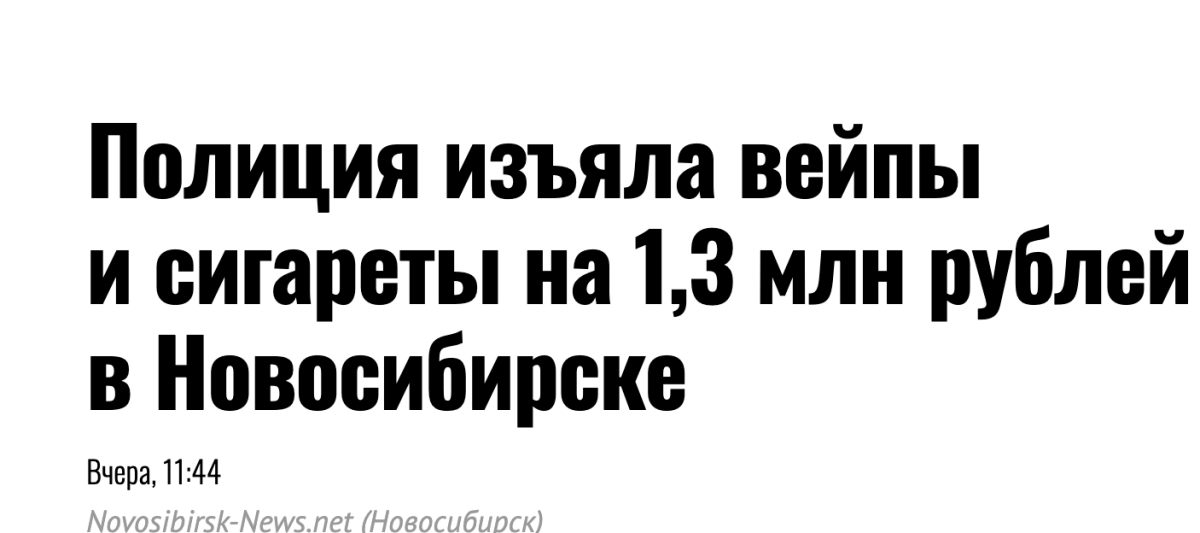
Russian police seize counterfeit e-cigarettes and tobacco products in Novosibirsk,products valued at about 1.3 million rubles

Oct.13.2025
Russian police seize counterfeit e-cigarettes and tobacco products in Novosibirsk,products valued at about 1.3 million rubles
Russian police in Novosibirsk bust counterfeit e-cigarette and tobacco products, seizing items worth 1.3 million rubles. Consideration for criminal charges.

Key Points


The police in Novosibirsk, Russia, have discovered counterfeit e-cigarettes and tobacco products.

Law enforcement actions cover both the Kilov and Soviet districts.

The seized items include 1850 e-cigarettes and over 800 packs of cigarettes.

The product is valued at approximately 1.3 million rubles, and the police are considering filing criminal charges.


Novosibirsk-News reported on October 13, 2025, that the police in Novosibirsk, Russia seized a counterfeit batch of e-cigarettes and tobacco products worth approximately 1.3 million rubles (about $16,000). The joint operation took place in the Kirov and Soviet districts.


According to the news department of the Siberian region of the Russian Interior Ministry, law enforcement officers found a large quantity of unmarked goods in shops and warehouses on Demakov Street and Pitukhova Street. Police seized a total of 1850 e-cigarettes, 424 packs of chewing tobacco, and over 810 packs of cigarettes.


This batch of nicotine-containing products has been sent to relevant laboratories for identification. The police are currently deciding whether to file charges for illegal sale or storage of tobacco products.


Cover image source: Novosibirsk-News


We welcome news tips, article submissions, interview requests, or comments on this piece.

Please contact us at info@2firsts.com, or reach out to Alan Zhao, CEO of 2Firsts, on LinkedIn


Notice

1.  This article is intended solely for professional research purposes related to industry, technology, and policy. Any references to brands or products are made purely for objective description and do not constitute any form of endorsement, recommendation, or promotion by 2Firsts.

2.  The use of nicotine-containing products — including, but not limited to, cigarettes, e-cigarettes, nicotine pouchand heated tobacco products — carries significant health risks. Users are responsible for complying with all applicable laws and regulations in their respective jurisdictions.

3.  This article is not intended to serve as the basis for any investment decisions or financial advice. 2Firsts assumes no direct or indirect liability for any inaccuracies or errors in the content.

4.  Access to this article is strictly prohibited for individuals below the legal age in their jurisdiction.


Copyright


This article is either an original work created by 2Firsts or a reproduction from third-party sources with proper attribution. All copyrights and usage rights belong to 2Firsts or the original content provider. Unauthorized reproduction, distribution, or any other form of unauthorized use by any individual or organization is strictly prohibited. Violators will be held legally accountable.

For copyright-related inquiries, please contact: info@2firsts.com


AI Assistance Disclaimer


This article may have been enhanced using AI tools to improve translation and editorial efficiency. However, due to technical limitations, inaccuracies may occur. Readers are encouraged to refer to the cited sources for the most accurate information.

We welcome any corrections or feedback. Please contact us at: info@2firsts.com

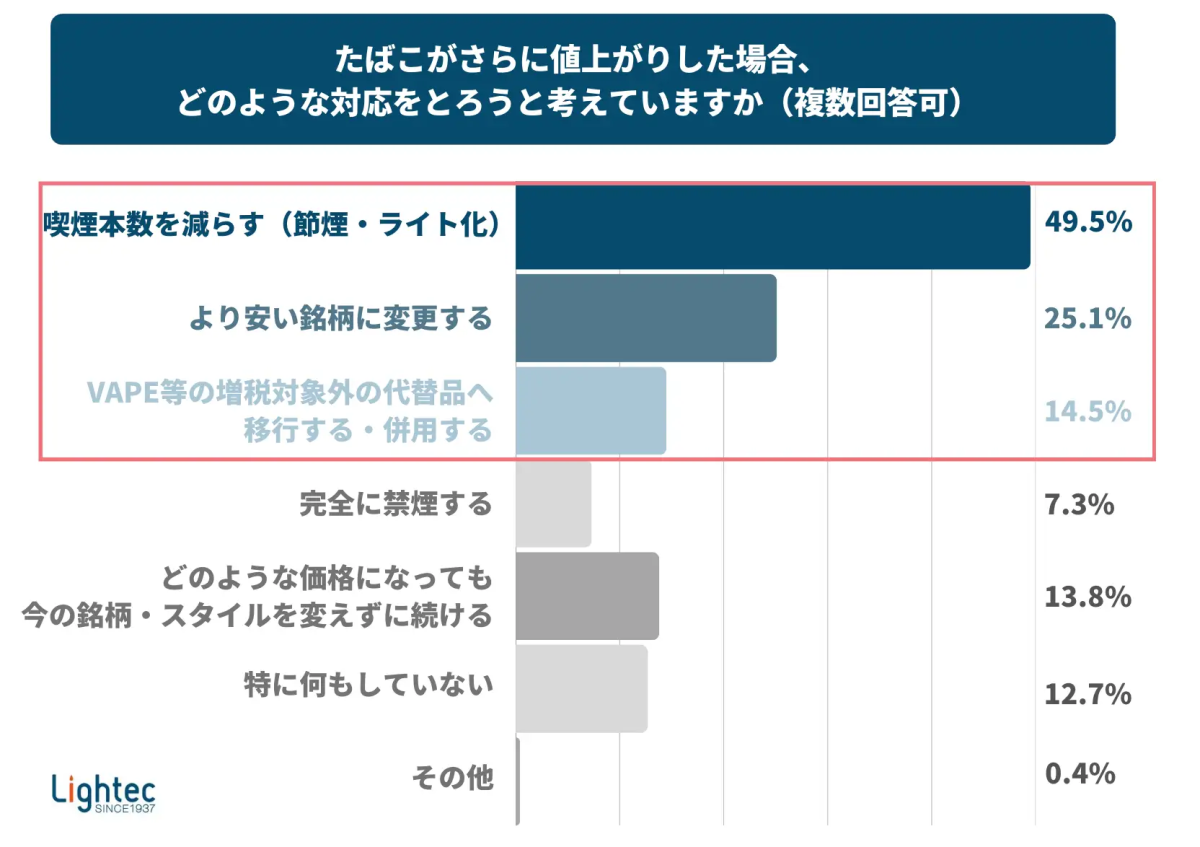
Japan Survey Finds 49.5% Would Cut Tobacco Use if Prices Rise, 64.6% Show Interest in Nicotine-Free Alternatives
A September online survey commissioned by Japanese smoking-accessories company Lightec found that 49.5% of respondents would consider reducing tobacco use if prices rose further, while 25.1% would consider switching to cheaper brands and 14.5% would consider using or combining alternatives such as vapes and nicotine-free herbal sticks. Another 64.6% expressed some level of interest in such alternatives. The survey covered 1,088 respondents aged 20 to 70 and was conducted by a company that sells NICOLESS nicotine-free vaping and herbal-stick products, meaning its findings should not be treated as representative of Japan's smoking population.
DATA
Oct.12
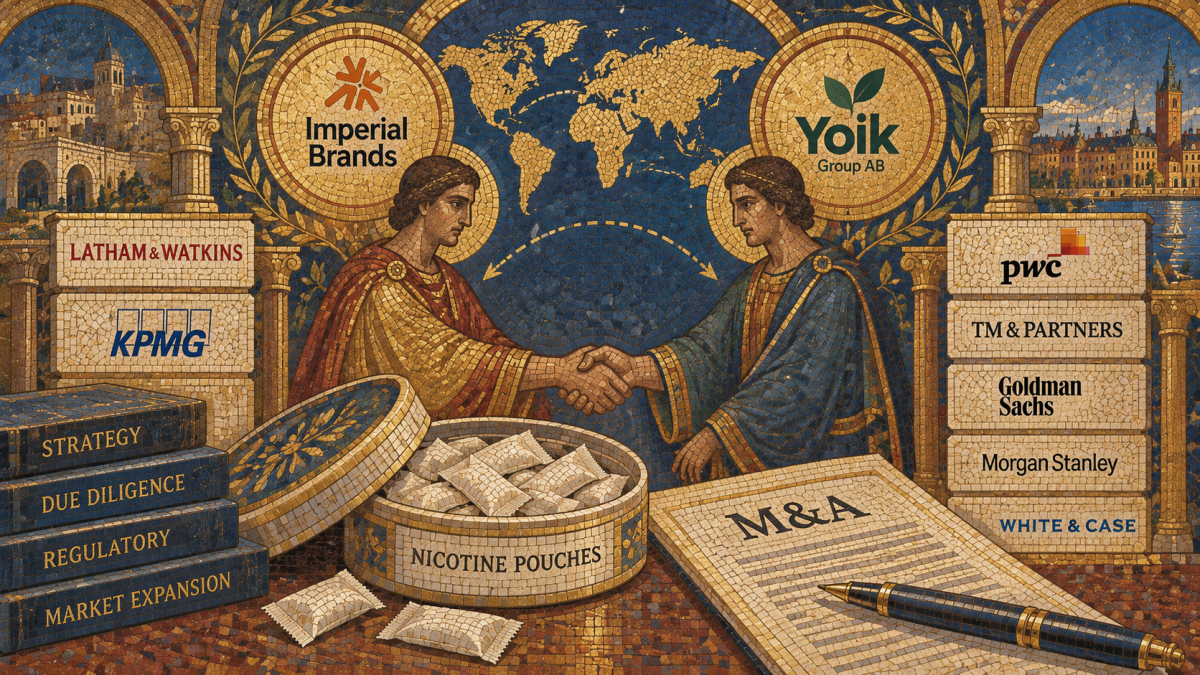
Inside Nicotine-Pouch M&A Through Imperial's Yoik Deal: Latham, KPMG, PwC, Goldman Sachs and Morgan Stanley Form the Adviser Lineup
Imperial Brands' acquisition of Swedish Helwit owner Yoik Group AB has highlighted the professional-services firms supporting cross-border oral nicotine M&A. Latham & Watkins and KPMG advised Imperial, while PwC and TM & Partners advised Yoik. KPMG also appeared on Imperial's acquisition of Black Buffalo earlier in 2026, while PwC played an extensive role in KT&G's acquisition of Swedish nicotine-pouch company Another Snus Factory. Imperial's public disclosures put the global modern oral nicotine delivery market at approximately £8.8 billion in retail sales and 23.5 billion pouches in 2024
Sep.20
As Regulators Focus on Nicotine Pouch Child Safety, Safeguard Pursues an External Packaging Route
As regulators pay closer attention to child safety in nicotine pouches, manufacturers face a practical challenge: how to strengthen child-resistant packaging without unnecessarily reworking products, production lines and regulatory submissions already in place. In a written interview with 2Firsts, Chemular detailed Safeguard’s external packaging approach, its customer-specific testing requirements and possible PMTA pathways. The model remains early-stage, but it offers a new way to think about an increasingly important regulatory and manufacturing issue.
Industry Insight
Sep.19
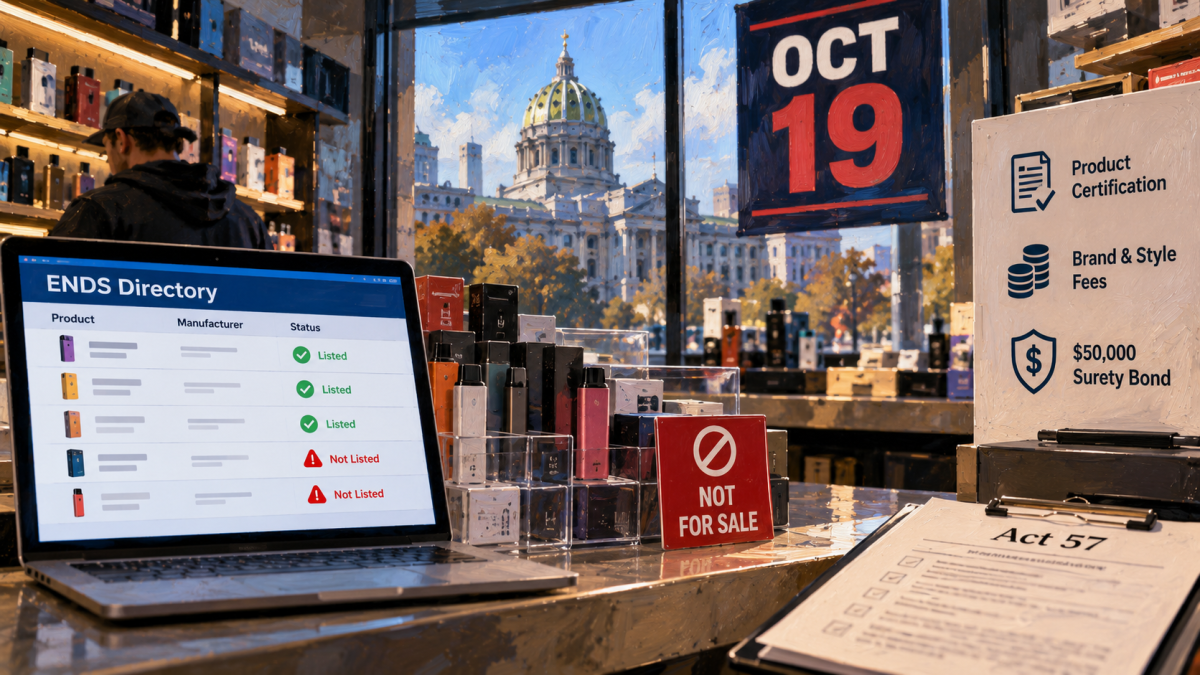
Pennsylvania Vape Directory Enforcement Starts Oct. 19, Barring Retail Sales of Unlisted Products
Pennsylvania's Act 57 vape directory regime will reach the end of its 120-day inventory transition period on Oct. 19. Nicotine-containing e-cigarettes intended for retail sale in the state that are not listed on the Attorney General's ENDS directory will then be barred from retail sale and treated as contraband subject to seizure, forfeiture and destruction. Manufacturers face annual product certification, brand- and style-based fees and a minimum $50,000 surety bond, while retailers and wholesalers must source through licensed channels and monitor the directory.
Regulations
Oct.08
PMI Expands U.S. ZYN Portfolio With New 1.5 mg and 8 mg Strengths, Moves Toward a Unified 20-Pouch-Per-Can Format
Philip Morris International is expanding its U.S. ZYN nicotine pouch portfolio with new 1.5 mg and 8 mg strengths and plans to move its core 3 mg and 6 mg dry-pouch products from 15 to 20 pouches per can in the fourth quarter of 2026. ZYN ULTRA is also commercially available, with FDA authorization covering 10 products at 9 mg and one 11 mg Smooth product. PMI U.S. lists the new 1.5 mg and 8 mg strengths as commercially available, but as of September 10 they do not appear on the FDA’s public authorization list. Public materials do not identify which PMTA submissions cover the two new strengths or their current review status.
Sep.11
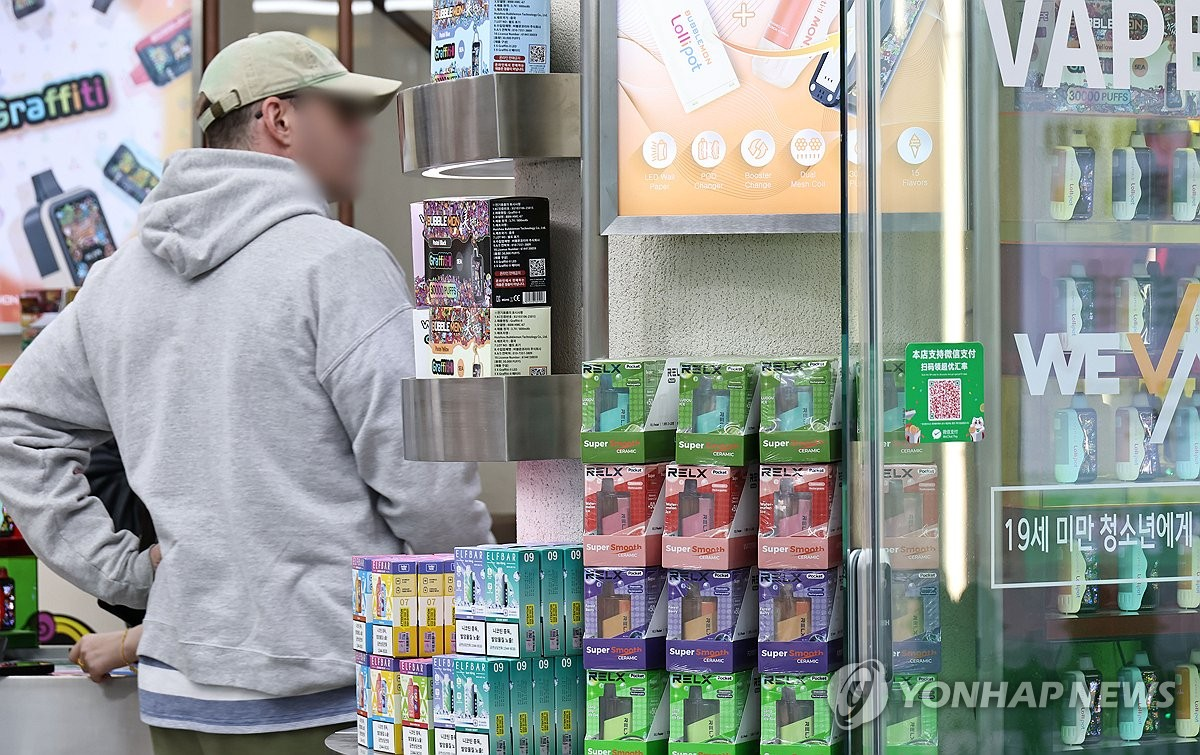
South Korea Fully Reviews Nicotine-Analog and Nicotine-Free Vape Liquid Imports, With Over 99% From China and Chinese Supply-Chain Documents Under Scrutiny
Korea Customs Service has tightened import controls on nicotine-analog and nicotine-free e-cigarette liquids, placing the products under 100% document review and subjecting all e-cigarette liquid import declarations to pre-clearance ingredient analysis. As of September 20, 2026, South Korea had imported about 15 metric tons of nicotine-analog liquids, 99.99% from China, and about 316 metric tons of nicotine-free liquids, including roughly 315 metric tons, or 99.7%, from China. The measures follow South Korea's April expansion of its tobacco definition to include synthetic nicotine products and include new checks on Chinese manufacturing, transaction and export documentation.
Sep.24