Singapore rolls out red vape disposal bins: Ong Ye Kung says move protects youth and avoids criminal records

Sep.08.2025
Singapore rolls out red vape disposal bins: Ong Ye Kung says move protects youth and avoids criminal records
Singapore Health Minister Ong Ye Kung explained that the islandwide rollout of red vape disposal bins is meant to let offenders—especially the roughly 30% of users under 30—surrender their devices without penalties, avoiding criminal records under the Misuse of Drugs Act. At the same time, the government has imposed tougher penalties on etomidate-laced “Kpods” (including mandatory minimum jail terms and caning) to choke off the supply chain. Authorities will review the effectiveness of the curre

Key Points


• Measure: Red vape disposal bins deployed islandwide, allowing offenders to surrender devices without penalties, with a focus on younger users.


• Rationale: Ong says “a lot of young people” vape—about 30% are under 30; using the Misuse of Drugs Act (MDA) harshly could harm their future records.


• Site feedback: Some bins (e.g., in Kembangan) have filled up.


• Enforcement: From Aug 28, a clampdown on etomidate-laced “Kpods”; from Sept 1, importing Kpods carries a minimum 3 years’ jail and 5 strokes of the cane, up to 20 years and 15 strokes for serious cases.


• Legal alignment: Etomidate is classified as a Class C controlled drug under the MDA; illegal possession/use can carry up to 10 years’ jail and a S$20,000 fine. The temporary reclassification lapses on Feb 28, 2026.


• Next steps: Authorities will review current measures and consider new or amended laws to create a more fit-for-purpose framework.


2Firsts, September 8, 2025 — Singapore Health Minister Ong Ye Kung explained on local podcast “The Daily Ketchup” the Government’s recent tightening of vape controls, including the rollout of red vape disposal bins across the island. The bins allow offenders to turn in their devices without penalties. Ong said he approved the approach because “a lot of young people” are among users—about 30% are under 30—and strict MDA enforcement could leave records that harm their future. He added that, unlike hardened drug abusers, young people are more likely to be persuaded to quit.


On utilisation, Ong noted some locations—such as Kembangan—have seen bins fill up, possibly due to coordinated disposal by groups of parents or students. Asked whether tougher penalties risk a “forbidden fruit” effect, he said similar measures have been effective against other drugs.


On August 28, the Government announced a package of actions targeting vaping, with a focus on etomidate-laced devices known as “Kpods.” From September 1, importing Kpods triggers a mandatory minimum of three years’ imprisonment and five strokes of the cane; serious offenders face up to 20 years and 15 strokes. Ong said such penalties make “businessmen” in the supply chain think twice and noted a decline in the share of vapes containing etomidate.


Etomidate has been classified as a Class C controlled drug under the MDA, exposing illegal possession and use to penalties of up to 10 years’ jail and a S$20,000 fine. The current reclassification expires on February 28, 2026. Ong said the present framework stitches together powers from the Poisons Act, the MDA and the Tobacco Act, and that a dedicated, fit-for-purpose law will likely be needed. Authorities will assess outcomes over the coming months before deciding on new or amended legislation.


 

Philippines Customs Seizes PHP11.68 Billion($200 Million) in Illegal Tobacco and Vapes in First Seven Months of 2026
Philippines Customs data showed that illegal cigarettes and vape products seized during the first seven months of 2026 were valued at about PHP11.68 billion, exceeding the PHP2.516 billion recorded for the full year of 2025. The figures were disclosed by a Bureau of Customs official during a House Committee on Ways and Means hearing on tobacco excise tax reforms. Vape-related seizures were valued at about PHP1.65 billion, with most cases recorded at the Manila International Container Port. Customs officials said enforcement against illicit tobacco trade would continue.
Aug.26
Altria’s USSTC Starts $250 Million Kentucky Expansion, Adding More Than 200 Jobs
U.S. Smokeless Tobacco Company, an Altria Group company, has broken ground on an approximately $250 million manufacturing expansion in Hopkinsville, Kentucky. The roughly 270,000-square-foot facility is expected to create more than 200 jobs and absorb processing, manufacturing and packaging operations currently split between Hopkinsville and Nashville, Tennessee. USSTC previously said production at its Nashville facility is expected to wind down by early 2028. The project forms part of Altria’s broader effort to modernize and consolidate its U.S. smokeless tobacco manufacturing network.
Sep.10
PMI Pushes Smoke-Free Business in Latin America as Argentina Lifts Heated Tobacco Ban, Mexico City Share Tops 7%
Philip Morris International (PMI) showcased IQOS heated tobacco systems and nicotine pouch products at Technovation 2026 in Buenos Aires on October 7–8, presenting research on consumer attitudes, regulatory developments and illicit cigarette trade across Latin America. PMI Chief Global Growth Officer Stefano Volpetti said smoke-free products accounted for more than 7% of the Mexico City market. Argentina repealed its heated tobacco ban in May 2026 and introduced registration requirements for tobacco and nicotine products, while local media reported nicotine pouch sales in Mendoza. A PMI-commissioned survey found that only 8% of respondents across four Latin American countries were familiar with nicotine pouches. A separate KPMG study estimated illicit cigarette consumption at 77 billion sticks across 11 markets in Latin America and Canada in 2025.
PMI
Oct.13
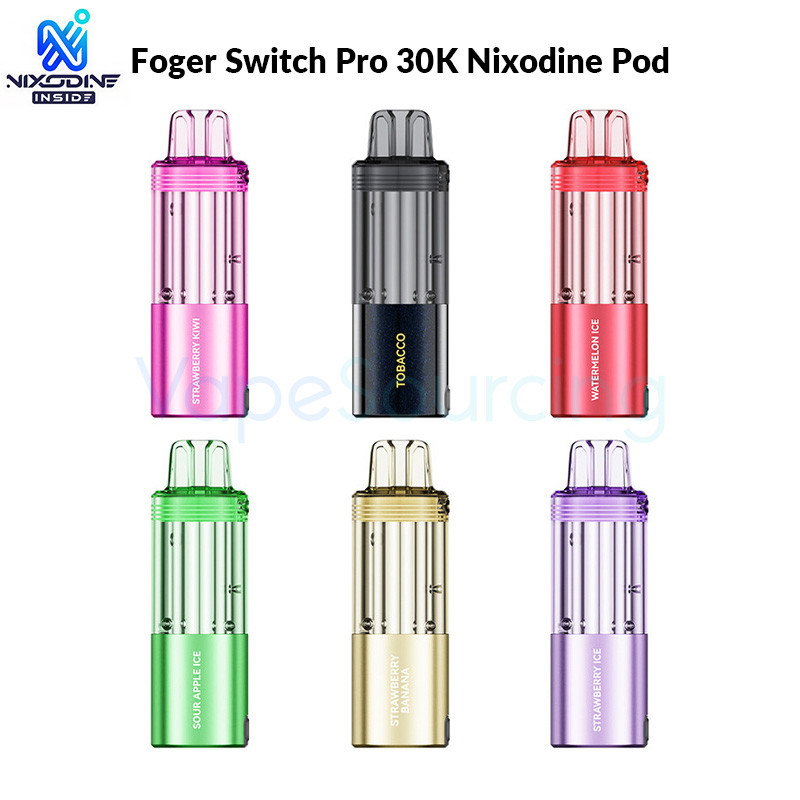
Product | FOGER Introduces Switch Pro 30K Nixodine Pod in U.S. Retail, Bringing 6-MN Related Formulation to High-Capacity Pod Platform
FOGER has introduced the Switch Pro 30K Nixodine Pod in U.S. retail channels, bringing a 6-methylnicotine (6-MN)-related formulation into its reusable Switch Pro 30K pod ecosystem. The product retains the existing reusable dock and magnetic replacement pod architecture, featuring a 19ml prefilled pod, dual-mesh heating and Normal/Boost modes. The Nixodine version is labeled nicotine-free in terms of conventional nicotine but uses a 5% Nixodine-related formulation. The product has appeared in U.S. retail and wholesale channels, with some listings indicating Kentucky-only availability.
Aug.28
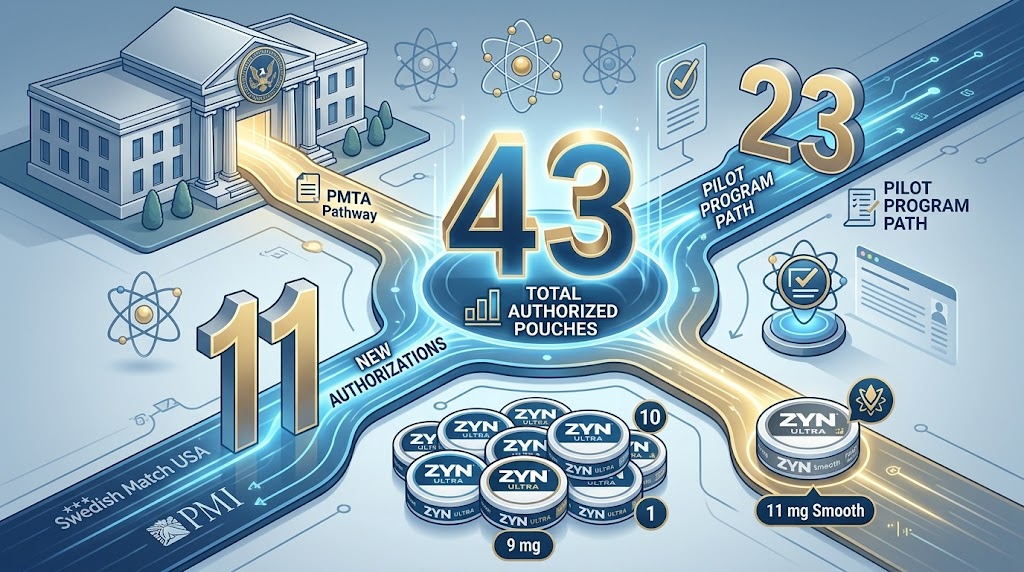
FDA Grants PMTA Authorization to 11 ZYN ULTRA Nicotine Pouches, Bringing Total Authorized Pouches to 43
The U.S. Food and Drug Administration authorized 11 ZYN ULTRA nicotine pouch products made by Swedish Match USA through the premarket tobacco product application pathway on August 21, 2026. Ten of the authorized products have a labeled nicotine content of 9 mg, while ZYN ULTRA Smooth was authorized at 11 mg. The reviews were conducted through FDA’s nicotine pouch PMTA pilot program. FDA has now authorized 43 nicotine pouch products, including 23 through the pilot.
Aug.24
Retail Case Study | Wisconsin Vape Market One Year After New Regulations: Johnny Vapes Reports 80% Sales Decline as Consumers Shift Online and Across State Lines
According to WNCY on August 24, 2026, some independent vape retailers in Wisconsin say they have faced significant business pressure one year after new vape regulations took effect. Johnny Vapes, a retailer operating in northeast Wisconsin, said its store count fell from seven locations to four, sales declined by about 80%, and roughly 90% of its inventory was affected. Retailers said some consumers have shifted to online purchases or traveled to neighboring Michigan to buy vape products. The case highlights how local regulations can reshape retail operations, inventory management and consumer purchasing patterns.
Aug.28