Key points:
·Tobacco Hazards and Impacts: In Bangladesh, 71% of deaths are caused by non-communicable diseases (NCDs), with tobacco being a major factor; Tobacco hinders the achievement of SDGs, including quality health and poverty reduction, affecting the vision of SDGs in 2030.
·Key Population and Smoking Control Needs: Nearly 50 million young people aged 15-35 in Bangladesh need protection, requiring smoke-free industry intervention in smoking control laws and strict enforcement.
·Progress and Contradictions in the Amendment of the Law: The Ministry of Health and Family Welfare initiated the revision of the smoking control law in 2021, with the draft to be revised by the High-Level Consultative Committee in 2024. However, tobacco companies continue to interfere, prompting experts to urge the government to expedite the process.
·Various Positions and Calls: Former government advisors, Cancer Association presidents, public health experts, and others emphasize the importance of smoking control, calling for the prompt passage of the revised draft; Media representatives argue that the mainstream media should continue to push for the amendment of smoking laws.
·Core Content of the Revised Draft: Proposed measures include the elimination of designated smoking areas in public places, banning the display of tobacco products at sales points, tobacco company CSR projects, and retail tobacco products, as well as a comprehensive ban on the production, import, and marketing of e-cigarettes and heated tobacco products (HTPs).
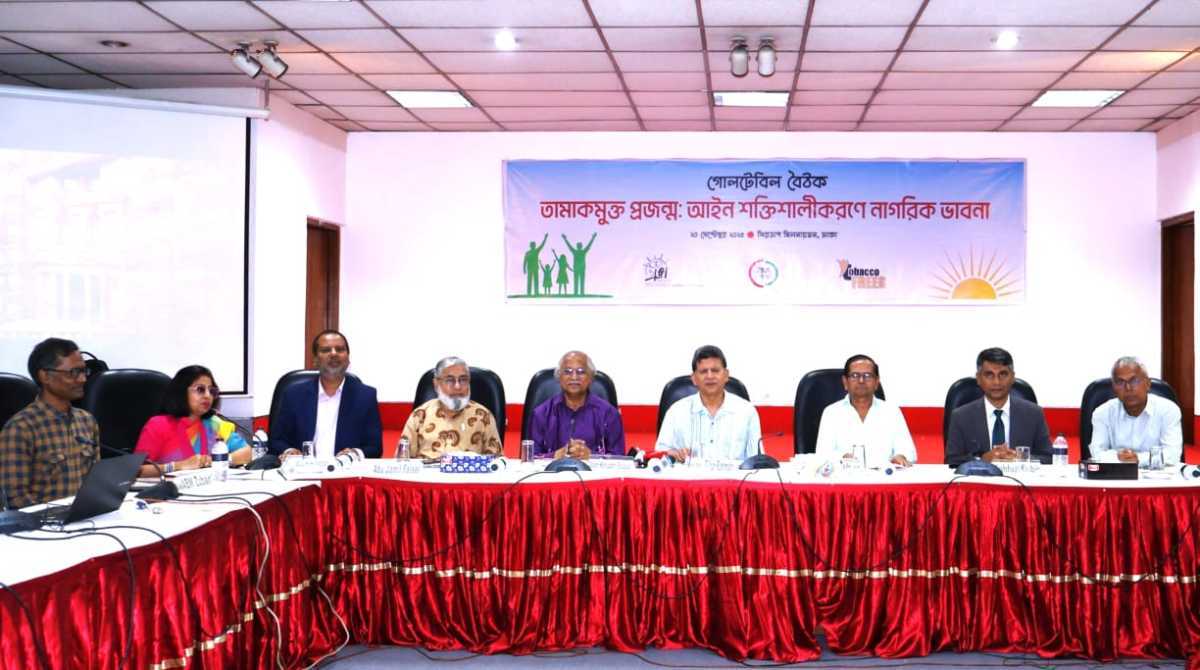
2Firsts, September 22, 2025 - According to ajkerdesh on September 20, tobacco is a major obstacle to Bangladesh in achieving its Sustainable Development Goals (SDGs), particularly hindering the goal of reducing premature deaths from non-communicable diseases (NCDs) by one third by 2030. In Bangladesh, non-communicable diseases, including cardiovascular diseases and cancer, account for 71% of all deaths, with tobacco use being a major contributing factor. Experts at a roundtable meeting organized jointly by PROGGA (Knowledge for Progress) and the Anti-Tobacco Media Alliance (ATMA) stated that there is no alternative solution as effective as strengthening tobacco control laws in reducing loss of life and establishing a tobacco-free generation.
During the meeting, it was revealed that there are nearly 50 million young people in Bangladesh aged between 15 and 35. In order to protect the population from the harmful effects of tobacco, it is necessary to pass a smoke-free law without industry interference, and ensure its strict enforcement.
Experts point out that tobacco hinders the achievement of all major sustainable development goals, such as good health, poverty reduction, food security and sustainable agriculture, quality education, gender equality, environmental protection, and climate change. Therefore, it could impact the vision of achieving the SDGs by 2030. Due to the serious impact of tobacco, the Ministry of Health and Family Welfare initiated the revision of the "Smoking and Tobacco Products (Control) (Amendment) Act" in 2021, with the draft currently being revised by a high-level advisory committee established in 2024. However, tobacco companies continue to interfere in the amendment process. Experts urge the government to expedite the revision and adoption process, without being misled by the industry's unethical tactics.
The main guest of the event, former caretaker government adviser and renowned economist Dr. Hossain Zillur Rahman, stated, "The dangers of tobacco are multifaceted. With the government currently undertaking comprehensive reforms, the revision of tobacco control laws will be a hallmark reform for the government.
Professor Dr. Golam Mohiuddin Faruque, President of the Bangladesh Cancer Society (BCS), stated during a workshop for tobacco-induced cancer victims, "We have heard the painful experiences of these victims and do not want to hear of such tragedies again. In order to protect the next generation, revisions to tobacco control laws need to be approved as soon as possible.
Public health expert and incoming president of the Public Health Association, Dr. Abu Jamil Faisel, stated, " Strengthening tobacco control laws is essential in addressing the prevalence of non-communicable diseases. I urge the government to ensure that the revised draft is passed swiftly.
Abu Taher, editor of the Bangladesh Daily, stated that "the mass media has played a crucial role in advocating for revisions to tobacco control laws, and this trend must continue.
Dr. Mahfuz Kabir, research director of the Bangladesh Institute of International and Strategic Studies (BIISS), stated, "The revision of tobacco control laws is not related to potential revenue loss. To protect public health, the revision process must be free from interference by the tobacco industry.
It is worth noting that the revised draft proposed by the Ministry of Health and Family Welfare includes suggestions such as but not limited to: cancelling designated smoking areas in all public places and public transportation, banning the display of tobacco products at point of sale, prohibiting tobacco companies' corporate social responsibility (CSR) projects, prohibiting the sale of tobacco products, and prohibiting the production, import, and marketing of all types of e-cigarettes and heated tobacco products (HTPs).
We welcome news tips, article submissions, interview requests, or comments on this piece.
Please contact us at info@2firsts.com, or reach out to Alan Zhao, CEO of 2Firsts, on LinkedIn
Notice
1. This article is intended solely for professional research purposes related to industry, technology, and policy. Any references to brands or products are made purely for objective description and do not constitute any form of endorsement, recommendation, or promotion by 2Firsts.
2. The use of nicotine-containing products — including, but not limited to, cigarettes, e-cigarettes, nicotine pouchand heated tobacco products — carries significant health risks. Users are responsible for complying with all applicable laws and regulations in their respective jurisdictions.
3. This article is not intended to serve as the basis for any investment decisions or financial advice. 2Firsts assumes no direct or indirect liability for any inaccuracies or errors in the content.
4. Access to this article is strictly prohibited for individuals below the legal age in their jurisdiction.
Copyright
This article is either an original work created by 2Firsts or a reproduction from third-party sources with proper attribution. All copyrights and usage rights belong to 2Firsts or the original content provider. Unauthorized reproduction, distribution, or any other form of unauthorized use by any individual or organization is strictly prohibited. Violators will be held legally accountable.
For copyright-related inquiries, please contact: info@2firsts.com
AI Assistance Disclaimer
This article may have been enhanced using AI tools to improve translation and editorial efficiency. However, due to technical limitations, inaccuracies may occur. Readers are encouraged to refer to the cited sources for the most accurate information.
We welcome any corrections or feedback. Please contact us at: info@2firsts.com