Key Points
- The Tobacco Business Act amendment will be reintroduced to the Legislation and Judiciary Committee on November 26.
- The bill seeks to define synthetic nicotine as tobacco, making it subject to taxation and regulation.
- Lawmakers cite the need to protect youth and prevent tax evasion.
- Civic groups and health advocates urge swift passage, warning of harm from regulatory gaps.
- Some lawmakers call for further debate on including nicotine analogues and anti-hoarding measures.
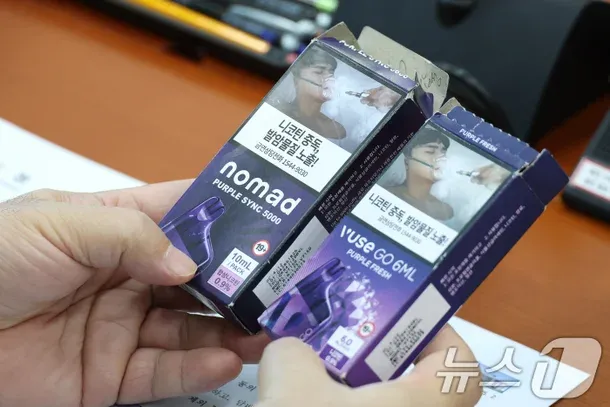
2Firsts, November 26, 2025 — According to News1,the South Korean National Assembly’s Legislation and Judiciary Committee will reconsider on Tuesday an amendment to the Tobacco Business Act that classifies synthetic nicotine as a tobacco product. The move comes amid rising calls from civic groups and lawmakers to regulate synthetic nicotine, which has been identified as a major gateway to smoking among adolescents.
The bill, previously postponed on November 12, has been resubmitted for discussion. Lawmakers expect it to pass during the ongoing regular session, citing growing consensus that stronger controls are needed to protect youth and ensure proper tax collection.
Lawmakers Kim Ki-pyo (김기표) of the Democratic Party and Na Kyung-won (나경원) of the People Power Party raised concerns earlier this month, suggesting the bill needs refinement to address two key issues:
Extending regulation and safety testing to nicotine analogues beyond synthetic nicotine;
Introducing anti-stockpiling and anti-hoarding measures to prevent market manipulation before the law takes effect.
Government officials have pledged to prepare complementary measures, including administrative guidance to minimize unintended side effects and collaboration with local authorities to verify the safety of imported synthetic nicotine prior to enforcement.
A staff member from Kim’s office said, “We requested the Ministry of Finance to propose specific solutions since sellers are evading taxes while earning massive profits. A general consensus has been reached.”
Similarly, Na’s office commented, “While the bill needs to be passed swiftly, the government must ensure proper safeguards are in place.”
Synthetic nicotine, widely used in e-cigarette liquids, is currently not classified as tobacco under Korean law. This means it is untaxed and can be sold online or via vending machines, creating a loophole that exposes minors to nicotine products.
Civic groups, including the Youth Protection Alliance, held a rally on November 23 in front of National Assembly member Kim Yong-min’s office in Namyangju, demanding swift passage of the amendment.
“Youth are already being harmed due to the regulatory vacuum,” the group said. “What we need now is not a perfect law, but at least a basic protective measure.”
Meanwhile, the Korea Electronic Cigarette Industry Association argued in a written opinion submitted on November 19 that mass stockpiling is unlikely due to e-liquid expiration. The association also warned that defining nicotine analogues as tobacco might create contradictions by indirectly legalizing their production. It suggested that existing pharmaceutical regulations could effectively restrict unsafe analogues instead.
If the bill fails again in committee, it may lose momentum and fall behind other key legislative priorities, including the national budget. However, if it passes the Judiciary Committee today, it is expected to move swiftly to a plenary vote within the current National Assembly session.
An industry representative added, “The number of synthetic nicotine businesses and underage users is growing daily. Lawmakers must take broader action to curb its social harm.”
Image source: News1
We welcome news tips, article submissions, interview requests, or comments on this piece.
Please contact us at info@2firsts.com, or reach out to Alan Zhao, CEO of 2Firsts, on LinkedIn
Notice
1. This article is intended solely for professional research purposes related to industry, technology, and policy. Any references to brands or products are made purely for objective description and do not constitute any form of endorsement, recommendation, or promotion by 2Firsts.
2. The use of nicotine-containing products — including, but not limited to, cigarettes, e-cigarettes, nicotine pouchand heated tobacco products — carries significant health risks. Users are responsible for complying with all applicable laws and regulations in their respective jurisdictions.
3. This article is not intended to serve as the basis for any investment decisions or financial advice. 2Firsts assumes no direct or indirect liability for any inaccuracies or errors in the content.
4. Access to this article is strictly prohibited for individuals below the legal age in their jurisdiction.
Copyright
This article is either an original work created by 2Firsts or a reproduction from third-party sources with proper attribution. All copyrights and usage rights belong to 2Firsts or the original content provider. Unauthorized reproduction, distribution, or any other form of unauthorized use by any individual or organization is strictly prohibited. Violators will be held legally accountable.
For copyright-related inquiries, please contact: info@2firsts.com
AI Assistance Disclaimer
This article may have been enhanced using AI tools to improve translation and editorial efficiency. However, due to technical limitations, inaccuracies may occur. Readers are encouraged to refer to the cited sources for the most accurate information.
We welcome any corrections or feedback. Please contact us at: info@2firsts.com