South Korea online purchasing fuels spread among younger groups; online drug cases share climbs

Feb.11
South Korea online purchasing fuels spread among younger groups; online drug cases share climbs
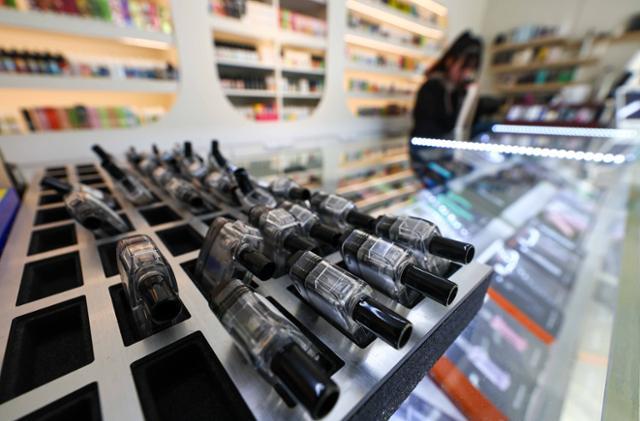
Police said detections of new drugs disguised as e-cigarettes reached 1,206 cases through September last year, up from 941 in 2022, and the number of detected drug types increased from 26 to 33 over the same period.


Key Takeaways


  • 1,206 detections of drugs disguised as e-cigarettes through September last year; 941 in 2022
  • Detected drug types increased from 26 to 33 over the same period
  • Police to implement special measures with eight agencies covering interdiction, enforcement, prevention/treatment, and international cooperation
  • Psychotropic-drug offenders: 10,326 in 2024 vs. 10,896 last year; seizures 381 kg vs. 448 kg
  • Online drug-offender share rose from 21.4% (2020) to 39.9% (last year)


2Firsts, Feb 11, 2026


According to the hankookilbo, detections of new drugs disguised as e-cigarettes reached 1,206 cases through September last year, a marked increase from 941 in 2022. The number of detected drug types also rose from 26 to 33 over the same period. Police said they will activate a government-wide cooperative framework to crack down on new drugs.


The National Investigation Headquarters of the Korean National Police Agency said on the 11th that it will 추진 a special set of measures with eight agencies, including the Supreme Prosecutors’ Office, the Ministry of Education, the Ministry of Food and Drug Safety, and the Korea Customs Service, to prevent the spread of new narcotics. The plan bundles measures covering interdiction of smuggling, domestic distribution enforcement, prevention and treatment, and international cooperation.


The report said the number of psychotropic-drug offenders increased from 10,326 in 2024 to 10,896 last year, and seized quantities rose from 381 kg to 448 kg. It also noted a trend in which new drugs disguised as liquid e-cigarettes or food products spread via online transactions and contactless delivery. The share of online drug offenders climbed from 21.4% in 2020 to 39.9% last year—nearly doubling over five years. Police said new drugs are spreading rapidly to younger age groups through the fast-growing online drug distribution market.


Because new drugs are often smuggled in from overseas, police said they will build a cooperative system with the Korea Customs Service to share smuggling and distribution information, linking investigations from the border stage through domestic circulation. With the Seoul Metropolitan Government, police plan to intensively monitor illegal advertising and sales channels in the online market to delete and block them. For misuse of medical narcotics, they also plan to share hospital and clinic information to enable swift enforcement.


Image source: hankookilbo


We welcome news tips, article submissions, interview requests, or comments on this piece.

Please contact us at info@2firsts.com, or reach out to Alan Zhao, CEO of 2Firsts, on LinkedIn


Notice

1.  This article is intended solely for professional research purposes related to industry, technology, and policy. Any references to brands or products are made purely for objective description and do not constitute any form of endorsement, recommendation, or promotion by 2Firsts.

2.  The use of nicotine-containing products — including, but not limited to, cigarettes, e-cigarettes, nicotine pouchand heated tobacco products — carries significant health risks. Users are responsible for complying with all applicable laws and regulations in their respective jurisdictions.

3.  This article is not intended to serve as the basis for any investment decisions or financial advice. 2Firsts assumes no direct or indirect liability for any inaccuracies or errors in the content.

4.  Access to this article is strictly prohibited for individuals below the legal age in their jurisdiction.


Copyright


This article is either an original work created by 2Firsts or a reproduction from third-party sources with proper attribution. All copyrights and usage rights belong to 2Firsts or the original content provider. Unauthorized reproduction, distribution, or any other form of unauthorized use by any individual or organization is strictly prohibited. Violators will be held legally accountable.

For copyright-related inquiries, please contact: info@2firsts.com


AI Assistance Disclaimer


This article may have been enhanced using AI tools to improve translation and editorial efficiency. However, due to technical limitations, inaccuracies may occur. Readers are encouraged to refer to the cited sources for the most accurate information.

We welcome any corrections or feedback. Please contact us at: info@2firsts.com

Australia Brings in Deloitte to Support Illicit Tobacco and Vape Enforcement Across Data, Processes and Project Delivery
Australia’s Department of Home Affairs has hired Deloitte to provide data analytics, business-process, communications and project-delivery support to the Office of the Illicit Tobacco and E-Cigarette Commissioner. The government says Deloitte personnel do not provide policy advice to the Commissioner or the Australian government, with policy development and decision-making remaining with public officials. The arrangement has nevertheless drawn scrutiny because Deloitte has previously provided professional services to several tobacco and vaping companies.
Sep.03
JUUL Purchasers Ask Ninth Circuit to Preserve Antitrust Classes in Case Over Altria’s $12.8 Billion Investment
Private antitrust litigation stemming from Altria's 2018 $12.8 billion investment for a 35% economic interest in JUUL is advancing before the U.S. Court of Appeals for the Ninth Circuit. Direct purchasers, indirect purchasers and indirect resellers of JUUL products filed answering briefs this week seeking to preserve class certifications granted by a California federal court in February. Altria and JUUL argue that individual consumers and large distributors differ too much in purchasing terms to remain in a single direct-purchaser class, while a separate dispute concerns whether California antitrust law can apply to indirect purchasers across 27 jurisdictions. A September trial has been put on hold during the appeal.
Sep.23
2Firsts Compliance Solutions Hosts PMTA Briefing on FDA Review Signals After JUUL2 Authorization
Following recent FDA authorizations for JUUL2 and ZYN ULTRA, 2Firsts Compliance Solutions held an online PMTA briefing on Sept. 4 to examine what the decisions may signal about review efficiency, scientific evidence and U.S. market access. Nearly 30 participants from brands, manufacturers, compliance service providers and investment firms joined the discussion.
2Firsts Events
Sep.06
 PMI Opens Generative AI Center in Portugal to Support Global Operations
PMI Opens Generative AI Center in Portugal to Support Global Operations
According to information released by Portugal’s Trade & Investment Agency (AICEP) in July 2026, Philip Morris International (PMI) has established a global Generative Artificial Intelligence Factory (GenAI Factory) at its Portuguese subsidiary Tabaqueira. The center will support PMI’s global operations by developing and deploying AI solutions focused on industrial process optimization, data analytics, operational automation and AI application development. The initiative strengthens Portugal’s role in PMI’s global technology and innovation network.
Aug.27
Australia Tobacco Tax Debate Spreads Within Labor as NSW Premier Minns Reaffirms Support for a Cut
Australia’s tobacco excise debate is increasingly exposing differences within the governing Labor Party. New South Wales Labor Premier Chris Minns reaffirmed on September 8 that he supports reducing tobacco excise, arguing that current tax settings are pushing consumers toward cheaper black-market cigarettes. Federal Health Minister Mark Butler continues to oppose an excise cut, while Treasurer Jim Chalmers and Assistant Treasurer Daniel Mulino have recently stopped short of ruling out future changes. The divergence follows the opposition Coalition’s proposal to cut tobacco excise by 80%.
Sep.08
Australian Coalition Unveils Illicit Tobacco Plan With 80% Excise Cut and Legal, Taxed Vapes and Nicotine Pouches
Australia’s Coalition has unveiled a national illicit-tobacco policy that would cut tobacco excise by 80% and create legal, regulated and taxed adult markets for vaping products and nicotine pouches if it wins government. The plan proposes an excise of A$0.50 per millilitre of e-liquid and A$0.025 per milligram of nicotine in pouches, alongside A$200 million in additional enforcement and a A$60 million three-year public-awareness campaign. The Coalition says the package would narrow the price advantage of illicit products and undermine organised crime, while Labor and public-health groups warn that dramatically cheaper cigarettes could reverse long-term declines in smoking.
Sep.03