Key Takeaways
- South Korea’s Ministry of Health and Welfare will implement a revised Tobacco Business Act on April 24.
- The legal definition of tobacco will expand from products made with “tobacco leaves” to all products made with natural or synthetic nicotine.
- Synthetic nicotine liquid e-cigarettes will be banned from online sales, and flavored products will no longer be allowed to use flavor-related words, pictures or photos on packaging and in advertisements.
- Sales through vending machines will require both retailer designation and adult verification devices, and installation locations will be restricted.
- From April 24, use of synthetic nicotine liquid e-cigarettes in smoke-free areas will also be banned, with violations subject to fines of up to KRW 100,000, or about USD 68.41 at the IMF’s April 2026 representative rate.
2Firsts, April 23, 2026
South Korea’s Ministry of Health and Welfare will implement a partial revision of the Tobacco Business Act on April 24. Under the amendment, the legal definition of tobacco in South Korea will change for the first time in 37 years since the law was established in 1988, expanding from products made from “tobacco leaves” to all products manufactured with natural and synthetic nicotine.
The tobacco definition will expand to natural and synthetic nicotine products
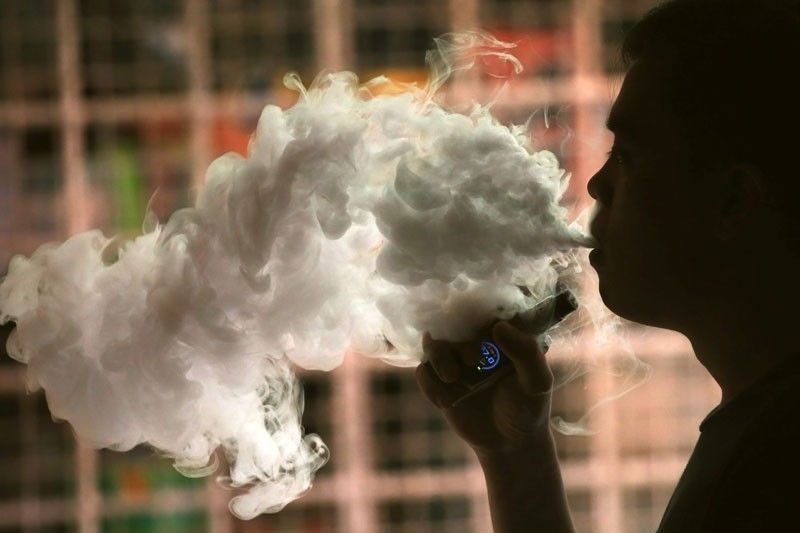
With the expansion of the tobacco definition, synthetic nicotine liquid e-cigarettes, which had previously been treated as industrial products and could be freely sold and advertised online, will from April 24 be regulated in the same way as ordinary tobacco products. According to Korea Disease Control and Prevention Agency data, the adult liquid e-cigarette use rate in 2024 was 3.8%, the highest since the survey began.
Online sales and flavor labeling will be fully banned
From April 24, online sales of synthetic nicotine liquid e-cigarettes will be fully prohibited. For products containing flavorings such as strawberry or lime, flavor-related words, illustrations and photos will also be banned from packaging and advertising.
Violations may result in fines of up to KRW 5 million, or about USD 3,420.56 at the IMF’s April 2026 representative rate. Warning pictures and warning statements will also become mandatory on cigarette packaging and advertisements, and violations may result in criminal penalties of up to one year in prison or fines of up to KRW 10 million, or about USD 6,841.12 at the same rate.
Vending machine sales will require adult verification and face location limits
When these products are sold through vending machines, sellers will be required both to obtain retailer designation and to install adult verification devices. Installation locations will be limited to places where entry by persons under 19 is prohibited, inside retail stores, and in smoking rooms.
Violations of these standards may result in fines of up to KRW 5 million, or about USD 3,420.56, while failure to install an adult verification device may result in fines of up to KRW 3 million, or about USD 2,052.34, using the IMF’s April 2026 representative rate. To protect existing liquid vape retailers, the 50-meter minimum distance rule between business premises will be suspended for two years.
Use in smoke-free areas will also become punishable
The amendment will also bring synthetic nicotine liquid e-cigarettes under smoke-free area regulation. Previously, because they were not included in the legal definition of tobacco, there had been cases in which fines were canceled even after use was detected in smoke-free areas. From April 24, smoking in smoke-free areas, whether with cigarettes, heated tobacco products or liquid e-cigarettes, may result in fines of up to KRW 100,000, or about USD 68.41 at the IMF’s April 2026 representative rate.
Youth liquid vape use rate stands at 2.9%
According to the Korea Disease Control and Prevention Agency’s Youth Health Behavior Survey, the youth liquid e-cigarette use rate in 2025 was 2.9%, including 3.8% among boys and 2.0% among girls.
The amendment is aimed at closing regulatory gaps
The focus of the Tobacco Business Act amendment is to close regulatory loopholes. The amendment was passed by South Korea’s National Assembly on Dec. 2, 2025, with 247 votes in favor, and was promulgated on Dec. 23 of the same month.
After a four-month grace period, it will now take effect. Manufacturers, importers, distributors and retailers are required to complete obligations such as adding warning labels, removing flavor-related labeling and installing adult verification devices on vending machines before the law takes effect.
Image source: Topic Tree
We welcome news tips, article submissions, interview requests, or comments on this piece.
Please contact us at info@2firsts.com, or reach out to Alan Zhao, CEO of 2Firsts, on LinkedIn
Notice
1. This article is intended solely for professional research purposes related to industry, technology, and policy. Any references to brands or products are made purely for objective description and do not constitute any form of endorsement, recommendation, or promotion by 2Firsts.
2. The use of nicotine-containing products — including, but not limited to, cigarettes, e-cigarettes, nicotine pouchand heated tobacco products — carries significant health risks. Users are responsible for complying with all applicable laws and regulations in their respective jurisdictions.
3. This article is not intended to serve as the basis for any investment decisions or financial advice. 2Firsts assumes no direct or indirect liability for any inaccuracies or errors in the content.
4. Access to this article is strictly prohibited for individuals below the legal age in their jurisdiction.
Copyright
This article is either an original work created by 2Firsts or a reproduction from third-party sources with proper attribution. All copyrights and usage rights belong to 2Firsts or the original content provider. Unauthorized reproduction, distribution, or any other form of unauthorized use by any individual or organization is strictly prohibited. Violators will be held legally accountable.
For copyright-related inquiries, please contact: info@2firsts.com
AI Assistance Disclaimer
This article may have been enhanced using AI tools to improve translation and editorial efficiency. However, due to technical limitations, inaccuracies may occur. Readers are encouraged to refer to the cited sources for the most accurate information.
We welcome any corrections or feedback. Please contact us at: info@2firsts.com