Key Points
● State Registries: AVM President Allison Boughner said state-level product registries and white-list systems are creating the most immediate disruption in the U.S. vapor market, as they directly affect what retailers and distributors can sell.
● Distributor Scrutiny: U.S. distributors are placing greater weight on PMTA status, FDA documentation, state registry eligibility, product testing, manufacturing origin and supply-chain transparency.
● Glas Authorization: Boughner said FDA’s authorization of certain Glas flavored products was symbolically important, but not a broad green light for flavored vapes.
● Operation Red Mist: The CBP operation pushed enforcement concerns further upstream, adding risk around imports, logistics, inventory stability and financial responsibility across the supply chain.
● Market Access: U.S. vape market access is increasingly shaped by overlapping state rules, federal enforcement, distributor due diligence and regulatory documentation, rather than any single FDA decision.
2Firsts
May 26, 2026
State-level product registries and white-list systems are creating the most immediate disruption in the U.S. vapor market, AVM President Allison Boughner told 2Firsts, as distributors and retailers face new limits on which products they can sell.
“Of all the recent developments, I believe the rise of state-level product registries and white-list systems has had the most immediate and disruptive impact on the market,” Boughner said in a written interview.
Her comments follow a series of U.S. regulatory developments. FDA recently authorized four Glas ENDS products, including menthol pods and two non-tobacco, non-menthol flavors, in what the agency described as its first authorization of non-tobacco and non-menthol ENDS products through the PMTA pathway. CBP also announced Operation Red Mist, which it said seized more than 18 million vaping products valued at more than $175 million. FDA has also faced leadership turbulence after Commissioner Marty Makary resigned in May.
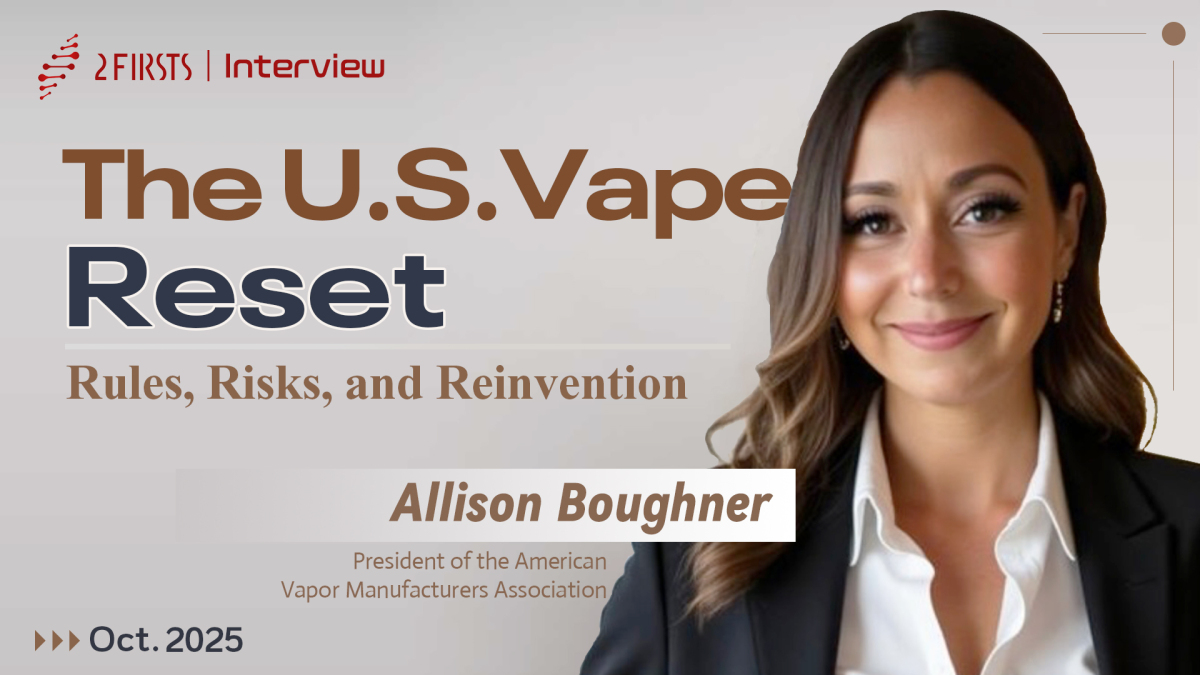
Boughner is President of the American Vapor Manufacturers Association and a long-time advocate for tobacco harm reduction. 2Firsts previously interviewed her in 2025 about how enforcement pressure was reshaping brands, distribution, compliance and U.S.-based manufacturing.
This follow-up interview focused on how the latest developments are affecting the market from the perspective of distributors, retailers, brand owners and manufacturers.
State Registries Become the Immediate Pressure Point
Boughner said the FDA’s authorization of certain Glas flavored products was symbolically important because it showed that non-tobacco, non-menthol products can still move through the current regulatory framework. FDA recently authorized four Glas ENDS products, including menthol pods and two products described by industry reports as mango and blueberry flavors. FDA said the action marked its first authorization of non-tobacco and non-menthol ENDS products.
But Boughner did not describe the decision as a broad opening for flavored vapor products. In daily business, she said, many companies are more focused on state-level restrictions because those rules directly affect which products retailers and distributors can legally sell.
“In many cases, states are moving faster and more aggressively than the FDA itself,” Boughner said. “That has created enormous uncertainty throughout the supply chain.”
Boughner was referring to state-level product registries and white-list systems. She said those state-level systems have had the most immediate and disruptive impact on the market.
The Glas authorization has also deepened industry frustration over regulatory standards, she said. Some industry participants believe potentially lower-risk alternatives face evidentiary and technological requirements that go far beyond those applied to combustible cigarettes.
For the market, the immediate question is not whether FDA has broadly opened the door to flavored products, but whether the decision will change how distributors, retailers and investors assess products with regulatory documentation — and whether similar authorizations can be replicated.
Distributors Scrutinize Documentation and Product Origin
Boughner said distributors are placing greater emphasis on compliance documentation and supply-chain visibility than they were a year ago.
She said distributors are now paying closer attention to PMTA submission status, FDA documentation, state registry eligibility, supply-chain transparency, manufacturing origin and product testing documentation.
“Compared to even a year ago, there is significantly more scrutiny surrounding product sourcing and regulatory positioning,” Boughner said.
She previously described distributors as market “gatekeepers.” Her latest remarks show that role becoming more central as distributors weigh federal enforcement risk, state registry eligibility and supply-chain exposure at the same time.
For manufacturers and brand owners, the change means product performance and price are no longer enough. Market access increasingly depends on whether a product can be documented, traced and defended through the distribution chain.
Operation Red Mist Adds Supply-Chain Risk
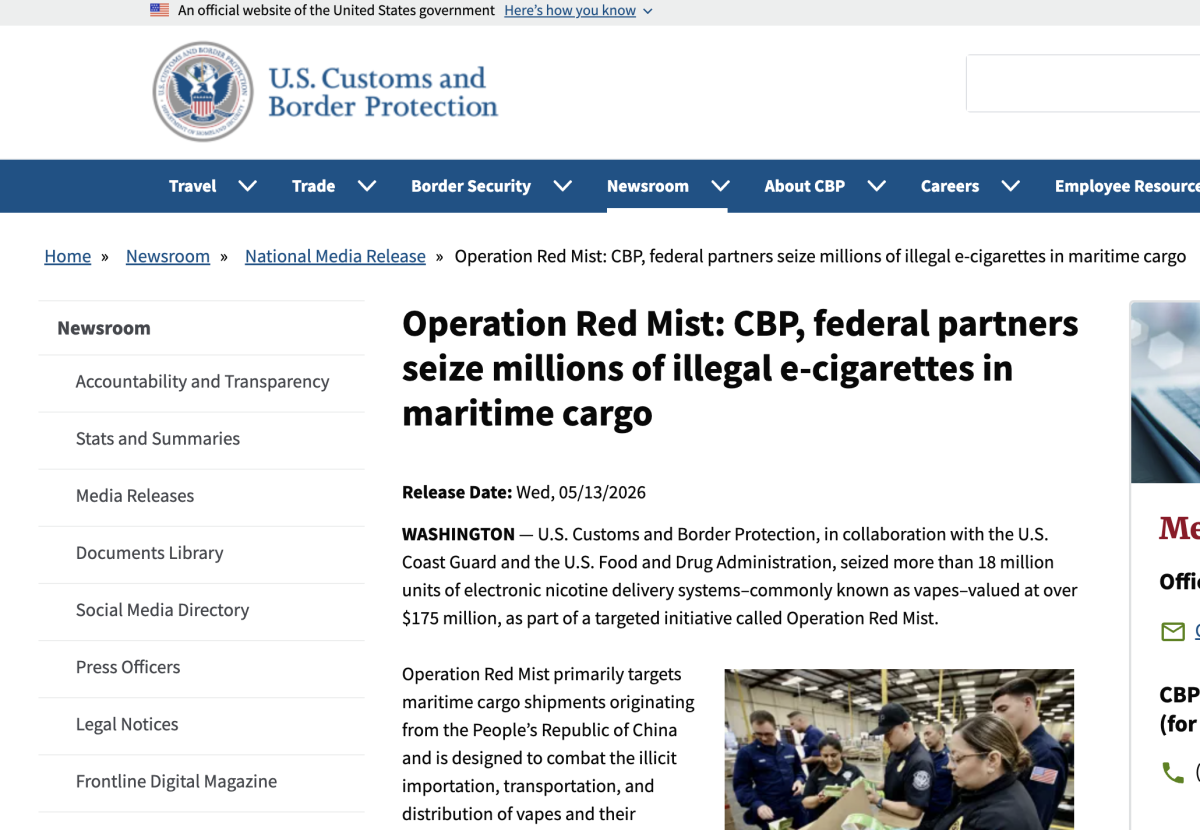
CBP announced Operation Red Mist on May 13, saying the operation seized more than 18 million electronic nicotine delivery systems valued at more than $175 million. The agency said the initiative focused on the illicit importation, transportation and distribution of unauthorized vaping products and related components.
Boughner said most people she spoke with became aware of the operation after CBP’s public announcement, although concern had already been building over tighter customs scrutiny and shipment delays.
“The operation clearly sent a message that enforcement is expanding upstream toward import networks and logistics infrastructure,” she said.
The financial impact of a seizure depends on contract structure and ownership of goods during transit, Boughner said. In some cases, overseas suppliers absorb the losses. In others, U.S. importers or brand owners bear the cost.
Retailers are usually less directly exposed to seizure losses, she said, but can still be affected through inventory shortages and supply instability.
“The reality is that increased seizure activity creates uncertainty across the entire supply chain regardless of who formally owns the shipment at the time,” Boughner said.
Consumers Shift Across Smoke-Free Categories
On the consumer side, Boughner said disposable products still dominate much of the U.S. market, particularly in convenience and specialty retail channels.
But she said interest is growing in products perceived as more stable from a regulatory standpoint, including pod systems, refillable devices, nicotine pouches and nicotine analogs.
In states with registry systems or flavor restrictions, many adult consumers are already experiencing reduced product availability, she said, which is influencing purchasing behavior.
Boughner said nicotine pouches are becoming more competitive within the adult nicotine category because of their convenience, discretion and smoke-free format. But she said she does not view pouches as a direct replacement for vapor products across the board.
“For many consumers, pouches and vapor products serve different use cases,” she said. “We are increasingly seeing adult consumers use multiple smoke-free product categories depending on environment and preference.”
PMTA Status Gains Commercial Weight
Boughner said she has seen renewed interest in PMTA strategy over the past six months.
That interest, she said, is being driven by state registry requirements, distributor expectations, investor pressure, evolving FDA enforcement priorities and the perception that the regulatory environment may be becoming more navigable.
“I also think recent FDA actions demonstrated that engagement with the regulatory process still matters,” Boughner said. “For years, many companies felt the process lacked transparency or any realistic pathway forward.”
She said significant concerns remain, but companies seeking long-term market stability increasingly recognize that they need some form of viable regulatory strategy.
PMTA submissions, filing-related communications or acceptance-related documentation do not amount to FDA marketing authorization. But Boughner said evidence of regulatory engagement is gaining commercial weight as distributors, investors and state-level systems reassess risk.
Enforcement Risk Extends Into Distribution and Retail
Beyond import seizures, Boughner said enforcement activity has become more coordinated and more selective.
“We are seeing increased pressure not only at the import level, but also throughout distribution and retail channels, particularly in states with active registries or product certification systems,” she said.
At the retail level, she said enforcement is increasingly tied to state compliance lists and registry eligibility, making it one of the largest operational concerns for many businesses.
At the federal level, Boughner said enforcement still appears heavily focused on unauthorized imports and products viewed as clearly outside the PMTA framework. But she said many independent companies with pending applications continue to operate in an uncertain environment.
“One of the biggest shifts over the last year is that regulation is no longer just an FDA issue,” Boughner said. “State governments are now playing a much larger role in determining which products survive in the marketplace and which do not.”
Market Access Faces Multiple Tests
Boughner’s comments describe a U.S. vapor market being reshaped across multiple layers, from federal authorization and import enforcement to state-level product lists, distributor due diligence, retail compliance and consumer choice.
The result is a market in which regulatory pressure is no longer confined to one agency or one point in the supply chain. It is affecting how products are sourced, documented, imported, distributed, stocked and sold.
Uncertainty, however, remains a defining feature of the U.S. vapor market. Companies are still weighing how to respond to state registries, federal enforcement, PMTA requirements and shifting consumer demand, while distributors and retailers continue to reassess which products carry acceptable risk.
For market participants, clearer regulatory and enforcement signals may be critical to reducing that uncertainty. Until then, the U.S. vapor market is likely to remain shaped by overlapping state rules, federal scrutiny, distributor risk controls and uneven product availability.
2Firsts will continue to follow developments in the U.S. vapor market.
(Cover image generated by AI)