StockNews Upgrades BAT (NYSE:BTI) Stock Rating to Buy

BAT by 2FIRSTS.ai
Dec.06.2023
StockNews Upgrades BAT (NYSE:BTI) Stock Rating to Buy
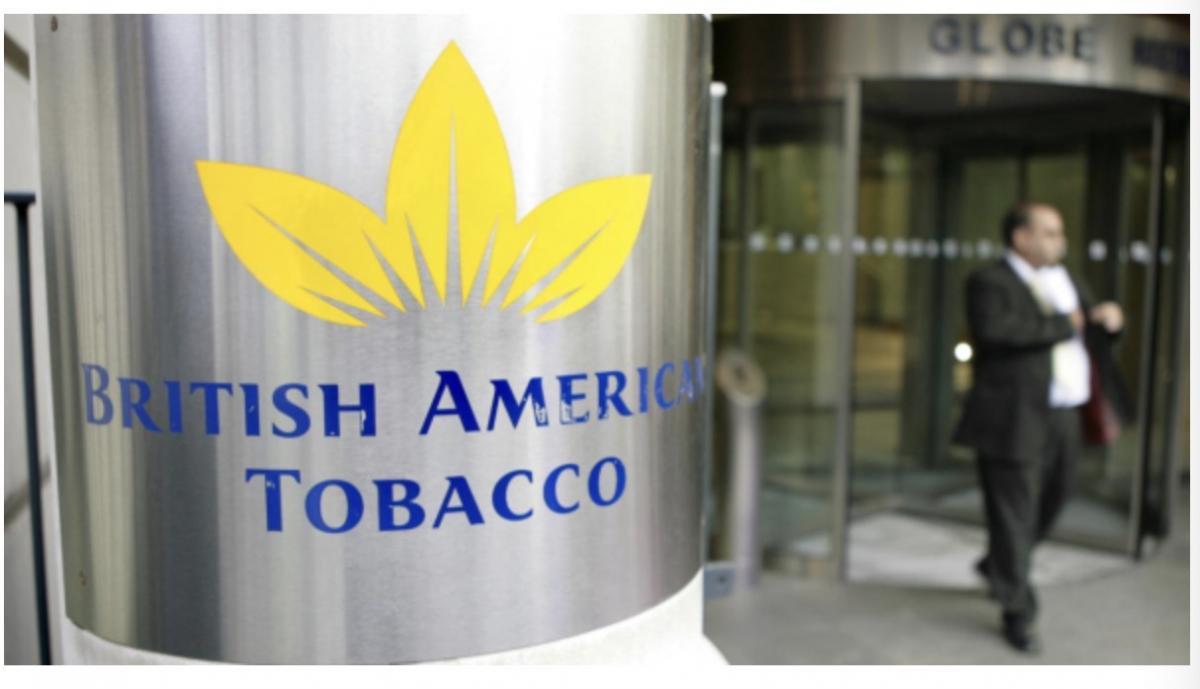
StockNews, a US stock news website, has upgraded its rating for British American Tobacco (NYSE: BTI) from "hold" to "buy".

According to multiple sources, StockNews, a US stock news website, recently upgraded its stock rating of British American Tobacco (NYSE:BTI) from "hold" to "buy".


Several other stock research analysts have also weighed in on the company. Argus downgraded their rating from "buy" to "hold." Meanwhile, Morgan Stanley and Citigroup both initiated coverage of British American Tobacco on November 1st and September 25th, respectively, and both gave it a "buy" rating.


Two investment analysts have given a "hold" rating on the stock, while three have given a "buy" rating. According to MarketBeat's data, British American Tobacco currently has an average rating of "moderate buy".


We welcome news tips, article submissions, interview requests, or comments on this piece.

Please contact us at info@2firsts.com, or reach out to Alan Zhao, CEO of 2Firsts, on LinkedIn


Notice

1.  This article is intended solely for professional research purposes related to industry, technology, and policy. Any references to brands or products are made purely for objective description and do not constitute any form of endorsement, recommendation, or promotion by 2Firsts.

2.  The use of nicotine-containing products — including, but not limited to, cigarettes, e-cigarettes, nicotine pouchand heated tobacco products — carries significant health risks. Users are responsible for complying with all applicable laws and regulations in their respective jurisdictions.

3.  This article is not intended to serve as the basis for any investment decisions or financial advice. 2Firsts assumes no direct or indirect liability for any inaccuracies or errors in the content.

4.  Access to this article is strictly prohibited for individuals below the legal age in their jurisdiction.


Copyright


This article is either an original work created by 2Firsts or a reproduction from third-party sources with proper attribution. All copyrights and usage rights belong to 2Firsts or the original content provider. Unauthorized reproduction, distribution, or any other form of unauthorized use by any individual or organization is strictly prohibited. Violators will be held legally accountable.

For copyright-related inquiries, please contact: info@2firsts.com


AI Assistance Disclaimer


This article may have been enhanced using AI tools to improve translation and editorial efficiency. However, due to technical limitations, inaccuracies may occur. Readers are encouraged to refer to the cited sources for the most accurate information.

We welcome any corrections or feedback. Please contact us at: info@2firsts.com

Smoore and EVE Energy Sign Procurement Framework Agreement Covering 2026–2028 Cell Supply
Smoore and EVE Energy have signed a procurement framework agreement for 2026–2028, under which Smoore Group will continue purchasing battery cells and related products. The agreement sets no specific transaction amount; actual figures will be determined by future orders, reflecting both parties’ intention to secure and extend their supply chain cooperation over the next three years.
Nov.21
South Korea’s Parliament Reconsiders Bill to Regulate Synthetic Nicotine as Tobacco
South Korea’s National Assembly is once again reviewing a bill to classify synthetic nicotine as a tobacco product under the Tobacco Business Act. The proposal aims to close regulatory loopholes that allow untaxed, unregulated nicotine liquids — often used by minors — to circulate freely. Lawmakers expect the bill to pass during the current session amid growing public and civic pressure.
Nov.26 by 2FIRSTS.ai
U.S. Fifth Circuit judges question FDA’s claim it has no de facto ban on flavored refillable e-cigarettes
Law360 reports that a Fifth Circuit panel expressed skepticism about the FDA’s claim that it has no de facto ban on flavored refillable e-cigarette products, noting that only six applications had been approved out of hundreds of thousands and that near-100% denials look like a ban.
Jan.07 by 2FIRSTS.ai
Global Tobacco Companies’ Latest Earnings Review: Nicotine Pouch Business Shows Broad Strength, Emerging as a Key Growth Driver
Multiple global tobacco and next-generation nicotine companies reported solid Q3 performance, with the nicotine-pouch category showing broad-based strength across seven firms. Growth was reflected in higher shipment volumes, expanded market coverage, and new product launches. Several companies also reported rising revenue contributions from pouches and continued investment in this fast-growing segment, underscoring its position as a key driver of future growth.
Nov.14
BREAKING: China Brings Nicotine Pouches Under Tobacco Monopoly Regulation, Signaling Major Shift for Oral Products
China has for the first time issued clear regulatory rules for nicotine pouches and other oral nicotine products, formally classifying them under the tobacco monopoly alongside cigarettes and tobacco, ending a long-standing legal grey zone and laying the regulatory groundwork for their potential domestic launch.
Jan.09 by Alan Zhao | 2Firsts Perspectives
Harm Reduction Experts Warn: FCTC COP11 Policies Risk Marginalizing the Global South
Two global tobacco harm reduction experts, in their submission to 2Firsts, argue that several COP11 policy proposals driven by high-income countries do not align with the capacities and conditions of low- and middle-income countries. They highlight research and funding gaps and call for a more equitable global support mechanism.
Nov.19