Study Shows Poor Scots Spend Third of Income on Tobacco

Mar.10.2023
Study Shows Poor Scots Spend Third of Income on Tobacco
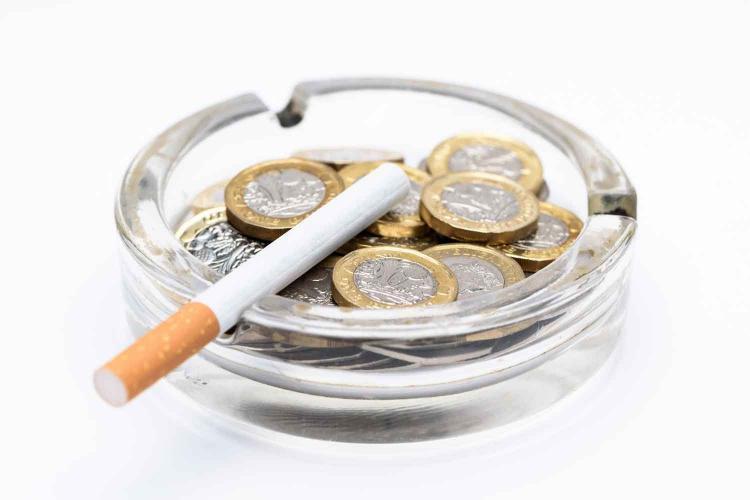
Scottish low-income families spend almost one-third of their income on tobacco according to a study by the "Tobacco and Health Action for Scotland" organization.

According to a report from the "Action on Smoking and Health" organization, nearly one-third of the income of poorer families in Scotland is spent on tobacco.


According to an analysis by the health organization, by 2023, the lowest-income group in the country will be spending 29.4% of their income on tobacco products, which is approximately nine times the amount spent by the highest-income group at 3.35%.


According to the study, by 2023, at least two smokers from low-income households will be spending over £6,000 (approximately RMB 49,841) on tobacco, which would account for 73.5% of their income.


Sheila Duffy, CEO of the Scottish Health Action on Smoking and Health, stated that "tobacco is a major cause of inequality, and our 2023 forecast data released today emphasizes the increasing demand for smoking cessation services in the Scottish National Health Service. Better resources and promotion are needed to support individuals in quitting smoking, especially in communities facing the greatest challenges.


In response to the investigative findings, the Scottish Smoking and Health Association has called for increased smoking cessation support in low-income communities.


Reference materials:


A recent study has found that financially disadvantaged individuals in Scotland spend almost one-third of their income on tobacco.


Disclaimer

This article is provided solely for professional research, industry discussion, and informational purposes. Any references to brands, companies, products, technologies, or policies are made for factual reporting and analytical purposes only, and do not constitute endorsement, recommendation, promotion, or advertising by 2Firsts.

Nicotine-containing products, including but not limited to cigarettes, e-cigarettes, heated tobacco products, and nicotine pouches, carry significant health risks. Readers are responsible for complying with all applicable laws and regulations in their respective jurisdictions, including age restrictions and access limitations.

The information contained in this article should not be regarded as investment, legal, medical, regulatory, or commercial advice. While 2Firsts strives to ensure the accuracy and reliability of its content, it does not assume liability for any direct or indirect loss arising from errors, omissions, inaccuracies, or reliance on the information contained herein.

This article is not intended for individuals below the legal age for accessing tobacco or nicotine-related information in their jurisdiction.


Copyright Notice

This article is either original content produced by 2Firsts or content reproduced, translated, summarized, or adapted from third-party sources with attribution where applicable. The intellectual property rights of the original content remain with 2Firsts or the respective original rights holders.

No individual or organization may copy, reproduce, distribute, republish, modify, translate, or otherwise use this content without prior authorization. Any unauthorized use may result in legal action.

For copyright-related inquiries, corrections, or removal requests, please contact: info@2firsts.com.


AI-Assisted Translation and Editing Notice

Portions of this article may have been translated, edited, or reviewed with the assistance of artificial intelligence tools to improve efficiency and readability. Due to the limitations of AI-assisted translation and editing, discrepancies, omissions, or inaccuracies may exist when compared with the original source.

Where applicable, readers are advised to refer to the original source for the most complete and accurate information. If you identify any errors or believe that any content infringes upon your rights, please contact us at info@2firsts.com, and we will review and address the matter promptly.


Malaysia Nicotine Vape Market Faces Legal Uncertainty Over Tax and Poisons List Ruling
Malaysia’s Finance Minister Anwar Ibrahim said duties and taxes on nicotine-containing vape products will be determined in line with the Court of Appeal’s ruling on whether liquid or gel nicotine can be exempted from the Poisons List under the Poisons Act 1952, a case that could affect the legal basis for vape taxation, retail sales and future ban policy.
Jun.29
2Firsts Data | China’s U.S. Vape Exports Have Yet to Regain Previous Growth Momentum in H1 2026, but Hardware Grew 15.2% and 6-Methyl Nicotine-Related Products Rose 234.7%
China’s vape exports to the U.S. reached approximately $1.58 billion in the first half of 2026, remaining broadly stable from a year earlier but still below previous growth momentum. 2Firsts’ analysis of China Customs data shows that the U.S. market has not simply returned to its previous trajectory after the enforcement shock and inventory-driven swings of 2025. Instead, export momentum is shifting across product categories. Vaping devices and atomization hardware increased 15.2% year over year, while 6-methyl nicotine-related and other nicotine substitute products surged 234.7%. Meanwhile, traditional nicotine-containing vaping products continued to face pressure.
Jul.22
Japan Health Ministry Cites Limited Evidence in Decision Not to Tighten Heated Tobacco Rules
Japan’s health ministry has proposed not tightening regulations on heated tobacco products to the same level as cigarettes as part of a review of passive smoking measures, with an expert panel broadly agreeing with the proposal, Jiji Press reported.
Jul.10
Special Report | Russia, Ukraine and Belarus Launch Fresh Push to Rein in Vaping
Russia, Ukraine and Belarus are tightening vape regulation through different tools, from Ukraine’s stronger enforcement push and Belarus’s proposed advertising restrictions to Russia’s new GOST standard and regional sales-ban mechanism. As black-market concerns persist, some Russian experts argue that China’s tightly controlled but legalised model — built around licensing, traceability and taxation — may offer a more effective alternative to blanket prohibition.
Jul.15
UK Parliament Briefing Puts Vape Hardware Design and Materials in Regulatory Focus
The UK Parliament’s Parliamentary Office of Science and Technology (POST) has published a scientific briefing reviewing current evidence on the health effects of vape device components, including heating elements, power settings, metals, plastics, batteries and e-liquid ingredients, signalling growing regulatory attention to device design and whole-product systems beyond e-liquids, flavours and packaging.
Special Report
Jun.29
PMI Highlights 43 Million Smoke-Free Users at Stockholm Summit
Philip Morris International says about 43 million adults worldwide now use its smoke-free products, with nearly 70% having stopped using cigarettes and smoke-free products accounting for about 43% of its net revenues.
Jun.18