Teenage Girl Hospitalized Due to Suspected E-Cigarette Poisoning in Russia

Regulations by 2FIRSTS.ai
Mar.12.2024
Teenage Girl Hospitalized Due to Suspected E-Cigarette Poisoning in Russia
A 9th grade girl in Saint Petersburg hospitalized for acute poisoning due to suspected e-cigarette; police investigate.

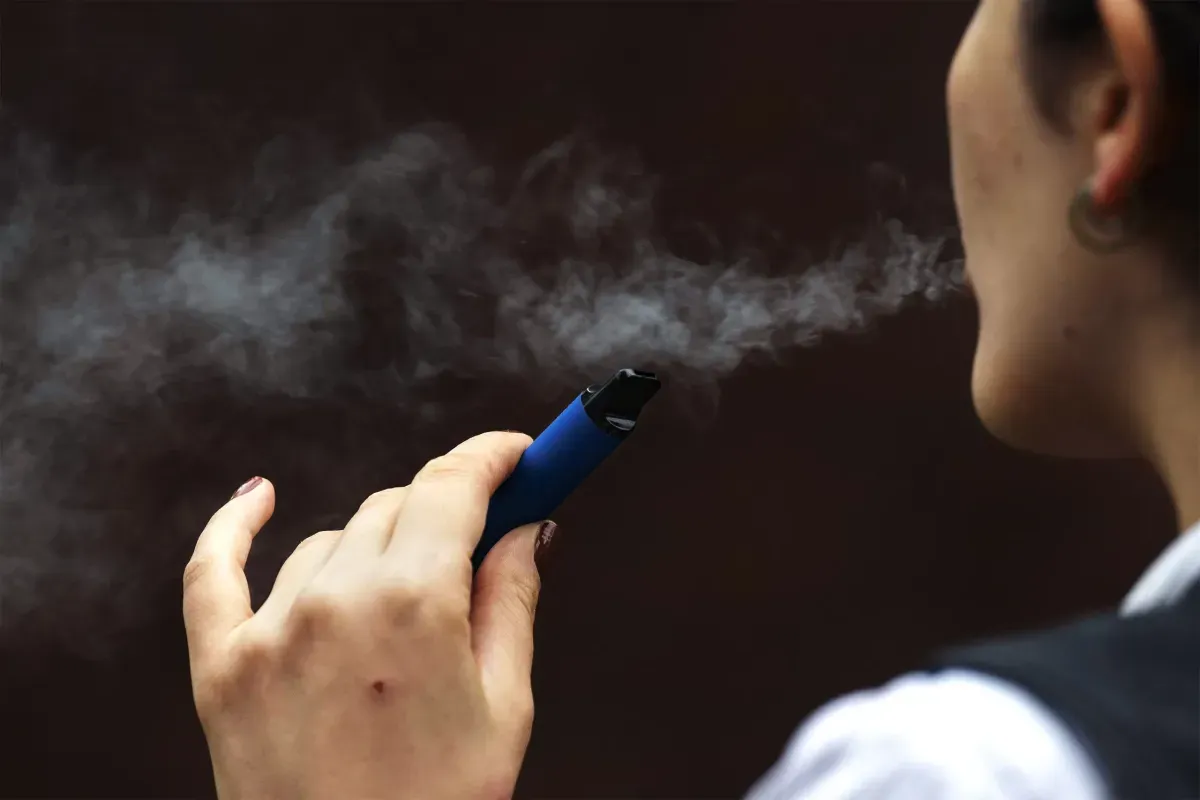
According to the Russian media Fontanka, in early March, a ninth grade girl from Saint Petersburg was hospitalized at Filatov Hospital due to acute poisoning. The incident is suspected to have been caused by an e-cigarette, according to the investigation.


Parents discovered the female student on the morning of March 8 next to vomit, holding a cigarette. Currently, the police have launched an investigation. The 15-year-old girl's health condition is worrisome. Doctors diagnosed her with acute poisoning, the toxic substance which will suppress the activity of the central nervous system. The girl comes from a stable family and has not been registered with the juvenile justice system.


There was also a similar case before. A fifth grade boy from Moscow exhibited abnormal behavior after attempting to make his own e-liquid and was admitted to a children's mental health center. Test results revealed that he had powerful drugs in his system that could cause hallucinations.


We welcome news tips, article submissions, interview requests, or comments on this piece.

Please contact us at info@2firsts.com, or reach out to Alan Zhao, CEO of 2Firsts, on LinkedIn


Notice

1.  This article is intended solely for professional research purposes related to industry, technology, and policy. Any references to brands or products are made purely for objective description and do not constitute any form of endorsement, recommendation, or promotion by 2Firsts.

2.  The use of nicotine-containing products — including, but not limited to, cigarettes, e-cigarettes, nicotine pouchand heated tobacco products — carries significant health risks. Users are responsible for complying with all applicable laws and regulations in their respective jurisdictions.

3.  This article is not intended to serve as the basis for any investment decisions or financial advice. 2Firsts assumes no direct or indirect liability for any inaccuracies or errors in the content.

4.  Access to this article is strictly prohibited for individuals below the legal age in their jurisdiction.


Copyright


This article is either an original work created by 2Firsts or a reproduction from third-party sources with proper attribution. All copyrights and usage rights belong to 2Firsts or the original content provider. Unauthorized reproduction, distribution, or any other form of unauthorized use by any individual or organization is strictly prohibited. Violators will be held legally accountable.

For copyright-related inquiries, please contact: info@2firsts.com


AI Assistance Disclaimer


This article may have been enhanced using AI tools to improve translation and editorial efficiency. However, due to technical limitations, inaccuracies may occur. Readers are encouraged to refer to the cited sources for the most accurate information.

We welcome any corrections or feedback. Please contact us at: info@2firsts.com

PMI Flags 2026 Headwinds from Japan Taxes, Sees Smoke-Free Growth Re-Accelerating Beyond in Earnings Call
PMI said on its latest earnings call that Japan’s tax cycle will weigh on 2026 performance, while smoke-free growth is expected to re-accelerate thereafter. The discussion also covered U.S. regulation, ZYN strategy and AI-driven efficiency.
Feb.07
U.S. Washington State to Bring Synthetic Nicotine Under the Tobacco Tax System, Applying a Unified Tax Starting January 2026
Washington State will subject all nicotine-containing products to the Tobacco Products Tax starting January 1, 2026, taxing them at 95% of the selling price. The change covers both tobacco-derived and synthetic nicotine products and requires businesses to report their inventory when the new tax system takes effect.
Dec.29 by 2FIRSTS.ai
Alabama Senate Passes SB9 to Ban Vaping in Indoor Public Places
Alabama’s Senate approved SB9 by a 31–1 vote, expanding existing indoor smoking restrictions to include vaping in a wide range of public places. The bill keeps the current $25 fine, renames the state’s Clean Indoor Air Act, and now heads to the House. If enacted, it would take effect on Oct. 1, 2026.
Feb.02 by 2FIRSTS.ai
Estonia warns of a booming illicit vape market, raising risks for minors and legitimate trade
Estonia’s Chamber of Commerce and Industry and the Tax and Customs Board are urging the government to address a thriving illicit vape market that undermines fair competition and makes vapes easily accessible to minors.
Feb.04 by 2FIRSTS.ai
Bangladesh Approves Ordinance Banning E-Cigarettes and Heated Tobacco Products
Bangladesh’s Advisory Council on December 24 approved the Smoking and Tobacco Products Usage (Control) (Amendment) Ordinance, 2025, aimed at strengthening tobacco control laws. The ordinance bans the use, production and marketing of emerging tobacco products, including e-cigarettes, electronic nicotine delivery systems and heated tobacco products. Nicotine pouches are included in the definition of tobacco products.
Dec.25 by 2FIRSTS.ai
South Korean Court Strikes Down Health Levy on Vape Nicotine Liquids, Citing Disproportionate Penalties
A Seoul court has annulled South Korea’s health-levy assessments imposed on multiple importers of nicotine liquids used for vaping. While the court agreed the nicotine could be treated as “tobacco” because it was found to be leaf-derived, it ruled the levy—stacked with other taxes and calculated on a blunt, volume-only basis—was so severe it effectively deprived businesses of the ability to operate, breaching constitutional proportionality and equality standards.
Jan.26 by 2FIRSTS.ai