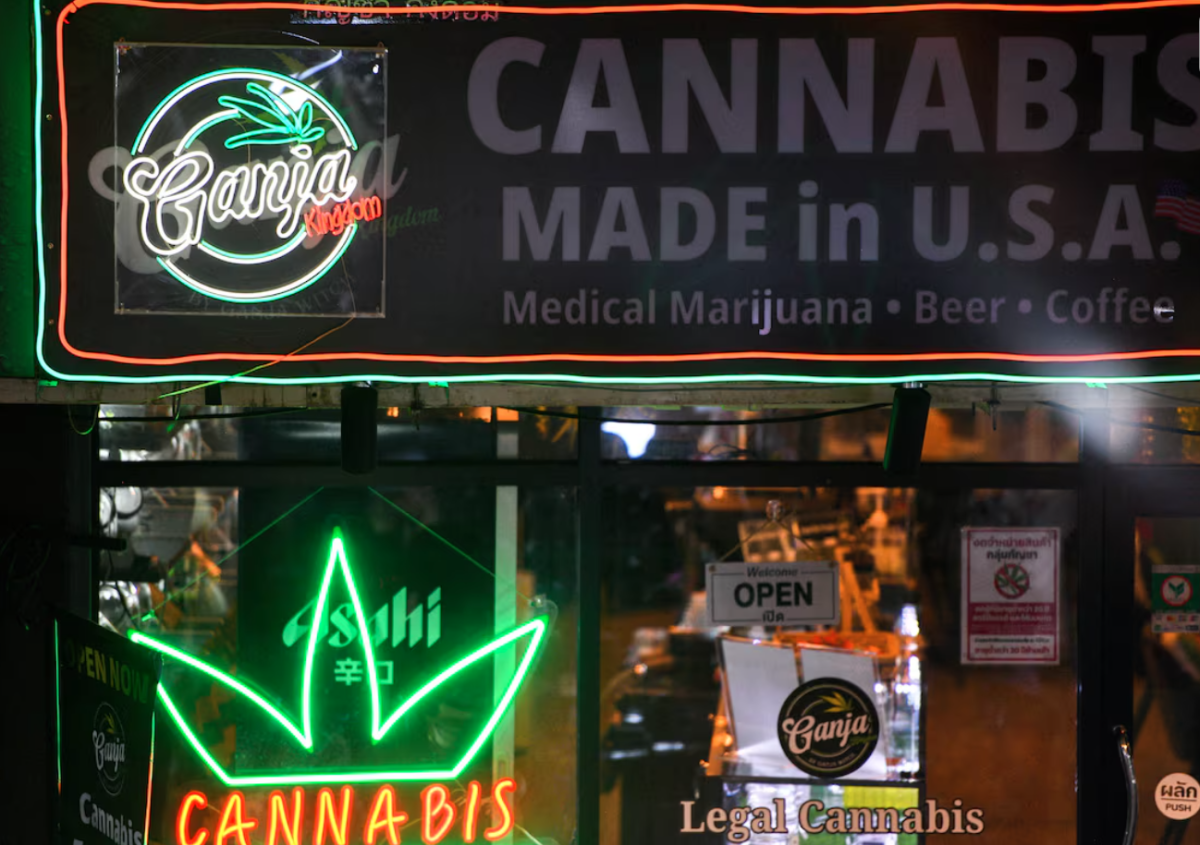
According to a report from Reuters on May 9th, Thai Prime Minister announced on Tuesday (7th) that Thailand will reclassify marijuana as a controlled substance by the end of the year. This marks a significant shift for the country, which became one of the first in Asia to legalize marijuana two years ago.
Over the past two years, the domestic retail marijuana market in Thailand has grown rapidly, with the industry projected to be worth up to $1.2 billion by 2025.
Thai Prime Minister Srettha Thavisin expressed on social media X, "I hope the Ministry of Health will amend regulations to reclassify marijuana as a controlled substance. The Ministry of Health should quickly issue a rule allowing its use only for health and medical purposes.
Medical marijuana was legalized in 2018, while recreational marijuana legalization was achieved in 2022. Critics argue that the liberalization occurred too quickly, leading to significant confusion in terms of rules and regulations.
After attending a meeting with the anti-drug organization, Strata stated that they are committed to taking a strong stance against illegal drugs and have requested authorities to deliver results within the next 90 days and show "significant progress".
Drug abuse is a problem that is destroying the future of our country, with many young people addicted. We must take swift action, confiscate drug traffickers' assets, and expand the range of treatments available.
He also requested authorities to redefine the possession of marijuana under the law, changing it from "small amount" to "one piece," so that authorities can enforce it more strictly. The Sreeta government had previously stated that they hoped to introduce a marijuana law by the end of the year, banning the recreational use of marijuana and only allowing it for medical and health purposes.
Prasitchai Nunual, Secretary-General of the Future Forward Network in Thailand, stated that re-criminalizing marijuana would be a detrimental move for the economy, causing significant damage to small businesses and consumers.
Many people are growing marijuana and opening marijuana shops, which will have to close. If scientific results show that marijuana is worse than alcohol and cigarettes, then they can be reclassified as drugs. If marijuana is found to be less harmful, then cigarettes and alcohol should be classified as drugs.
We welcome news tips, article submissions, interview requests, or comments on this piece.
Please contact us at info@2firsts.com, or reach out to Alan Zhao, CEO of 2Firsts, on LinkedIn
Notice
1. This article is intended solely for professional research purposes related to industry, technology, and policy. Any references to brands or products are made purely for objective description and do not constitute any form of endorsement, recommendation, or promotion by 2Firsts.
2. The use of nicotine-containing products — including, but not limited to, cigarettes, e-cigarettes, nicotine pouchand heated tobacco products — carries significant health risks. Users are responsible for complying with all applicable laws and regulations in their respective jurisdictions.
3. This article is not intended to serve as the basis for any investment decisions or financial advice. 2Firsts assumes no direct or indirect liability for any inaccuracies or errors in the content.
4. Access to this article is strictly prohibited for individuals below the legal age in their jurisdiction.
Copyright
This article is either an original work created by 2Firsts or a reproduction from third-party sources with proper attribution. All copyrights and usage rights belong to 2Firsts or the original content provider. Unauthorized reproduction, distribution, or any other form of unauthorized use by any individual or organization is strictly prohibited. Violators will be held legally accountable.
For copyright-related inquiries, please contact: info@2firsts.com
AI Assistance Disclaimer
This article may have been enhanced using AI tools to improve translation and editorial efficiency. However, due to technical limitations, inaccuracies may occur. Readers are encouraged to refer to the cited sources for the most accurate information.
We welcome any corrections or feedback. Please contact us at: info@2firsts.com