Thailand National Health Commission Advances Vape Regulation Aligned with Anti-Drug Agenda

Nov.05.2025
Thailand National Health Commission Advances Vape Regulation Aligned with Anti-Drug Agenda
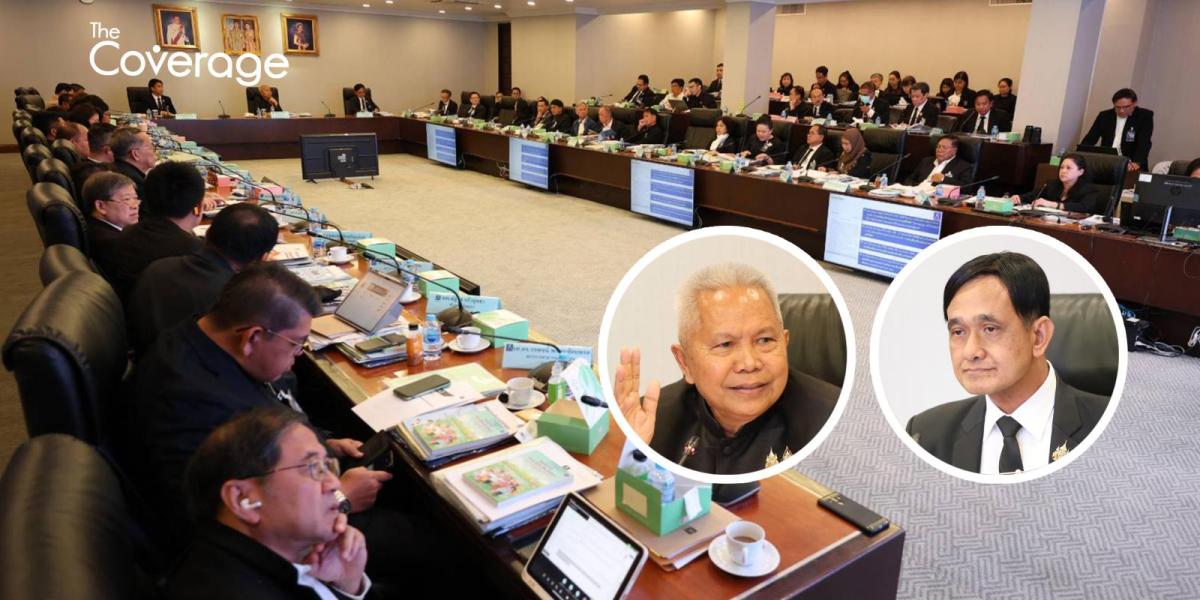
Thailand’s Deputy Prime Minister Sophon Saram, who chairs the National Health Commission (NHC), presided over a meeting aligning the nation’s e-cigarette control policies with the government’s “Quick Big Win” anti-drug strategy. The session reviewed progress under the National Health Assembly Resolution on Protecting Children and Youth from E-Cigarettes, which includes five key measures on awareness, enforcement, and prevention.

Key Points


  • Policy Shift: Vaping officially incorporated into Thailand’s national anti-drug framework.
  • Five Measures: Focus on public education, enforcement, and prevention aligned with WHO FCTC.
  • Deputy PM Statement: Sophon Saram called e-cigarettes a “destructive addictive substance” harming youth.
  • Nationwide Screening: Local officials to classify individuals by risk level for future policy planning.
  • Next Steps: Findings to inform Thailand’s FY2027 health budget and be reviewed by the Cabinet.


2Firsts,On November 5, 2025——Thailand’s Deputy Prime Minister Sophon Saram, Chair of the National Health Commission (NHC), presided over the commission’s fourth meeting of 2025, which focused on the country’s ongoing efforts to protect children and youth from e-cigarette use. The initiative supports the government’s “Quick Big Win” campaign against narcotics.


The National Health Assembly’s special resolution, endorsed by the Cabinet on May 20, 2025, outlines five key measures: knowledge development, public awareness, law enforcement, capacity building among community networks, and adherence to the WHO Framework Convention on Tobacco Control (FCTC).


Saram described e-cigarettes as a “destructive addictive substance undermining Thai society,” especially among youth. The government has launched a pilot program in Buriram Province, to be expanded to 20 northeastern provinces.


The meeting also discussed a nationwide screening initiative using local administrative networks to identify individuals involved in drug or vape use. Participants will be categorized into four color-coded risk levels—green, yellow, orange, and red—to guide FY2027 budgeting and resource allocation. The plan will be submitted to the Cabinet on November 11.


NHC Secretary-General Dr. Suthep Petchmark stated that the commission will work with provincial health assemblies and local health charters to promote community participation in anti-drug and vape control efforts.


The upcoming 18th National Health Assembly, scheduled for November 27–28, 2025 at the IMPACT Forum in Bangkok, will focus on five major themes, including the aging economy, energy transition, and crisis management, while continuing to address vaping among youth.


Image Source: The Coverage Thailand


We welcome news tips, article submissions, interview requests, or comments on this piece.

Please contact us at info@2firsts.com, or reach out to Alan Zhao, CEO of 2Firsts, on LinkedIn


Notice

1.  This article is intended solely for professional research purposes related to industry, technology, and policy. Any references to brands or products are made purely for objective description and do not constitute any form of endorsement, recommendation, or promotion by 2Firsts.

2.  The use of nicotine-containing products — including, but not limited to, cigarettes, e-cigarettes, nicotine pouchand heated tobacco products — carries significant health risks. Users are responsible for complying with all applicable laws and regulations in their respective jurisdictions.

3.  This article is not intended to serve as the basis for any investment decisions or financial advice. 2Firsts assumes no direct or indirect liability for any inaccuracies or errors in the content.

4.  Access to this article is strictly prohibited for individuals below the legal age in their jurisdiction.


Copyright


This article is either an original work created by 2Firsts or a reproduction from third-party sources with proper attribution. All copyrights and usage rights belong to 2Firsts or the original content provider. Unauthorized reproduction, distribution, or any other form of unauthorized use by any individual or organization is strictly prohibited. Violators will be held legally accountable.

For copyright-related inquiries, please contact: info@2firsts.com


AI Assistance Disclaimer


This article may have been enhanced using AI tools to improve translation and editorial efficiency. However, due to technical limitations, inaccuracies may occur. Readers are encouraged to refer to the cited sources for the most accurate information.

We welcome any corrections or feedback. Please contact us at: info@2firsts.com

Italy Fines PMI €7 Million Over Misleading ‘Smoke-Free Future’ Marketing Claims
Italy’s Competition and Market Authority (AGCM) has fined Philip Morris Italia €7 million, finding that the company’s use of “smoke-free future” and related claims in promoting products such as IQOS, VEEV and ZYN could mislead consumers.
Jun.16
Product | JT Upgrades with2 Infused Tobacco Capsules With Double-Size BIG PACK
Japan Tobacco Inc. (JT) announced that it will introduce a BIG PACK version of all five tobacco capsule variants designed for its with2 infused tobacco system. Scheduled for release in Japan on August 4, 2026, the refreshed packaging doubles the contents from five capsules and one cartridge to ten capsules and two cartridges while maintaining the same flavors and formulations
News
Jun.26 by 2Firsts Perspectives
Data|China’s January-May 2026 Device Exports Rise 13% While Nicotine Product Exports Decline 6.9%
According to China Customs export data analyzed by 2Firsts, China’s vape export mix continued to evolve during January-May 2026. Exports of electronic vaporisation devices (HS 85434000) increased 13.00% year on year, supported by growth in both shipment volume and average export prices. Meanwhile, exports of nicotine-containing non-combustible products (HS 24041200) declined 6.89%, with lower shipment volumes partly offset by higher average export prices.
Special Report
Jun.30
Data|China’s May Vape Exports Fall 10.3%; January–May Shipments Slip 0.9%
China’s vape-related exports fell 10.25% year on year in May 2026, marking a second consecutive monthly decline, although exports recovered modestly from April. January-May exports totaled US$4.018 billion, down 0.86% from a year earlier and broadly in line with 2025 levels.
Special Report
Jun.29
FIFA Bans Vaping in 2026 World Cup Stadiums, Putting Nicotine Rules in Event Compliance Focus
FIFA’s 2026 World Cup stadium rules prohibit smoking, vaping and the use of any tobacco products or electronic smoking devices inside stadiums, including inner and outer perimeters, while electronic smoking devices, tobacco products, lighters and matches are listed as prohibited items, bringing nicotine-product management, venue compliance and cross-border legal differences into focus at a major global sporting event.
Jul.06
Japan’s Heated Tobacco Tax Changes Reshape Consumer Choices, Survey Reveals Impact of Price and Income
A consumer survey by Japanese heated tobacco information platform RELAZO found that rising tobacco prices and planned heated tobacco tax changes may influence smoking decisions among Japanese consumers. The survey covered 49,879 men and women aged 20 to 69 nationwide. It found that around 40% of respondents cumulatively indicated they may consider quitting when a pack reaches ¥600 (approximately US$4.1), while nearly 90% expressed potential quitting intentions at a ¥1,000 (approximately US$6.8) price level. The survey also found significant differences by income level, with lower-income respondents showing greater sensitivity to price increases.
Jul.24