Key Points
- The UK has launched a 12-week consultation on vape packaging, flavours, appearance and display.
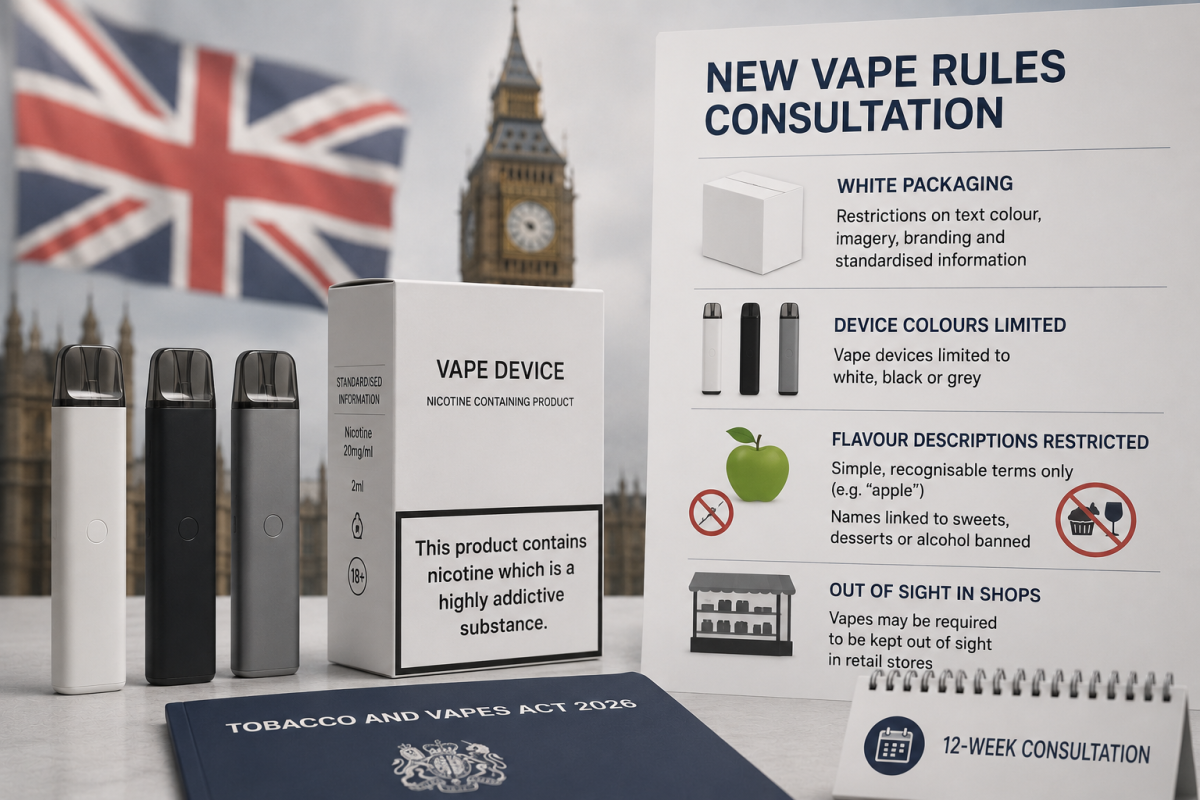
- Vapes could be sold in plain white packaging.
- Vape devices could be limited to white, black or grey.
- Flavour names linked to sweets, desserts or alcohol could be banned.
- Shops may be required to keep vapes out of sight.
2Firsts
July 10, 2026
The UK government and devolved administrations have launched a 12-week consultation on new vape rules aimed at reducing the appeal of vaping products to children and young people, according to the Department of Health and Social Care, Manchester Evening News and WalesOnline.
The proposals include plain white packaging, restrictions on device colours, limits on flavour descriptions and changes to how vapes are displayed in shops.
Vapes Could Be Sold in Plain White Packaging
According to the Department of Health and Social Care, the consultation includes proposals for white vape packaging with restrictions on text colour, imagery, branding and standardised product information.
The government said the move follows the experience of standardised cigarette packaging, which has been in place in the UK since 2017. Health officials said colourful branding and imagery can increase the appeal of vaping products to children and young people.
If implemented, the rules would require vape companies to redesign product packaging, including colours, visual elements, text layout and product information.
Device Colours Could Be Limited to Black, White or Grey
The consultation also proposes limits on the appearance of vape devices.
Under the proposals, vape devices could be restricted to white, black or grey, reducing the use of bright colours that may appeal to children and young people.
The measure shows that UK regulators are looking beyond packaging and advertising to the appearance of the product itself.
Flavour Descriptions Would Face Restrictions
The UK is also proposing restrictions on vape flavour descriptions.
Under the consultation, flavour names could be limited to simple, recognisable terms such as “apple,” while names linked to sweets, desserts or alcohol would be prohibited.
The proposal does not amount to a ban on all fruit or sweet flavours. Instead, it targets marketing-style flavour names considered more likely to appeal to children.
For vape companies, the changes could affect flavour naming, packaging copy and marketing materials.
Shop Displays May Be Changed
The consultation also covers how vapes are displayed in retail environments.
The proposals could require shops to keep vapes out of sight, reducing children’s exposure to vape marketing in stores.
The approach would bring vape retail display rules closer to restrictions already applied to tobacco products.
Consultation Also Covers Tobacco Rules
The consultation also includes proposals affecting tobacco products.
The government is considering inserts in cigarette packs to tell smokers where they can get help to quit. It is also proposing to extend plain packaging rules to all tobacco products, including rolling paper and cigars.
The consultation would also remove exemptions that allow duty-free shops and airports to display tobacco products, meaning cigarettes and other tobacco products would be restricted from view in those settings.
Industry Impact and Outlook
The consultation shows that UK vape regulation is moving beyond the single-use vape ban into packaging, flavour naming, product appearance and retail display controls.
The UK has already implemented a ban on single-use vapes, and the Tobacco and Vapes Act 2026 gives ministers powers to regulate vape and nicotine products more broadly. The latest consultation focuses on how those powers may be used to reduce children’s exposure to attractive vape marketing.
For vape companies, the potential impact includes packaging redesign, changes to device colours, revised flavour names, new retail display rules and tighter limits on brand communication. Compared with a full flavour ban, the proposals focus more on restricting packaging and marketing features considered appealing to children.
The UK policy debate also reflects a broader public health balance. Policymakers are seeking to prevent youth vaping while preserving vaping as a smoking-cessation tool for adults. Public health groups have noted that vaping is not risk-free but is significantly less harmful than smoking and has helped many adults quit.
The outcome of the 12-week consultation will determine the final direction of UK rules on vape packaging, flavour descriptions and retail display. If implemented, the measures could become an important reference point for vape marketing restrictions in Europe.
Follow 2Firsts for the latest updates on global tobacco harm reduction, nicotine products and regulatory developments.
Cover Image generated by AI
Disclaimer
This article is provided solely for professional research, industry discussion, and informational purposes. Any references to brands, companies, products, technologies, or policies are made for factual reporting and analytical purposes only, and do not constitute endorsement, recommendation, promotion, or advertising by 2Firsts.
Nicotine-containing products, including but not limited to cigarettes, e-cigarettes, heated tobacco products, and nicotine pouches, carry significant health risks. Readers are responsible for complying with all applicable laws and regulations in their respective jurisdictions, including age restrictions and access limitations.
The information contained in this article should not be regarded as investment, legal, medical, regulatory, or commercial advice. While 2Firsts strives to ensure the accuracy and reliability of its content, it does not assume liability for any direct or indirect loss arising from errors, omissions, inaccuracies, or reliance on the information contained herein.
This article is not intended for individuals below the legal age for accessing tobacco or nicotine-related information in their jurisdiction.
Copyright Notice
This article is either original content produced by 2Firsts or content reproduced, translated, summarized, or adapted from third-party sources with attribution where applicable. The intellectual property rights of the original content remain with 2Firsts or the respective original rights holders.
No individual or organization may copy, reproduce, distribute, republish, modify, translate, or otherwise use this content without prior authorization. Any unauthorized use may result in legal action.
For copyright-related inquiries, corrections, or removal requests, please contact: info@2firsts.com.
AI-Assisted Translation and Editing Notice
Portions of this article may have been translated, edited, or reviewed with the assistance of artificial intelligence tools to improve efficiency and readability. Due to the limitations of AI-assisted translation and editing, discrepancies, omissions, or inaccuracies may exist when compared with the original source.
Where applicable, readers are advised to refer to the original source for the most complete and accurate information. If you identify any errors or believe that any content infringes upon your rights, please contact us at info@2firsts.com, and we will review and address the matter promptly.