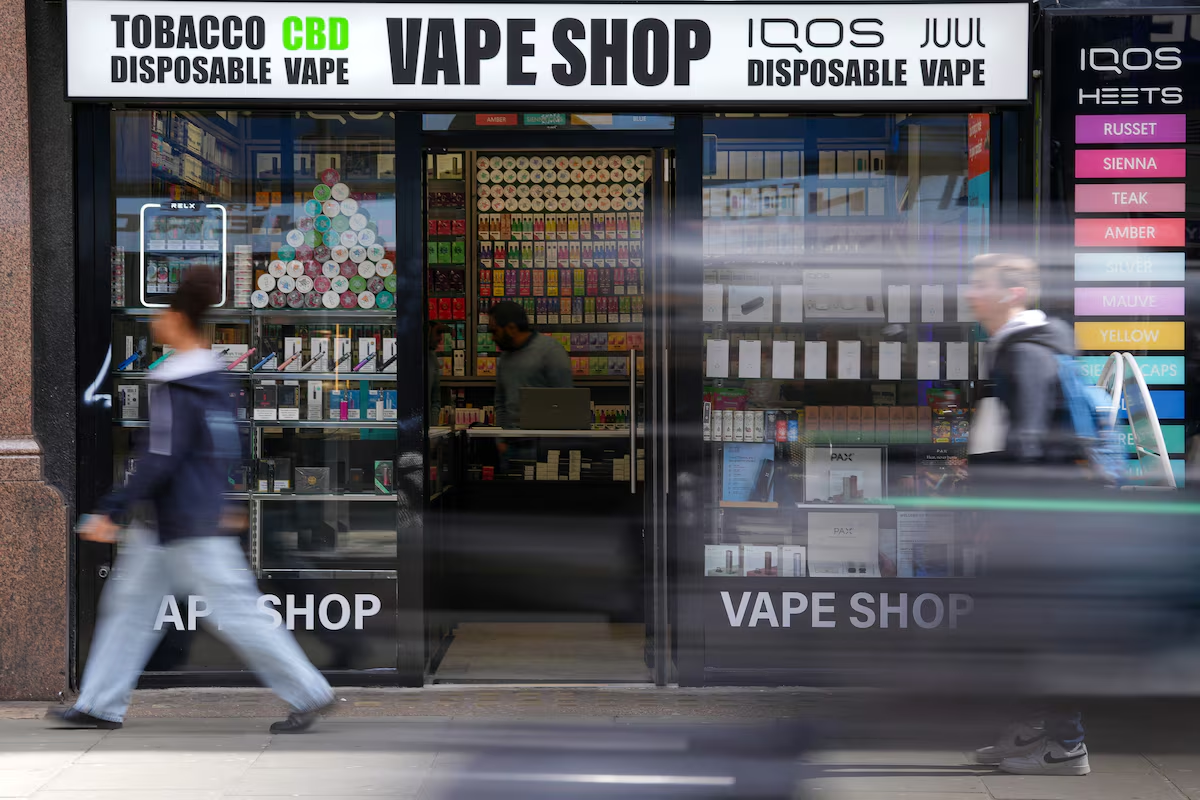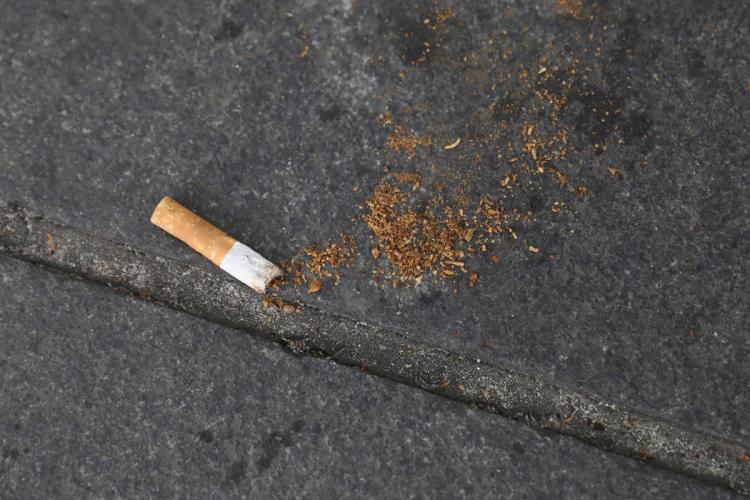
On May 10, 2017, a cigarette butt was spotted lying on a street in New York, as reported by Reuters photographer Shannon Stapleton.
On August 26th, a US appeals court upheld the ban on smoking in federally subsidized public housing.
The Washington D.C. Circuit Court of Appeals has stated that the Department of Housing and Urban Development (HUD) implemented a rule in 2016 that requires state and local public housing agencies to prohibit smoking cigarettes and cigars in housing units, indoor common areas, and within 25 feet of these spaces.
Six tenants and a smokers' rights group in New York City are lobbying against the "New York Conflict" ordinance, which they argue is a violation of smokers' rights. The ordinance, also known as the smoking ban, is being challenged by the group, who believe it unfairly targets smokers.
They allege that their privacy has been unlawfully violated and due process has been violated, preventing them from engaging in legal activities at home, such as using tobacco.
In a decision on Friday, Chief Justice Sri Srinivasan stated that the Department of Housing and Urban Development provided "quite a bit of" evidence demonstrating that the rule helps protect residents from the health risks of secondhand smoke, prevents fires, and reduces property maintenance costs.
The judge wrote that the department had fully substantiated its reasons for the rule and had not acted arbitrarily or capriciously when issuing it.
Srinivasan also denied the allegation that the ban improperly restricts the government's spending methods.
Larry Joseph, the plaintiff's lawyer, announced that his client plans to appeal. He stated that this case concerns significant issues regarding federalism and whether Congress truly authorized the Department of Housing and Urban Development to implement smoking bans.
Audrey Silk, founder of NYC Clash, stated that this decision opened the door for the government to ban other lawful activities within families.
HUD did not immediately respond.
The ruling by Srinivasan upheld the lower court's decision from March 2020, with Circuit Judge Douglas Ginsburg also joining in the ruling.
US Supreme Court justice Ketanji Brown Jackson heard oral arguments for the case in September 2021 while still serving on an appellate court, but did not participate in the ruling.
The case is NYC CLASH Inc et al v. Fudge, heard at the United States Court of Appeals for the District of Columbia Circuit, with case number 20-5126.
Statement:
This article has been compiled from third-party information and is intended for industry-related communication and learning purposes.
This article does not represent the views of 2FIRSTS, and 2FIRSTS cannot confirm the authenticity or accuracy of the article's content. The translation of this article is solely intended for industry-related communication and research.
Due to limitations in translation ability, the compiled article may not fully express the same meaning as the original text. Please refer to the original text for accuracy.
2FIRSTS is in complete alignment with the Chinese government in regards to any domestic, Hong Kong, Macao, Taiwan or foreign-related statements and positions.
The compilation of information is copyrighted to the original media and author. In the case of infringement, please contact us for deletion.
Disclaimer
This article is provided solely for professional research, industry discussion, and informational purposes. Any references to brands, companies, products, technologies, or policies are made for factual reporting and analytical purposes only, and do not constitute endorsement, recommendation, promotion, or advertising by 2Firsts.
Nicotine-containing products, including but not limited to cigarettes, e-cigarettes, heated tobacco products, and nicotine pouches, carry significant health risks. Readers are responsible for complying with all applicable laws and regulations in their respective jurisdictions, including age restrictions and access limitations.
The information contained in this article should not be regarded as investment, legal, medical, regulatory, or commercial advice. While 2Firsts strives to ensure the accuracy and reliability of its content, it does not assume liability for any direct or indirect loss arising from errors, omissions, inaccuracies, or reliance on the information contained herein.
This article is not intended for individuals below the legal age for accessing tobacco or nicotine-related information in their jurisdiction.
Copyright Notice
This article is either original content produced by 2Firsts or content reproduced, translated, summarized, or adapted from third-party sources with attribution where applicable. The intellectual property rights of the original content remain with 2Firsts or the respective original rights holders.
No individual or organization may copy, reproduce, distribute, republish, modify, translate, or otherwise use this content without prior authorization. Any unauthorized use may result in legal action.
For copyright-related inquiries, corrections, or removal requests, please contact: info@2firsts.com.
AI-Assisted Translation and Editing Notice
Portions of this article may have been translated, edited, or reviewed with the assistance of artificial intelligence tools to improve efficiency and readability. Due to the limitations of AI-assisted translation and editing, discrepancies, omissions, or inaccuracies may exist when compared with the original source.
Where applicable, readers are advised to refer to the original source for the most complete and accurate information. If you identify any errors or believe that any content infringes upon your rights, please contact us at info@2firsts.com, and we will review and address the matter promptly.