Key Points
- The U.S. House passed H.R. 8800, its version of the FY2027 NDAA.
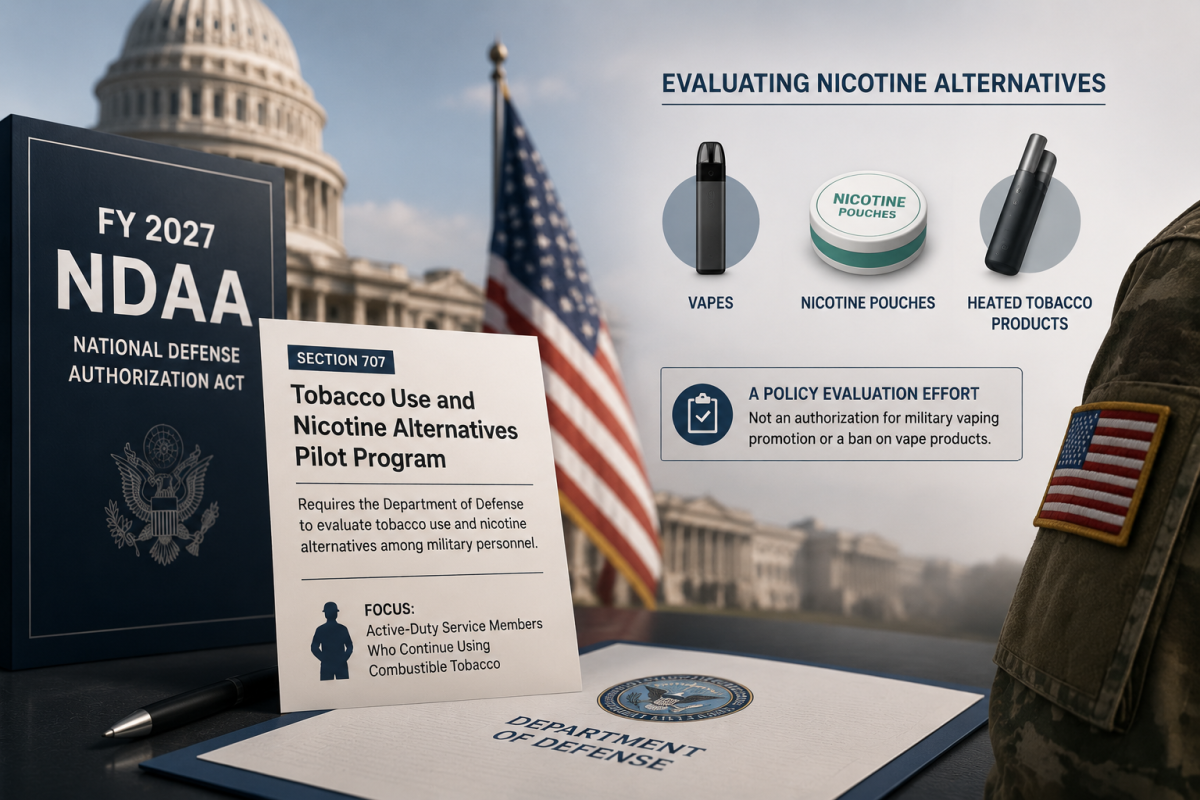
- Section 707 includes a pilot evaluation of tobacco use and nicotine alternatives among military personnel.
- Vapes, nicotine pouches and heated tobacco products are included in the assessment.
- The pilot focuses on active-duty personnel who continue using combustible tobacco.
- The provision is a research initiative, not a vape endorsement or prohibition.
2Firsts
July 28, 2026
On July 23, 2026, the U.S. House of Representatives passed H.R. 8800, its version of the Fiscal Year 2027 National Defense Authorization Act (NDAA), by a vote of 216-212. Section 707 of the bill includes provisions related to a Department of Defense pilot evaluation of tobacco use among military personnel, with emerging nicotine products including vapes, nicotine pouches and heated tobacco products included in the review.
According to Vaping360, the provision is designed to assess different smoking cessation and nicotine alternative approaches among military personnel, including potential effects on health outcomes, tobacco-use behavior and related policy decisions.
The measure does not authorize the U.S. military to promote vaping products, nor does it establish a ban on vapes. Instead, it creates a framework for policy evaluation within military health management.
Defense Bill Includes Nicotine Product Pilot Evaluation
The National Defense Authorization Act (NDAA) is one of the most significant annual defense policy bills considered by Congress, covering military funding, programs and related policy matters.
Section 707 of the House-passed FY2027 NDAA version would direct the Department of Defense to conduct a one-year pilot program evaluating tobacco use and alternative nicotine approaches among service members.
The pilot focuses primarily on active-duty personnel who continue using combustible tobacco products and examines options including vaping products, nicotine pouches, heated tobacco products and traditional nicotine replacement therapies.
Because the bill remains subject to further legislative steps, the final provisions and implementation details may change.
Vapes and Nicotine Pouches Enter Military Health Policy Discussion
The U.S. military has long focused on tobacco use because of its links to healthcare costs, long-term health outcomes and readiness considerations.
As newer nicotine products such as vapes and nicotine pouches have expanded, policymakers have increasingly examined their role among adult populations.
The NDAA provision is significant because it moves emerging nicotine products beyond traditional consumer regulation discussions and into military health policy evaluation.
Congress Has Previously Focused on Military Tobacco Use
Congressional attention to military tobacco use is not new.
Lawmakers have previously pushed tobacco control and smoking cessation measures within defense policy discussions, focusing on service member health, healthcare costs and military readiness.
Representative Don Davis has previously advanced tobacco-related NDAA amendment discussions, reflecting continued congressional attention to tobacco use within military environments.
The FY2027 NDAA provision expands that discussion by including emerging nicotine products such as vapes, nicotine pouches and heated tobacco products.
Provision Is Neither Vape Promotion Nor Ban
The provision may generate different interpretations among industry participants and policymakers.
Based on currently available information, the focus is on evaluating whether different nicotine products may serve as alternatives for adult smokers and what implications they may have for health and policy.
The measure does not authorize military promotion of vaping products and does not establish a broad prohibition on their use.
For the vape industry, the significance lies in the expansion of nicotine policy discussions into new institutional settings, including military health and government policy evaluation.
U.S. Nicotine Policy Debate Expands Into New Areas
Recent U.S. nicotine policy discussions have focused largely on FDA authorization, youth protection, market regulation and public health concerns.
The NDAA provision shows that policymakers are increasingly examining nicotine products through broader frameworks, including their role among specific adult populations.
Future government assessments of vapes, nicotine pouches and other alternatives may influence the regulatory environment.
For vape companies, policy attention is expanding beyond market access issues into health policy, institutional management and broader public policy discussions.
Follow 2Firsts for the latest updates on global tobacco and nicotine regulation, industry developments and market trends.
Cover Image source: generated by AI