Key Points
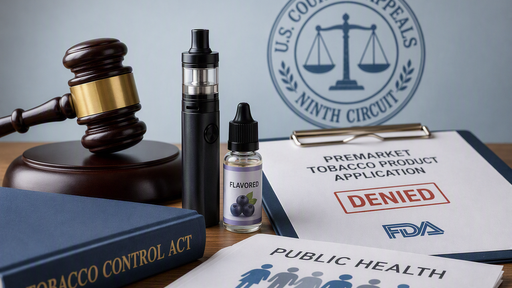
- The Ninth Circuit denied MH Global LLC’s petition challenging FDA’s denial of its flavored ENDS marketing applications.
- The court confirmed that FDA may require product-specific evidence showing flavored products provide greater cessation or switching benefits than tobacco-flavored alternatives.
- The court found FDA’s comparative-efficacy framework consistent with the Tobacco Control Act’s APPH standard.
- The ruling confirmed FDA can apply the framework through product-specific adjudications rather than formal rulemaking.
- The decision reinforces the evidence requirements facing flavored ENDS products seeking PMTA authorization.
2Firsts
August 26, 2026
The U.S. Court of Appeals for the Ninth Circuit has upheld the Food and Drug Administration’s (FDA) denial of marketing applications submitted by MH Global LLC for flavored electronic nicotine delivery systems (ENDS). The court ruled that FDA’s requirement for applicants to demonstrate that flavored products provide greater cessation or switching benefits than tobacco-flavored alternatives is consistent with the Tobacco Control Act’s (TCA) “appropriate for the protection of the public health” (APPH) standard.
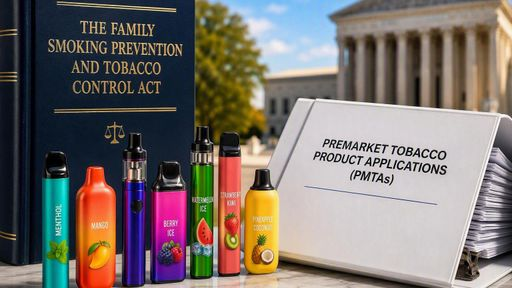
The case involved MH Global’s premarket tobacco applications (PMTAs) for flavored ENDS products. FDA previously denied the applications, finding that the company failed to provide reliable evidence that its flavored products offered greater switching or cessation benefits than tobacco-flavored products while facing substantial youth-initiation risks.
Ninth Circuit Upholds FDA’s Comparative-Efficacy Framework
The Ninth Circuit held that FDA’s comparative-efficacy framework was consistent with the TCA.
The court said the APPH standard requires FDA to evaluate tobacco products based on their overall impact on public health, including:
● the likelihood that nonusers may begin using tobacco products; and
● the likelihood that existing users may transition away from more harmful tobacco products.
The court found that these considerations require a comparative assessment of potential benefits and risks.
Accordingly, FDA may require flavored ENDS applicants to provide product-specific evidence showing that their products offer additional public health benefits compared with tobacco-flavored alternatives.
FDA Found MH Global Lacked Sufficient Evidence
FDA determined that flavored ENDS products may increase youth-initiation risks because flavors can increase appeal, repeated use and nicotine exposure.
At the same time, FDA acknowledged that ENDS products may provide benefits for adults who completely switch from combustible cigarettes.
However, the agency concluded that flavored products needed stronger evidence if tobacco-flavored alternatives could provide similar switching benefits with lower youth appeal.
The Ninth Circuit agreed that MH Global had not provided sufficient evidence, noting that the company did not submit randomized controlled trials, longitudinal studies or similarly robust evidence demonstrating superior cessation or switching outcomes.
Court Rules FDA Did Not Need Formal Rulemaking
MH Global also argued that FDA should have established the comparative-efficacy framework through notice-and-comment rulemaking.
The court rejected that argument.
The Ninth Circuit said agencies generally may develop regulatory standards through either rulemaking or individual adjudications unless Congress requires a specific procedure.
The court found that FDA’s use of the framework during PMTA reviews did not violate procedural requirements.
Decision Clarifies Path for Future Flavored ENDS Applications
The ruling does not create an automatic ban on all flavored ENDS products. Instead, it further clarifies the evidentiary standards FDA may apply when reviewing flavored product applications.
For companies seeking authorization in the U.S. market, the decision highlights the need for stronger scientific evidence demonstrating that flavored products provide measurable public health benefits beyond tobacco-flavored alternatives while addressing youth-related risks.
Follow 2Firsts for timely updates on global tobacco and nicotine regulations, market developments and industry trends.
Cover Image Source: VitalLaw
Disclaimer
This article is provided solely for professional research, industry discussion, and informational purposes. Any references to brands, companies, products, technologies, or policies are made for factual reporting and analytical purposes only, and do not constitute endorsement, recommendation, promotion, or advertising by 2Firsts.
Nicotine-containing products, including but not limited to cigarettes, e-cigarettes, heated tobacco products, and nicotine pouches, carry significant health risks. Readers are responsible for complying with all applicable laws and regulations in their respective jurisdictions, including age restrictions and access limitations.
The information contained in this article should not be regarded as investment, legal, medical, regulatory, or commercial advice. While 2Firsts strives to ensure the accuracy and reliability of its content, it does not assume liability for any direct or indirect loss arising from errors, omissions, inaccuracies, or reliance on the information contained herein.
This article is not intended for individuals below the legal age for accessing tobacco or nicotine-related information in their jurisdiction.
Copyright Notice
This article is either original content produced by 2Firsts or content reproduced, translated, summarized, or adapted from third-party sources with attribution where applicable. The intellectual property rights of the original content remain with 2Firsts or the respective original rights holders.
No individual or organization may copy, reproduce, distribute, republish, modify, translate, or otherwise use this content without prior authorization. Any unauthorized use may result in legal action.
For copyright-related inquiries, corrections, or removal requests, please contact: info@2firsts.com.
AI-Assisted Translation and Editing Notice
Portions of this article may have been translated, edited, or reviewed with the assistance of artificial intelligence tools to improve efficiency and readability. Due to the limitations of AI-assisted translation and editing, discrepancies, omissions, or inaccuracies may exist when compared with the original source.
Where applicable, readers are advised to refer to the original source for the most complete and accurate information. If you identify any errors or believe that any content infringes upon your rights, please contact us at info@2firsts.com, and we will review and address the matter promptly.