Vaping: Heart Risks for Teen Boys

Innovation
Jun.29.2022
Vaping: Heart Risks for Teen Boys

According to The Centers for Disease Control, more than 2 million American teens used vape products last year. Twenty-five percent of those teens reported vaping every day.


Now, new research shows what happens to the cardiovascular system of adolescents, especially boys, when they vape.


For years, experts have warned about the dangers of smoking. Scientists know much less about vaping. Now, researchers at The Ohio State University College of Medicine are testing the impacts of vaping by using teenage mice.


“We study mice that are three weeks old, so equivalent to 12 to 15 years old,” said Loren Wold, PhD, professor of medicine and nursing at The Ohio State University College of Nursing.


The researchers expose the mice to an e-cigarette mixture that includes nicotine in a lab enclosure that automatically releases a puff of vape once a minute.

“We do this for several hours per day, five days per week, and we expose the whole animal,” Wold explained.


The mice were exposed for two to three months – the equivalent of about 15 years in humans.


“When we exposed adolescent males, we had significant cardiovascular effects,” Wold said.


But researchers say the heart function was not impacted at all in the female mice. One theory is the female mice had much higher levels of an enzyme called CYP 2A5.


“The theory is that this enzyme being much higher, was able to break the nicotine down much faster,” Wold said.


A similar enzyme is also present in women. Next, scientists want to learn if that offers women protection from vape-related heart problems.


The researchers say that even if women’s hearts are offered some additional protection from vape products, it doesn’t mean vaping is safe for girls. Scientists still don’t know the impact on developing brains and other body systems.


Also, the scientists say this research is important to conduct on mice because it would be unethical to recruit teenagers for this kind of study.


Source:5NBCDFW

South Korea to Classify Synthetic Nicotine E-Cigarettes as Tobacco from April 2026
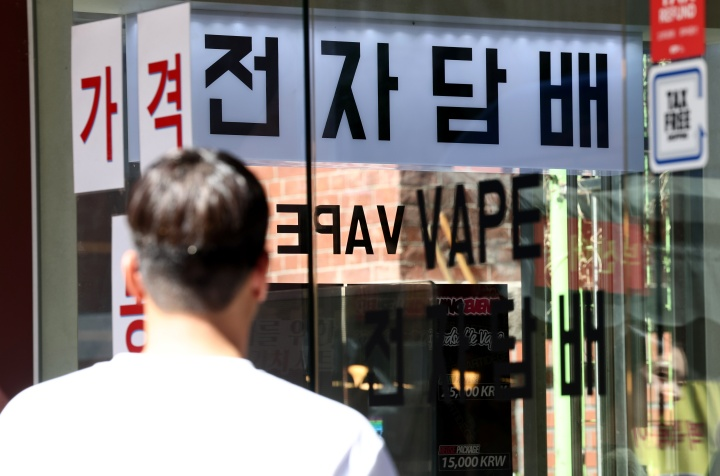
South Korea will implement amendments to its Tobacco Business Act on April 24, 2026, officially classifying synthetic nicotine liquid e-cigarettes as tobacco. This marks the first revision of the legal definition of tobacco since 1988. Once in effect, synthetic nicotine e-cigarettes will be subject to existing tobacco regulations, including health warnings, advertising restrictions, smoke-free area enforcement, and youth protection measures.
Dec.29 by 2FIRSTS.ai
California DOJ publishes first-ever Unflavored Tobacco List; products not on the list are ineligible for sale
California Attorney General Rob Bonta announced the publication of the first-ever Unflavored Tobacco List (UTL), listing unflavored tobacco products lawful for sale under California’s flavored tobacco restrictions. Any covered tobacco product not appearing on the UTL is deemed a flavored tobacco product and ineligible for sale.
Jan.04 by 2FIRSTS.ai
Canada’s B.C. Passes First Vaping Cost-Recovery Framework, Allowing Government to Sue Manufacturers Over Health Expenses
According to the Nelson Star, British Columbia has passed the Vaping Product Damages and Health Care Costs Recovery Act by a 49–42 vote. The legislation enables the provincial government to seek recovery of future public health costs from vape manufacturers, following models used in opioid and tobacco litigation.
Dec.03
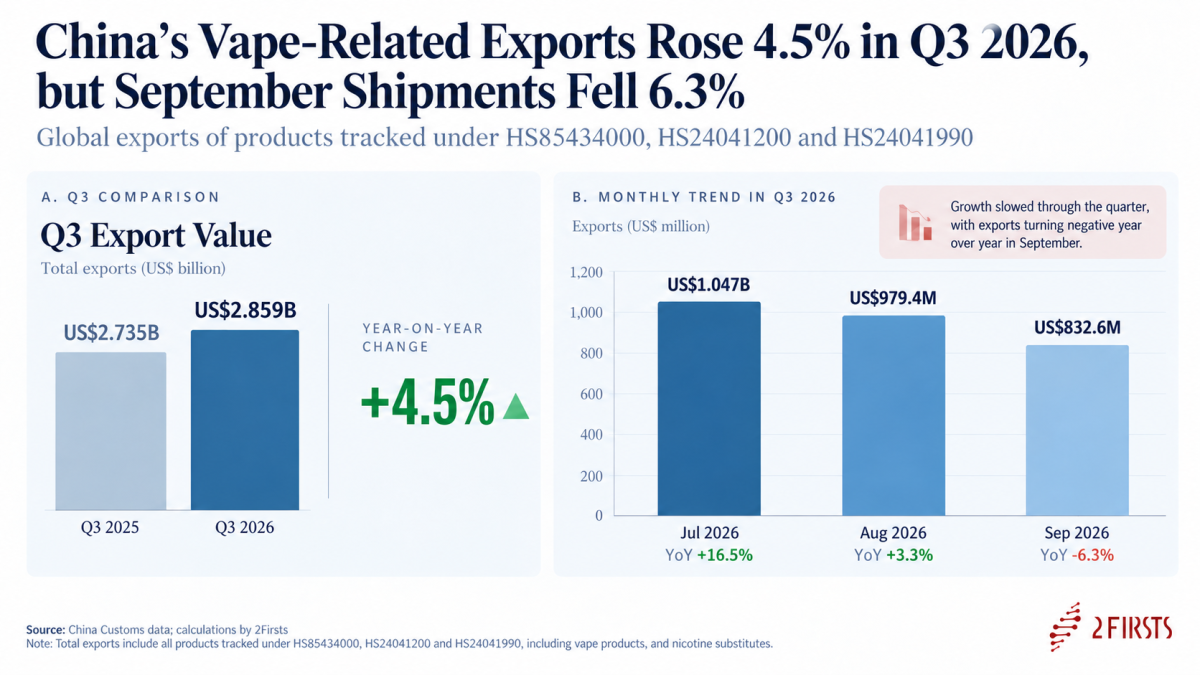
Washington Policy Media Flags Surge: China’s Monthly Vape Exports Jump from 2.2M Kg to 14.8M Kg; Crackdown Effectiveness Questioned
The Washington Examiner on December 9, 2025, reported: China's vape export volume to the U.S. rebounded sharply from 2.2 million kilograms to 14.8 million kilograms despite the crackdown. This volatility, confirming the annual multi-billion dollar trade gap, is the "Bullwhip Effect" in action. It transfers massive inventory to the U.S. market, putting the working capital of Chinese manufacturers and the supply chain at severe risk of lock-up and failure. Regulatory escalation is now imminent.
News
Dec.11
Kentucky lawmaker proposes directing Juul settlement funds to youth vaping prevention
A Kentucky state senator has filed Senate Bill 74 to steer settlement money the Commonwealth received from vaping manufacturer Juul Labs into youth vaping prevention and cessation efforts.
Jan.14 by 2FIRSTS.ai
Poland Plans Total Prohibition of Single-Use Vapes to Protect Youth
Poland’s Ministry of Health has proposed legislation to ban all disposable e-cigarettes — both with and without nicotine — under a new amendment to tobacco product laws. The government aims to protect youth from nicotine addiction while reducing public health and environmental harm. Medical professionals largely support the move but call for balanced harm-reduction strategies.
Nov.25 by 2FIRSTS.ai