VAPORESSO Plans to Enhance CSR with Environmental Initiatives

Dec.04.2022
VAPORESSO Plans to Enhance CSR with Environmental Initiatives
Vaporesso is committed to protecting the environment by offering eco-friendly shopping experiences and launching recycling programs worldwide.

Vaporesso, an electronic cigarette brand under the Smoore company, has announced plans to strengthen its commitment to protecting the environment and advancing corporate social responsibility (CSR) by providing customers with a unique shopping experience.


The "Recycle Your Vape" campaign by VAPORESSO has been launched in over 130 retail stores across the United States and the United Kingdom. The initiative aims to decrease the environmental impact of disposable electronic cigarette devices by retrieving them from landfill sites. The campaign also strives to raise awareness among e-cigarette enthusiasts and encourages more people to participate in environmentally-friendly actions while earning rewards.


Vaporesso is offering a winter care package to customers who make purchases at 40 designated locations in France. The company is also partnering with French non-governmental organization, La Vape Du Cœur, with the aim of reducing the risks associated with smoking. Working through French hospitals and healthcare professionals, the NGO will provide e-cigarette devices to legal smokers who want to quit but are facing financial difficulties.


2FIRSTS will continue to track and report on this issue, with updates available on the '2FIRSTS APP.' Scan the QR code below to download the app.


Disclaimer

This article is provided solely for professional research, industry discussion, and informational purposes. Any references to brands, companies, products, technologies, or policies are made for factual reporting and analytical purposes only, and do not constitute endorsement, recommendation, promotion, or advertising by 2Firsts.

Nicotine-containing products, including but not limited to cigarettes, e-cigarettes, heated tobacco products, and nicotine pouches, carry significant health risks. Readers are responsible for complying with all applicable laws and regulations in their respective jurisdictions, including age restrictions and access limitations.

The information contained in this article should not be regarded as investment, legal, medical, regulatory, or commercial advice. While 2Firsts strives to ensure the accuracy and reliability of its content, it does not assume liability for any direct or indirect loss arising from errors, omissions, inaccuracies, or reliance on the information contained herein.

This article is not intended for individuals below the legal age for accessing tobacco or nicotine-related information in their jurisdiction.


Copyright Notice

This article is either original content produced by 2Firsts or content reproduced, translated, summarized, or adapted from third-party sources with attribution where applicable. The intellectual property rights of the original content remain with 2Firsts or the respective original rights holders.

No individual or organization may copy, reproduce, distribute, republish, modify, translate, or otherwise use this content without prior authorization. Any unauthorized use may result in legal action.

For copyright-related inquiries, corrections, or removal requests, please contact: info@2firsts.com.


AI-Assisted Translation and Editing Notice

Portions of this article may have been translated, edited, or reviewed with the assistance of artificial intelligence tools to improve efficiency and readability. Due to the limitations of AI-assisted translation and editing, discrepancies, omissions, or inaccuracies may exist when compared with the original source.

Where applicable, readers are advised to refer to the original source for the most complete and accurate information. If you identify any errors or believe that any content infringes upon your rights, please contact us at info@2firsts.com, and we will review and address the matter promptly.

Ukraine Raises Excise Stamp Fees for Tobacco, Heated Tobacco and Vape Liquids by 30.5% as Parliament Backs E-Excise Delay to 2027
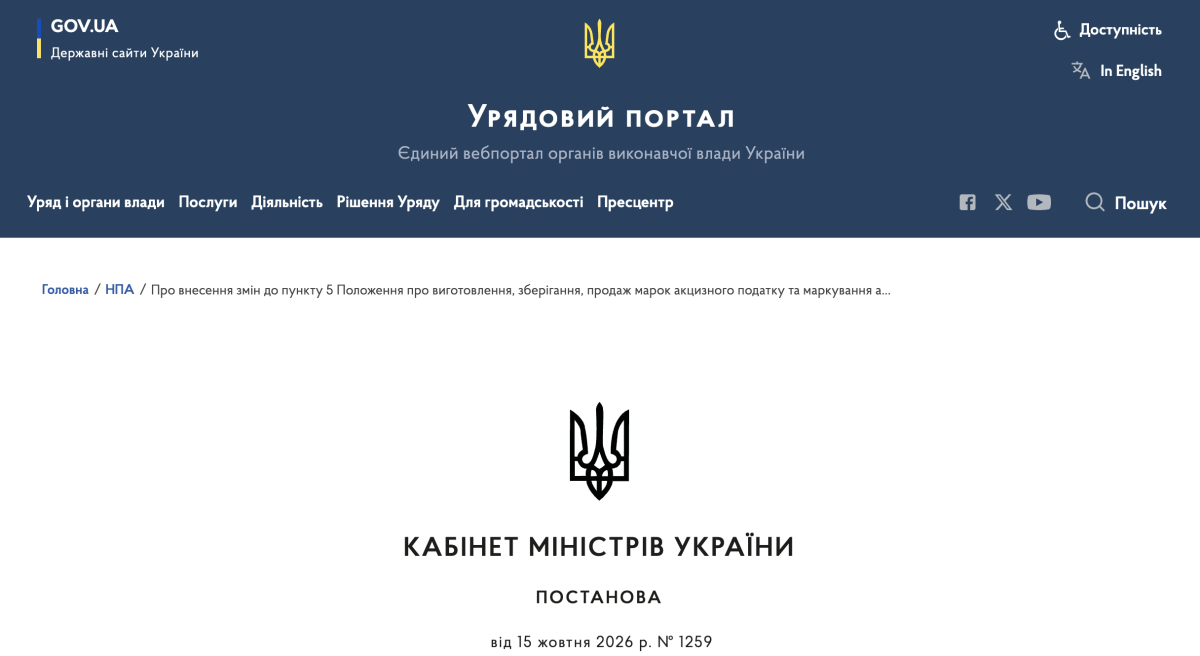
Ukraine's Cabinet of Ministers adopted Resolution No. 1259 on October 15, 2026, increasing excise stamp production fees for tobacco products and e-cigarette liquids by approximately 30.5%, from UAH 0.1643 to UAH 0.2144 per stamp. Fees for alcoholic beverages rose by about 30.2%. Separately, Ukraine's parliament passed Bill No. 15532 on October 13, proposing to postpone the full implementation of electronic excise stamps and traceability for alcohol, tobacco and e-cigarette liquids from November 1, 2026, to July 1, 2027. Parliament cited additional testing, configuration and integration requirements. The bill was sent to the president for signature on October 19.
Regulations
Oct.21
Imperial Brands' NGP Revenue Rises 11.4% in FY2026 but Business Still Posts £63 Million Loss; Zone Reaches 114,000 US Stores as Smokeless Reporting Takes Shape
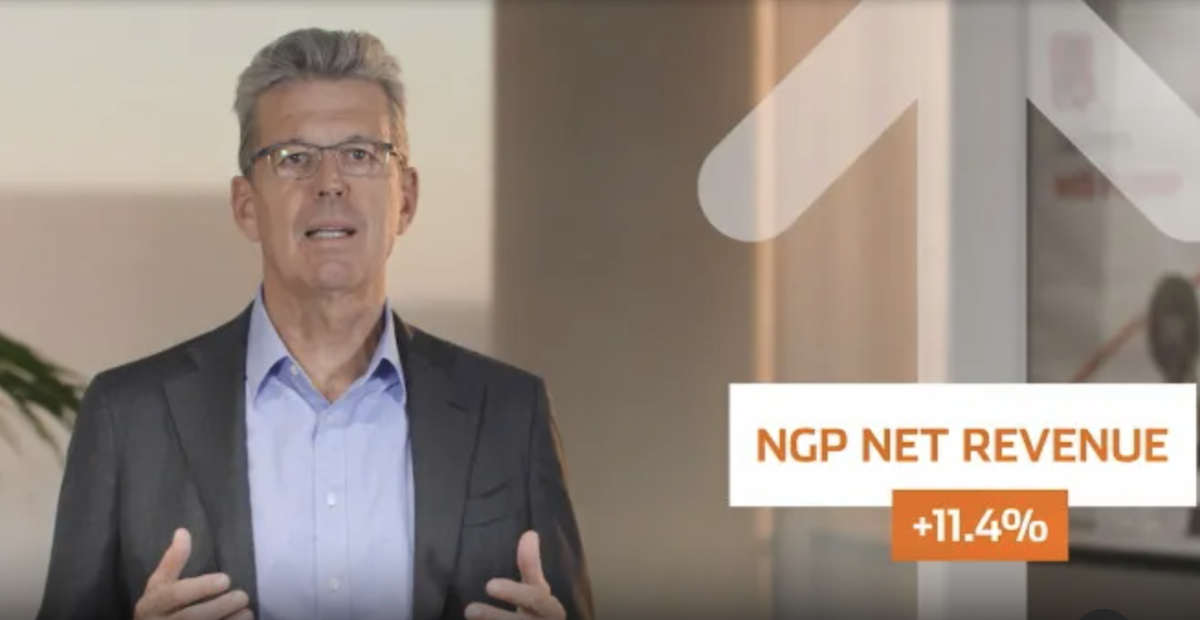
Imperial Brands reported an 11.4% increase in next-generation product (NGP) net revenue to £419 million in fiscal 2026, while its adjusted NGP operating loss narrowed to £63 million. European NGP revenue rose 16.8%, while the Americas recorded a 17.1% decline. Global modern oral nicotine volumes increased 27.8%, with US nicotine pouch brand Zone expanding to approximately 114,000 stores. The company also acquired Black Buffalo in the US and Helwit in Sweden, broadening its oral nicotine portfolio. From FY2027, Imperial Brands will adopt a new Smokeless reporting category combining NGP with traditional oral tobacco. On the new basis, FY2026 Smokeless net revenue was £554 million, with adjusted operating profit of £14 million.
company
Nov.18
Russia's Vape Ban Decisions Reach 17 Regions With 39 More Considering Laws, Putting Over 3,000 St. Petersburg Retail Outlets in Focus
Russia's regional vape retail restrictions are expanding. State Duma Speaker Vyacheslav Volodin said on November 7 that 17 regions had adopted decisions to ban vape sales, while another 39 were preparing or considering similar legislation. On November 12, lawmakers in Leningrad Oblast and the Republic of Karelia adopted bans scheduled to begin on March 1, 2027. A day earlier, St. Petersburg unanimously approved a five-year ban proposal in its first reading. The city has 615 specialist vape shops and more than 2,400 other retail outlets selling vaping products alongside other goods. Under Federal Law No. 186-FZ, enacted in June 2026, Russian regions may prohibit retail sales of electronic nicotine delivery systems and related liquids between March 2027 and March 2032. The legislation also restricts licensed suppliers from delivering covered products to retail premises in regions where bans apply.
Regulations
Nov.13
Spain Cigarette Volumes Fall 5.2% in August, BAT Drops 14.5%, JTI Gains Share; France Down 8.3% on Adjusted Basis
Spain's cigarette volumes declined 5.2% year over year in August 2026, according to government data cited by UBS and reported by Investing.com on October 7. British American Tobacco's volumes fell 14.5%, followed by Imperial Brands at 8.8%, Philip Morris International at 6.6% and Japan Tobacco at 4.6%. JTI was the only one of the four companies to gain cigarette market share, rising six basis points to 26.7%. In France, official customs data showed an unadjusted 3.7% decline in cigarette deliveries. Adjusting for the difference in delivery days produces a decline of approximately 8.3%, consistent with the UBS figure. The bank also estimated the earnings exposure of major tobacco companies to both markets.
Market
Oct.13
Sweden Finds ZYN Ingredient Labels Noncompliant Over Generic Flavoring Disclosure, Swedish Match Faces SEK 2 Million Monthly Penalty
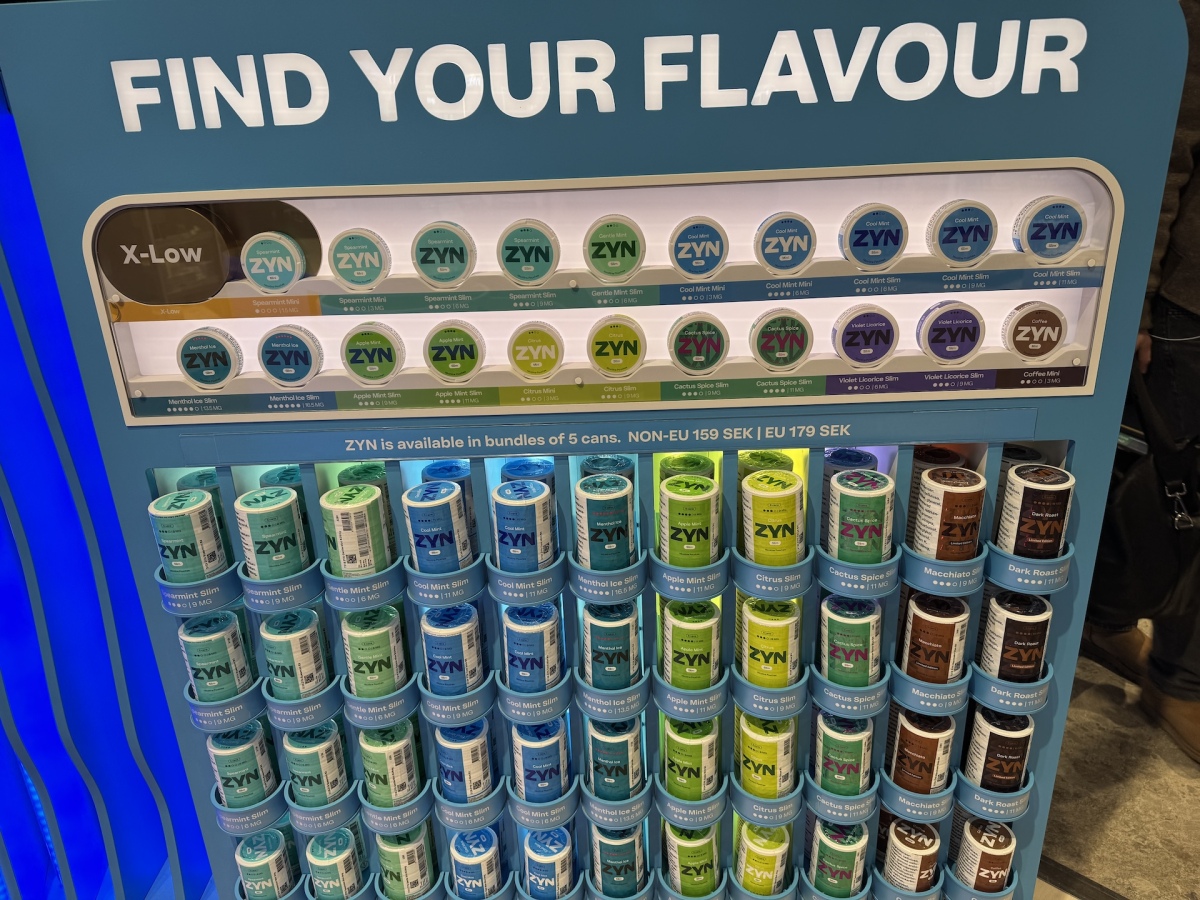
Sweden's Public Health Agency has found ingredient labels on ZYN nicotine pouches sold by Philip Morris International subsidiary Swedish Match to be noncompliant, according to Dagens industri. The products' packaging listed 10 to 13 ingredients, compared with 11 to 42 in regulatory submissions, with multiple flavoring ingredients grouped under the generic term "aromer." The agency ordered corrective action, warning of a conditional penalty of SEK 2 million per month for noncompliance. The order applies only to products manufactured after the decision becomes legally effective and does not require recalls. Swedish Match disputes the agency's interpretation and plans to appeal.
PMI
Oct.22
South Korea's Synthetic Nicotine Tax Take Estimated at Just 1.3% of Forecast as Imports Plunge Nearly 97%
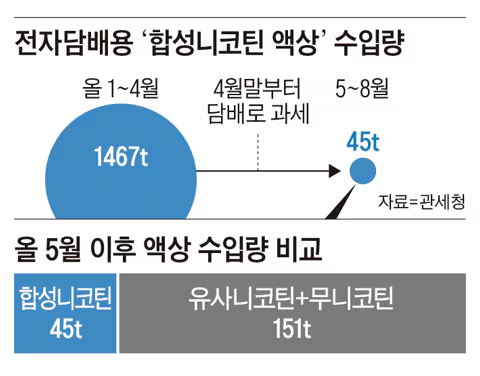
After synthetic nicotine was placed under tobacco regulation on April 24, 2026, South Korea’s tax collections from synthetic-nicotine vaping products fell far short of government projections. The Chosun Ilbo reported on November 18 that Ministry of Health and Welfare data showed national health promotion charges on synthetic-nicotine liquid e-cigarettes totaled 765 million won from April 24 through September. Using statutory rates, the newspaper estimated combined major taxes and charges at about 2.622 billion won—on a monthly basis roughly 1.3% of an earlier forecast after temporary tax reductions. Customs data showed synthetic-nicotine imports dropped from about 1,467 metric tons in January–April to 45 metric tons in May–August, a nearly 97% decline. Imports of nicotine-analog and nicotine-free liquids totaled 151 metric tons in May–August, exceeding synthetic-nicotine imports in the same period, though both categories were also below January–April volumes.
Regulations
Nov.19