2024 February Chinese E-cigarette Export Data to the Netherlands

Industry Insight by 2FIRSTS Mincy
Mar.29.2024
2024 February Chinese E-cigarette Export Data to the Netherlands
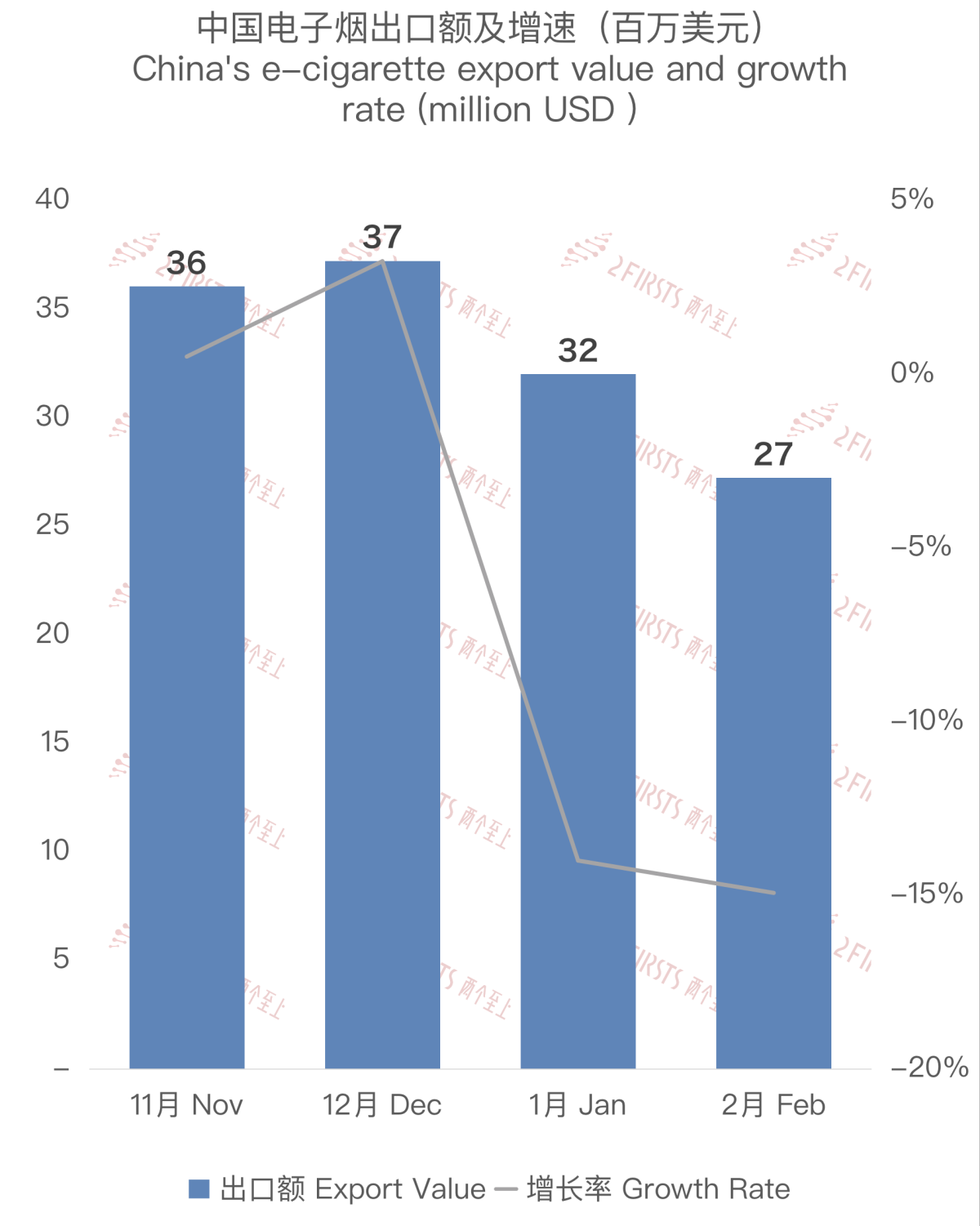
China's e-cigarette exports to the Netherlands in Feb 2024 totaled $27.24 million, with a 86.64% YoY increase.

According to the updated trade data from the General Administration of Customs of the People's Republic of China, 2FIRSTS has compiled the e-cigarette export data to the Netherlands in February 2024. The specifics are as follows:
2024 February Chinese E-cigarette Export Data to the Netherlands
Image source: 2FIRSTS (Mincy Mapping)


The export volume was approximately $27.24 million, a decrease of 14.93% compared to the previous period, but an increase of 86.64% compared to the same period last year.
2024 February Chinese E-cigarette Export Data to the Netherlands
Image source: 2FIRSTS (created by Mincy)


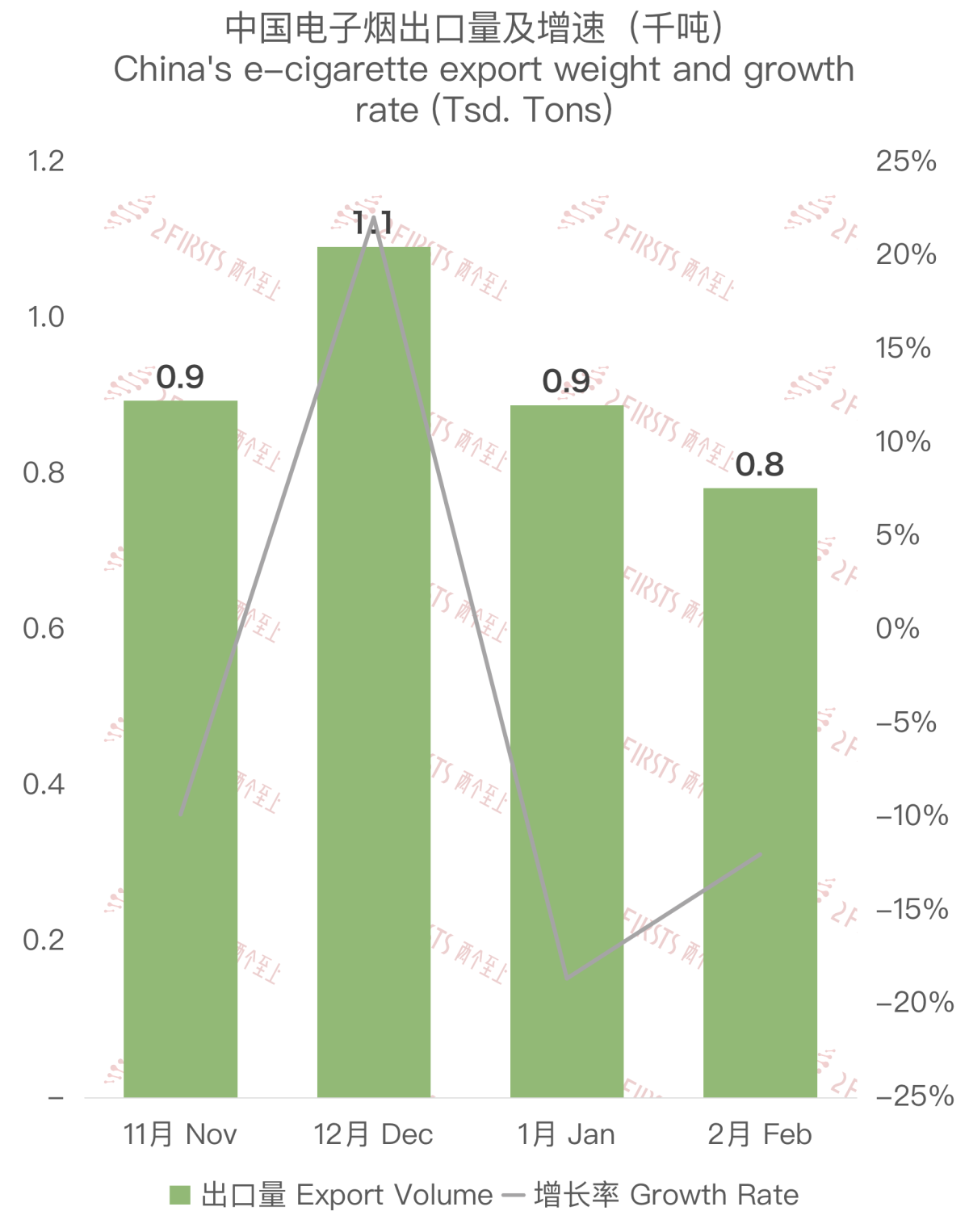
The export volume was around 782 tons, down 11.98% compared to the previous period, and an increase of 154.77% compared to the same period last year.
2024 February Chinese E-cigarette Export Data to the Netherlands
Image source: 2FIRSTS (Mapped by Mincy)


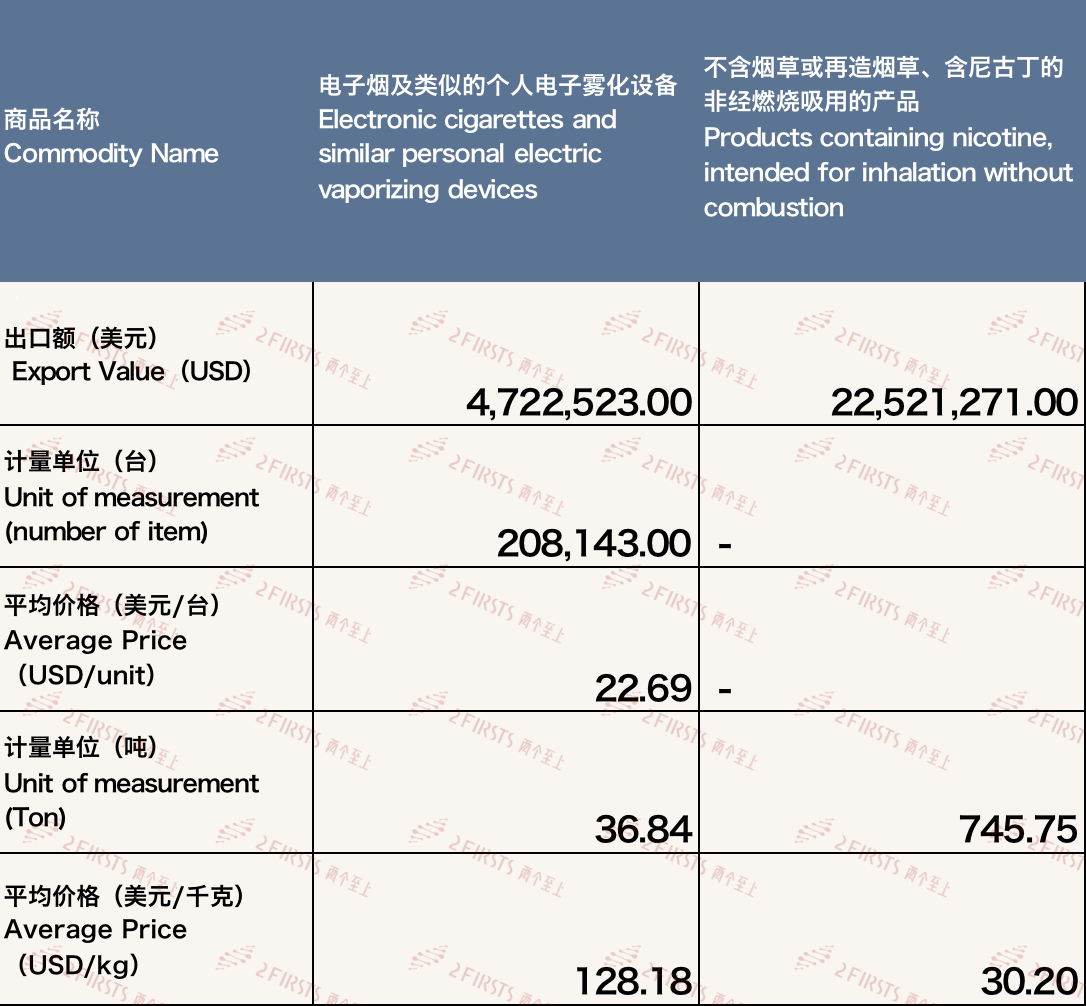
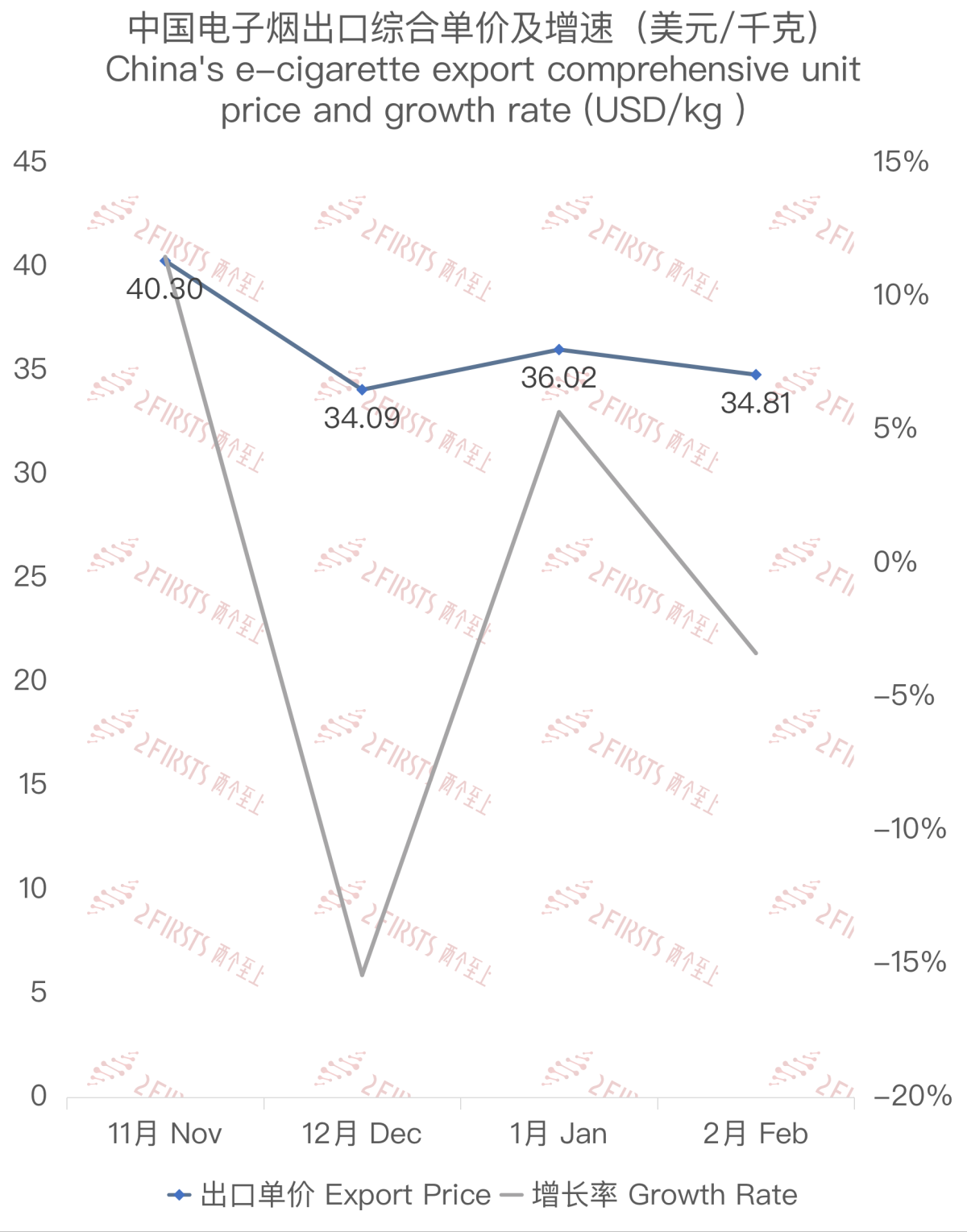
The export unit price decreased by 3.36% month-on-month and 26.74% year-on-year to $34.81 per kilogram. The average price for "e-cigarettes and similar personal electronic vaporizing devices" is $22.69 per unit.
2024 February Chinese E-cigarette Export Data to the Netherlands
Image source: 2FIRSTS (created by Mincy)


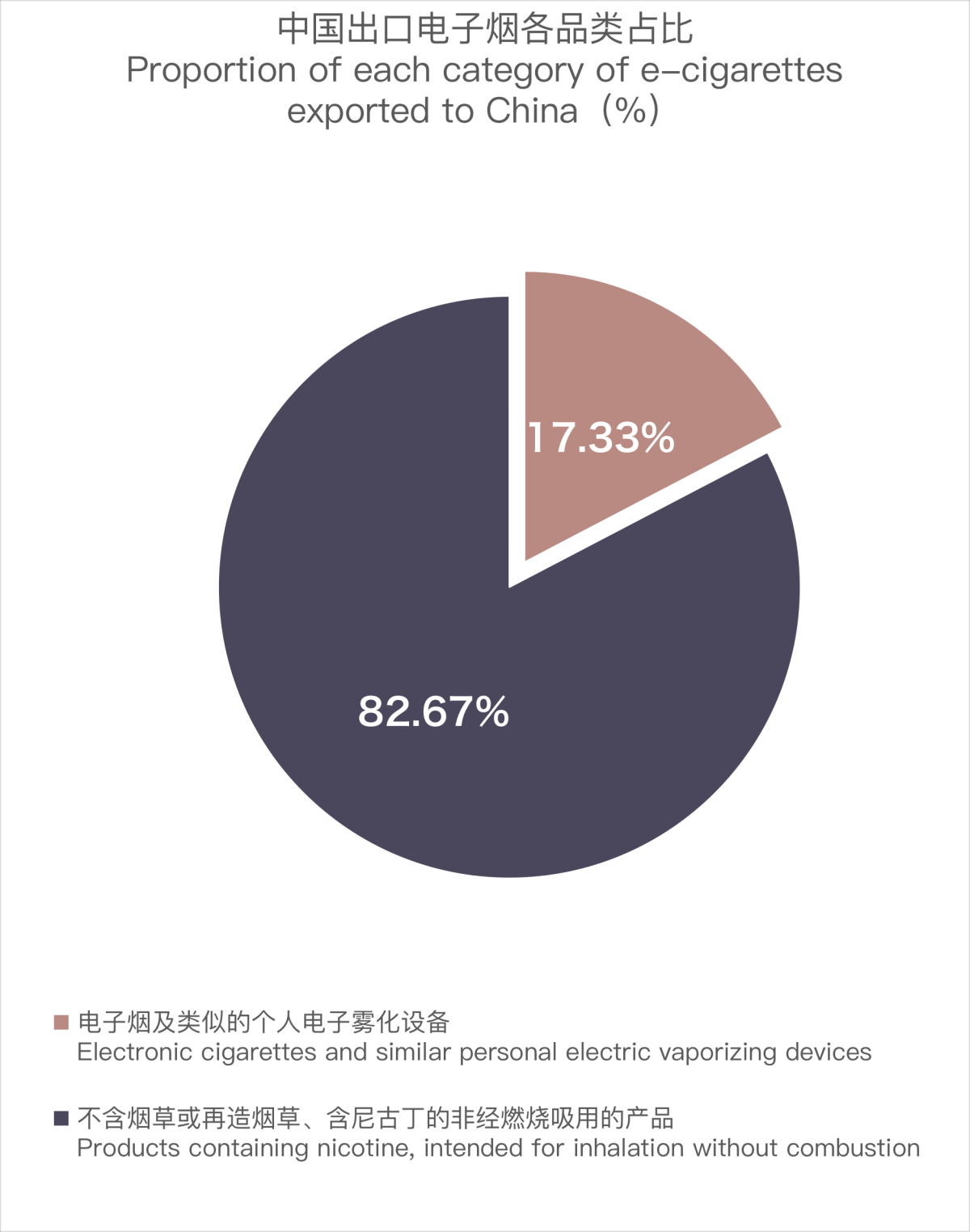
Among them, e-cigarettes and similar personal electronic vaporizers account for 17.33% of the export category, while products that do not contain tobacco or reconstituted tobacco and contain nicotine for non-combustible use account for 82.67%.
2024 February Chinese E-cigarette Export Data to the Netherlands
Image source: 2FIRSTS (Mincy illustration)


We welcome news tips, article submissions, interview requests, or comments on this piece.

Please contact us at info@2firsts.com, or reach out to Alan Zhao, CEO of 2Firsts, on LinkedIn


Notice

1.  This article is intended solely for professional research purposes related to industry, technology, and policy. Any references to brands or products are made purely for objective description and do not constitute any form of endorsement, recommendation, or promotion by 2Firsts.

2.  The use of nicotine-containing products — including, but not limited to, cigarettes, e-cigarettes, nicotine pouchand heated tobacco products — carries significant health risks. Users are responsible for complying with all applicable laws and regulations in their respective jurisdictions.

3.  This article is not intended to serve as the basis for any investment decisions or financial advice. 2Firsts assumes no direct or indirect liability for any inaccuracies or errors in the content.

4.  Access to this article is strictly prohibited for individuals below the legal age in their jurisdiction.


Copyright


This article is either an original work created by 2Firsts or a reproduction from third-party sources with proper attribution. All copyrights and usage rights belong to 2Firsts or the original content provider. Unauthorized reproduction, distribution, or any other form of unauthorized use by any individual or organization is strictly prohibited. Violators will be held legally accountable.

For copyright-related inquiries, please contact: info@2firsts.com


AI Assistance Disclaimer


This article may have been enhanced using AI tools to improve translation and editorial efficiency. However, due to technical limitations, inaccuracies may occur. Readers are encouraged to refer to the cited sources for the most accurate information.

We welcome any corrections or feedback. Please contact us at: info@2firsts.com

Special Report | Russian Vape Compromise Faces First Hurdles
Russia’s regional vape-ban model is facing early legal and political tests, as Perm Krai moves ahead before federal legislation is fully adopted. The case highlights uncertainty over regional authority, concerns from business groups about market fragmentation, and the risk that pressure against regional bans could revive calls for a stricter nationwide prohibition.
Industry Insight
May.28
Tobacco Farming in the New Nicotine Era: Why Indian Farmers Struggle to Transition — Contributed by Samrat Chowdhery
In this contributed article to 2Firsts, Mumbai-based journalist and harm reduction advocate Samrat Chowdhery examines India’s tobacco transition from the perspective of agriculture, supply chains and regulation. As noted by 2Firsts, India offers a relevant case for understanding how new nicotine technologies may affect not only consumption, trade and policy, but also tobacco farming.
Special Report
May.29
South Korea’s New Vape Rules Raise Bar for E-Liquid Makers and China-Linked Supply Chains, Expert Says
South Korea’s new vape regulations are reshaping the e-liquid market, raising compliance requirements for manufacturers, retailers and overseas suppliers. In an interview with 2Firsts, Korean nicotine products specialist Sam Kim discusses licensing barriers, inventory impacts, China-linked supply chains, and emerging regulatory challenges around nicotine analogues, nicotine-free products and DIY mixing. The Korean case may offer broader insights as governments worldwide adapt to rapidly evolving nicotine products.
Jul.16
2Firsts Data | China’s Vape Exports Rise 3.1% in H1 2026 as 6-Methyl Nicotine-Related Products Surge 65.2%
China’s vape exports showed resilience in the first half of 2026 after a short-term shock from China’s export rebate adjustment. But customs data points to more than a simple recovery: the structure of growth is changing. Vaping devices and atomization hardware emerged as the strongest growth driver, while nicotine-containing vaping products remained broadly stable. Meanwhile, nicotine substitute-related products represented by 6-methyl nicotine expanded rapidly, becoming a new category to watch for both industry and regulators. After the U.S. market went through a cycle of shortages, replenishment and inventory rebuilding in 2025, China’s vape supply chain is entering a new phase of reallocation.
Special Report
Jul.20
Illicit Vape and Nicotine Pouch Seizures Concentrated in UK Hotspots, New Data Shows
Freedom of Information (FOI) data from the UK shows that more than 3,000 seizures of illegal nicotine products were recorded in the 2024/25 financial year, with Hull, Liverpool and Bolton emerging as the most active enforcement hotspots — highlighting that the problem of illicit vapes, nicotine pouches and smokeless tobacco products persists across many parts of the country.
Jun.16
Former ATF Official’s Claims on Chinese Vape Companies and 6-Methyl Nicotine Fuel US Regulatory Debate
Former ATF Deputy Director Edgar Domenech has warned that some Chinese vape companies may be using 6-methyl nicotine, a nicotine analogue, raising new questions over how US regulators should classify emerging nicotine compounds.
Jul.13