Key Facts and Insights on Japan’s Next-Generation Tobacco Market:
1. E-cigarettes account for less than 1% of Japan’s overall tobacco-related product market, and about 92% of Japanese people have never tried vaping, indicating significant untapped potential.
2. Heat-not-burn (HNB) products dominate Japan’s next-generation tobacco market, with annual sales exceeding ¥1 trillion (approximately USD 6.97 billion).
3. Around half of Japanese e-cigarette users are dual users (also smoking combustible cigarettes or heated tobacco products), while the other half exclusively vape — a group that includes many Gen Z consumers.
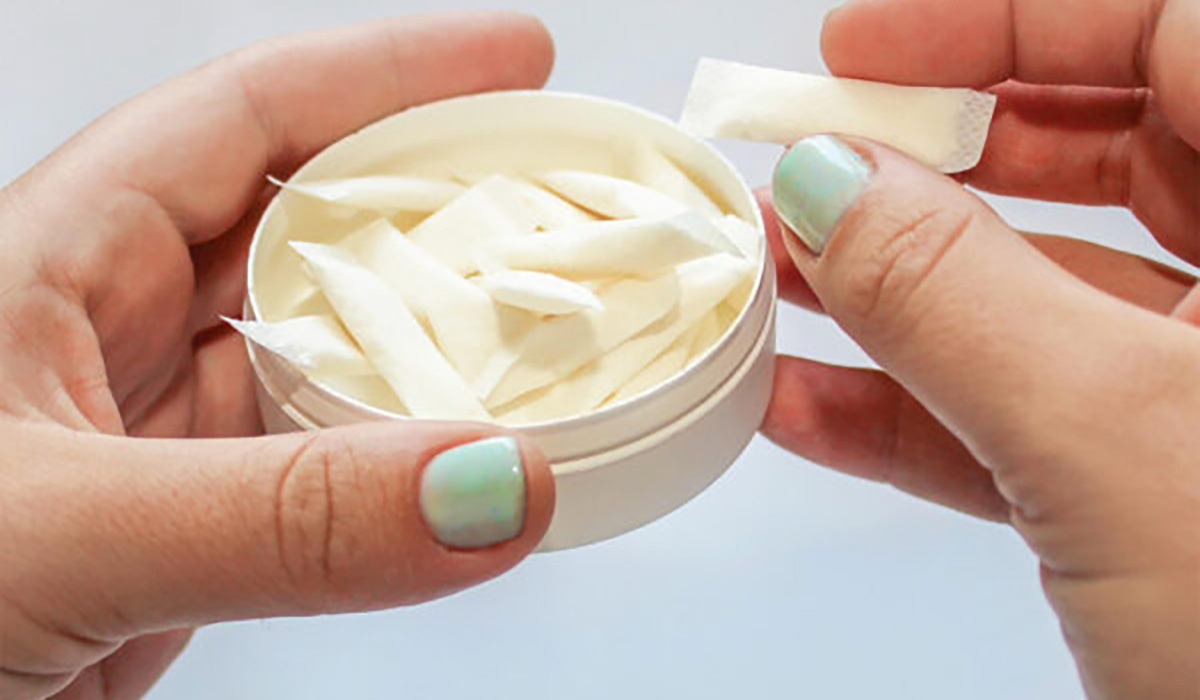
4. Although the nicotine pouch market currently generates only several billion yen in annual sales, it is growing rapidly at a rate of over 40 percent per year, making it one of the fastest-growing alternative product segments.
5. In Japan’s e-liquid market, low-cost, large-capacity bottles dominate, but demand for mid-to-premium-priced products (¥2,000–¥3,000) is rising rapidly. Online channels lead sales, with Amazon holding the largest market share.
[By Taco Tuinstra, 2FIRSTS] Japan is frequently cited as an example of tobacco harm reduction (THR) in action. Smoking rates in the country have plunged by nearly half since next-generation products debuted a decade ago. Contrary to the situation in other markets, however, vapes have played virtually no role in this development, as Japan allows sales of e-cigarettes only without nicotine.
THR advocates attribute Japan’s success to the rise of heat-not-burn (HNB) products, which hit Japanese store shelves around 2014 and today represent more than ¥1 trillion ($6.97 billion) in sales. The vape segment, by contrast, accounts for less than 1% of the overall tobacco-related market.
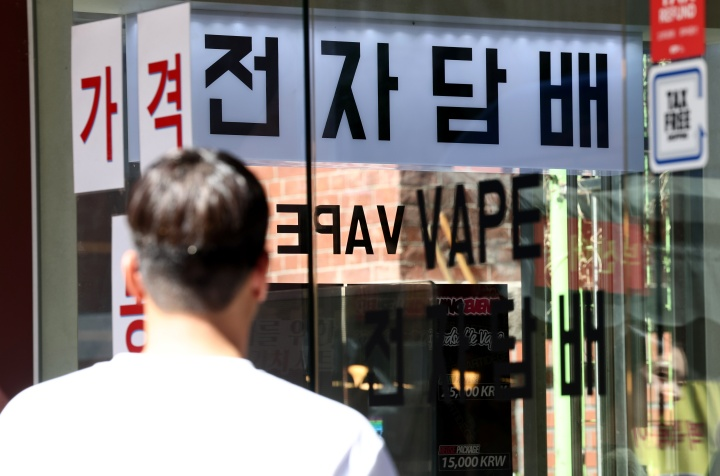
Nonetheless, interest in vaping has been growing in Japan, with mini shisha and disposable products gaining traction especially among young adult consumers. According to surveys, approximately 92% of Japanese people have never vaped, suggesting significant untapped potential for the category.

In late June 2024, BAT’s CEO visited Japan and announced that the company would fully launch its latest heat-not-burn product, Hilo, in September 2024. This move further accelerates changes in Japan’s next-generation tobacco market.
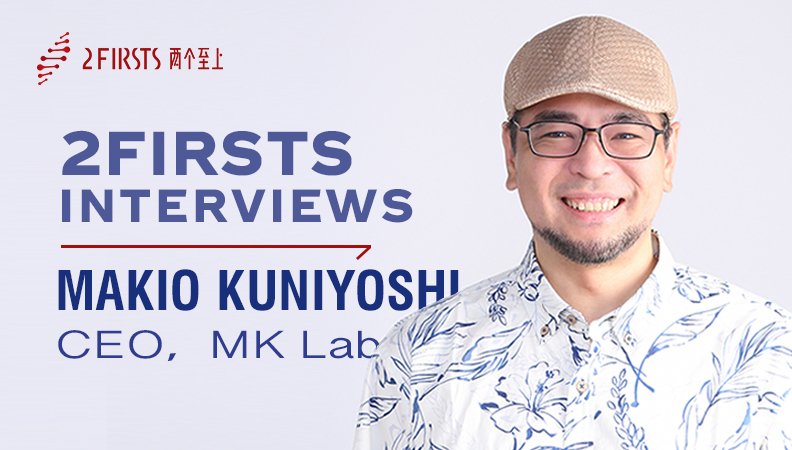
Against this backdrop, how are heated tobacco, e-cigarettes, nicotine pouches, and other novel products reshaping the Japanese market? To explore these dynamics in depth, 2Firsts interviewed Makio Kuniyoshi, CEO of MK Lab, to better understand the market landscape, consumer profiles, and future trends.

MK Lab’s Founding and Development
One player that stands to benefit from the rising domestic interest in e-cigarettes is MK Lab. Founded by Makio Kuniyoshi, a game-programmer-turned-product-creator with a sharp sense for design, the firm in 2012 set out on a mission to help smokers in Japan transition to less-risky forms on enjoyment by developing original, safe and flavorful liquids.
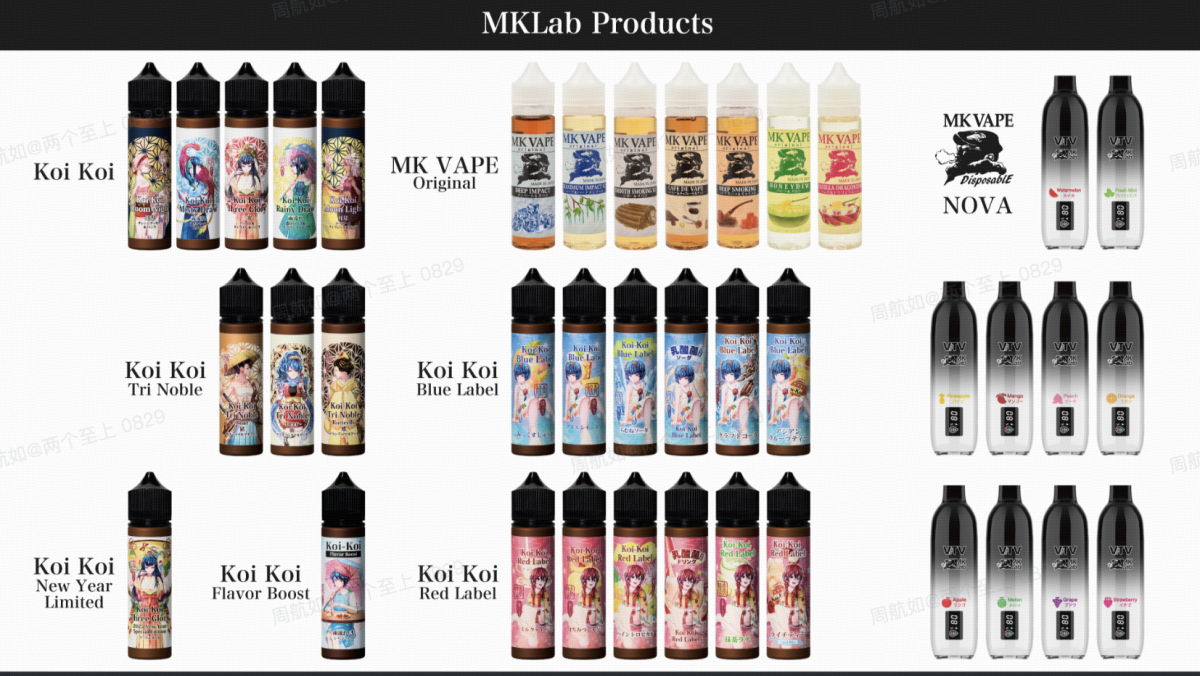
The company started by studying vape products from around the world. In 2015, the business rebranded and incorporated as MK Lab. That same year, it launched the Koi-Koi series, inspired by the traditional Japanese card game Hanafuda. A Koi-Koi partnership with the Okayama Denim webstore subsequently won the Minister for Foreign Affairs Award at the 43rd MAF exhibition in Tokyo. MK Lab has since collaborated with popular Japanese anime titles such as Steins; Gate and The Saga of Tanya the Evil.
Product Line and International Expansion
Operating under the slogan “Quality and creativity from Japan,” MK Lab today not only develops and manufactures e-liquids under its own trademarks and for other brands but also develops disposable e-cigarettes (in collaboration with Chinese manufacturing partners) and researches and develops new products with a strong emphasis on Japanese aesthetics and cultural sensibilities. The company manages more than 4,000 flavoring agents in-house.
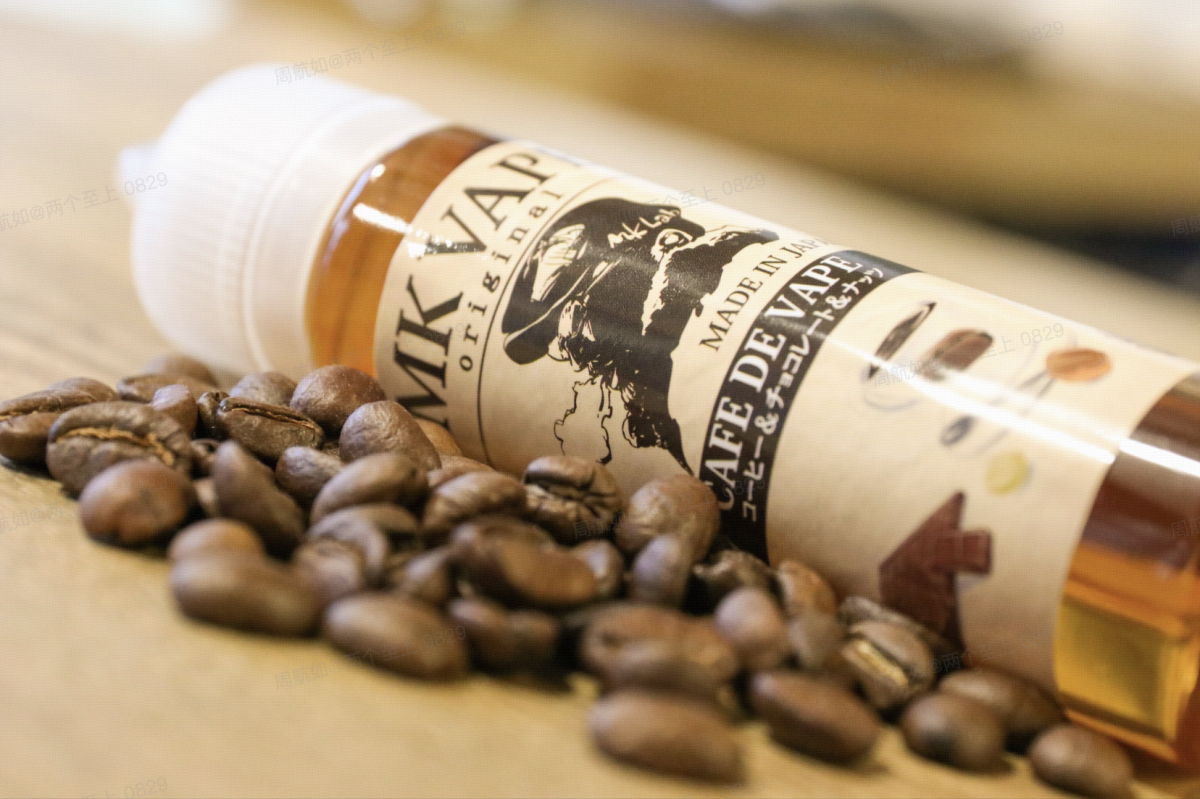
Its products include nicotine-free e-liquids in 60 ml bottles; the MK Vape original brand; and “shortfills”—bottles of nicotine-free juices that are intentionally underfilled to allow the user to add nicotine—for overseas markets. For the time being, MK Lab’s international business is confined to the Czech Republic, but the company is eager to extend the sales of its shortfills across the European Union.
Domestically, MK Lab sells through online channels and specialty vape shops. Its products are available through the official MK Lab store and platforms such as Amazon, Rakuten and Yahoo! Shopping. In selecting physical stores, Kuniyoshi says the company chooses establishments that are committed to optimizing the customer experience with proper product explanations.
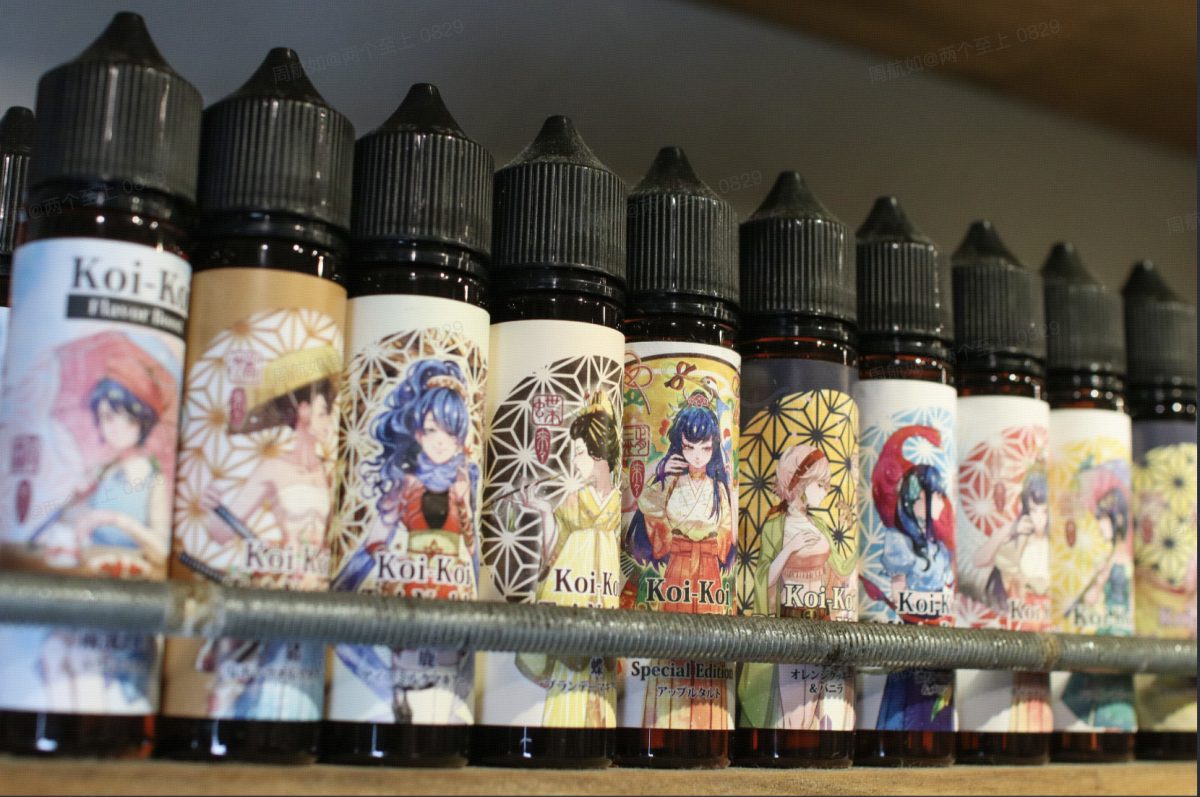
While nicotine-containing e-cigarettes are likely to remain illegal in Japan, MK Lab is keen to capitalize on the growing interest in vaping domestically and the potential for shorfills overseas. Kuniyoshi believes Japanese vape liquids have strong potential in regions such as Europe, where shortfill formats—sometimes referred to as "shake and vape” products—dominate.
According to Kuniyoshi, Japanese products set themselves apart through high-quality flavors, precision in aromatic composition and a strong commitment to safety. “These traits serve as significant differentiators in global markets,” he says. “Moving forward, MK Lab aims to enhance global outreach by promoting both the cultural value and technical excellence of its products.”
Japan’s Remarkable NGP Market
In the global market for next-generation products, Japan stands out because vapes represent less than 1 percent of the country’s tobacco-related product sales. This situation is related to the country’s ban on nicotine-containing e-liquids.
Devices—particularly disposable products—account for most sales, with only limited adoption of refillable liquid-type devices. Among liquid products, low-cost, large-capacity bottles (e.g., 60ml to 100ml for under ¥1,000) dominate, according to MK Lab. As more users seek refined flavors and higher quality, the company expects the market for mid-to-premium-priced liquids (¥2,000–¥3,000) to expand.
Because the number of retail outlets for vape products remains limited in Japan, online platforms represent the main sales channel. Amazon holds the largest market share, followed by Rakuten and Yahoo! Shopping, according to MK Lab. In terms of physical stores, sales are mostly limited to vape specialty shops and occasional pop-up stores.
Consumer Profiles and Market Trends
ML Lab distinguishes four categories of vapers in Japan: Smokers looking to reduce cigarette consumption, flavor enthusiasts, consumers seeking to reduce their calorie intake, and vape hobbyists. Smokers tend to prefer menthol or minty vape flavors with a strong throat hit, while flavor enthusiasts flock to dessert and fruit-based flavors, according to MK Lab. Those vaping to suppress food cravings tend to like sweet flavors, while the vape hobbyist enjoy exploring more complex flavor profiles. The hobbyists are typically intermediate users or advanced users for whom vaping is a lifestyle.
Dual use is common in Japan, according to MK Lab. Approximately half of all vapers also use combustible cigarettes or heated tobacco products. The other half vape exclusively, with some obtaining nicotine separately via personal import. This latter group tends to be tech-savvy and includes many Gen Z members.
In terms of trends, the Dr. Vape brand has gained significant recognition through a subscription model and large-scale advertising. Brands like Vapengin and TARLESS are leveraging social media and influencer marketing to appeal to younger adult consumers. In many cases, promotional strength outweighs product performance in determining market success, according to MK Lab.
As their counterparts in other countries, many Japanese vape specialty shops import devices from Chinese suppliers such as Aspire, GeekVape and Vaporesso. Japanese manufacturers of disposable vape products increasingly rely on partnerships with original equipment manufacturers and original design manufacturers to develop devices tailored for the domestic market.
Like, the vape market, the nicotine pouch market is still small in Japan, with sales accounting for only a few billion yen annually. However, this category has been gaining traction rapidly, with an annual growth rate exceeding 40 percent, according to MK Lab. Like vapes, pouches offer smokers a less-harmful alternative to smoking. However, unlike nicotine-free vapes, which are treated as consumer products in Japan, nicotine pouches must comply with the country’s tobacco law.
Welcome to submit articles, contact for interviews, or provide comments to 2Firsts. Please contact: info@2firsts.com, or connect with 2Firsts CEO Alan Zhao on LinkedIn.
We welcome news tips, article submissions, interview requests, or comments on this piece.
Please contact us at info@2firsts.com, or reach out to Alan Zhao, CEO of 2Firsts, on LinkedIn
Notice
1. This article is intended solely for professional research purposes related to industry, technology, and policy. Any references to brands or products are made purely for objective description and do not constitute any form of endorsement, recommendation, or promotion by 2Firsts.
2. The use of nicotine-containing products — including, but not limited to, cigarettes, e-cigarettes, nicotine pouchand heated tobacco products — carries significant health risks. Users are responsible for complying with all applicable laws and regulations in their respective jurisdictions.
3. This article is not intended to serve as the basis for any investment decisions or financial advice. 2Firsts assumes no direct or indirect liability for any inaccuracies or errors in the content.
4. Access to this article is strictly prohibited for individuals below the legal age in their jurisdiction.
Copyright
This article is either an original work created by 2Firsts or a reproduction from third-party sources with proper attribution. All copyrights and usage rights belong to 2Firsts or the original content provider. Unauthorized reproduction, distribution, or any other form of unauthorized use by any individual or organization is strictly prohibited. Violators will be held legally accountable.
For copyright-related inquiries, please contact: info@2firsts.com
AI Assistance Disclaimer
This article may have been enhanced using AI tools to improve translation and editorial efficiency. However, due to technical limitations, inaccuracies may occur. Readers are encouraged to refer to the cited sources for the most accurate information.
We welcome any corrections or feedback. Please contact us at: info@2firsts.com