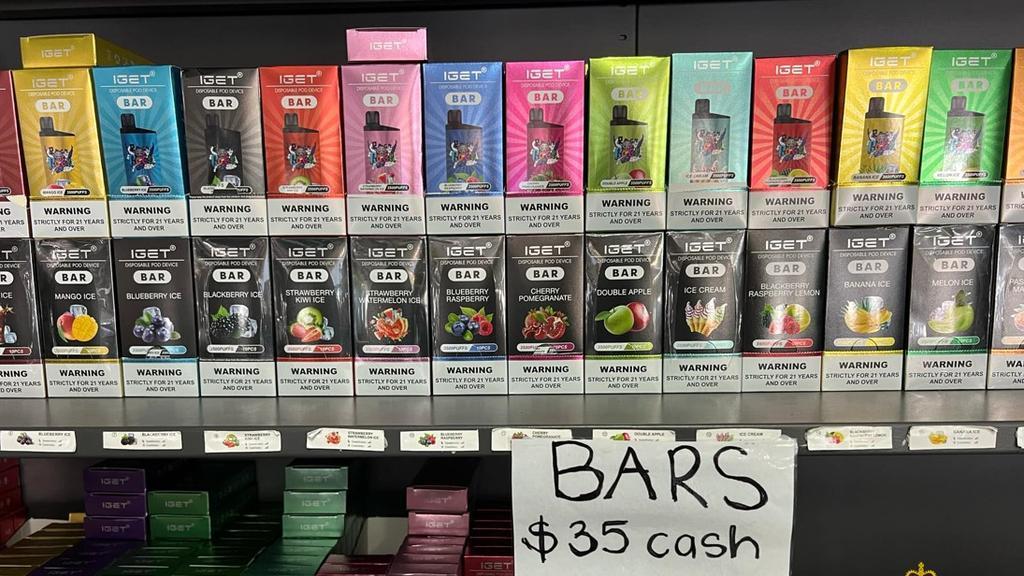
According to News.com.au on August 13, the Australian Border Force (ABF) seized over 4000 e-cigarettes in a single day, with the seized products involving the e-cigarette brand IGET.
The Australian Border Force (ABF) has seized over 4,000 e-cigarettes and approximately 110,000 illicit tobacco cigarettes in New South Wales (NSW). These illegal items were discovered during inspections at three tobacco shops in the Central Coast region, which are reportedly linked to organized crime.
This operation was part of a major cross-state operation, which resulted in the seizure of 9,338 disposable e-cigarettes, 742,811 cigarette sticks, and 76 kilograms of loose tobacco.
Erin Dale, Interim Illegal Tobacco and E-Cigarette Commissioner (ITEC), stated that combating illegal e-cigarette trade requires a "collaborative response across multiple jurisdictions," with disrupting the profitability of organized crime being a key factor.
In this operation, officials discovered illegal tobacco being sold under the counter at discounted prices - not only evading taxes, but also fueling the activities of criminal gangs involved in smuggling and supplying these products.
Similarly, cheap e-cigarette products that are now banned are prominently displayed to customers in some stores.
Australian Border Force Commander Ken McKern stated that organized criminal groups are "highly adaptive and resilient", and cracking down on the illegal tobacco market is a primary focus of ABF's work.
Criminal networks see the illegal tobacco market as a low-risk, high-reward commodity - these organized crime groups have strong adaptability and resilience. After a raid, the products are often transferred or quickly set up in new locations.
We will continue to disrupt the business models of these criminal organizations, some of the best methods being working with partner agencies, sharing intelligence, and utilizing all available institutional authority and legal means to dismantle these criminal operations.
The latest crackdown occurred after the Australian Border Force-led Illicit Tobacco Taskforce (ITTF) seized over $5 million worth of suspected nicotine e-cigarettes and approximately $3.8 million worth of cigarettes and tobacco products in the past week.
ABF ITTF Commander Penny Spies stated that the illegal tobacco market is attractive to organized crime groups due to the huge profits brought in from tax evasion.
These profits funded a lavish lifestyle and were reinvested into organized criminal activities.
We welcome news tips, article submissions, interview requests, or comments on this piece.
Please contact us at info@2firsts.com, or reach out to Alan Zhao, CEO of 2Firsts, on LinkedIn
Notice
1. This article is intended solely for professional research purposes related to industry, technology, and policy. Any references to brands or products are made purely for objective description and do not constitute any form of endorsement, recommendation, or promotion by 2Firsts.
2. The use of nicotine-containing products — including, but not limited to, cigarettes, e-cigarettes, nicotine pouchand heated tobacco products — carries significant health risks. Users are responsible for complying with all applicable laws and regulations in their respective jurisdictions.
3. This article is not intended to serve as the basis for any investment decisions or financial advice. 2Firsts assumes no direct or indirect liability for any inaccuracies or errors in the content.
4. Access to this article is strictly prohibited for individuals below the legal age in their jurisdiction.
Copyright
This article is either an original work created by 2Firsts or a reproduction from third-party sources with proper attribution. All copyrights and usage rights belong to 2Firsts or the original content provider. Unauthorized reproduction, distribution, or any other form of unauthorized use by any individual or organization is strictly prohibited. Violators will be held legally accountable.
For copyright-related inquiries, please contact: info@2firsts.com
AI Assistance Disclaimer
This article may have been enhanced using AI tools to improve translation and editorial efficiency. However, due to technical limitations, inaccuracies may occur. Readers are encouraged to refer to the cited sources for the most accurate information.
We welcome any corrections or feedback. Please contact us at: info@2firsts.com