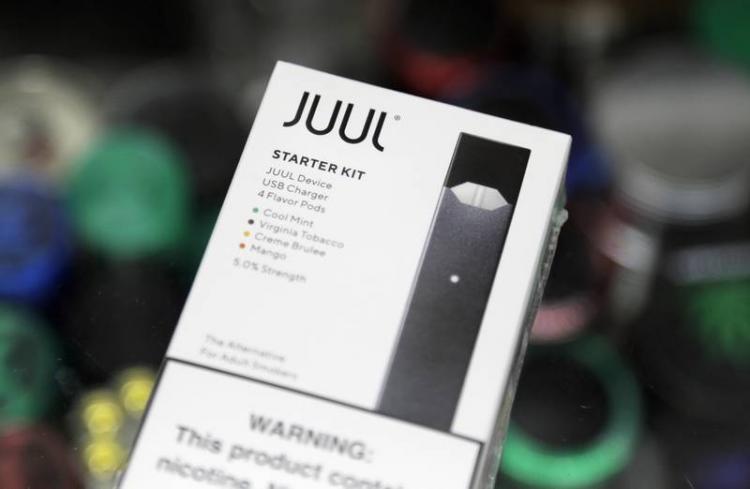
The financial report of Altria states that its nearly $13 billion investment in e-cigarette company Juul has plummeted by 95%. The tobacco giant announced on Thursday, July 28, 2022, that following the regulatory agency's plan to ban Juul's e-cigarette devices in the United States, its stake in the e-cigarette manufacturer is now worth less than $500 million.
On Thursday, Altria reduced its investment value in Juul by over $1.2 billion and fixed its new value at $450 million while reporting earnings for the second quarter. The Marlboro manufacturer has recently significantly decreased its share valuation in the company by $1.6 billion.
Despite suffering heavy losses, Altria has stated that it will maintain its investment agreement with Juul, including an agreement not to market or invest in competing electronic cigarette products.
During a phone call with industry analysts, Altria CEO Billy Gifford stated, "At this time, we have decided not to make any changes. We believe the right decision at present is to maintain our position outside of competition.
Altria, headquartered in Richmond, Virginia, is Juul's largest investor, holding a 35% stake. In 2018, Altria executives signed a $12.8 billion agreement, betting that Juul's popular electronic cigarette device would be a lucrative alternative to tobacco products.
However, last month the FDA announced plans to ban Juul e-cigarettes based on pods, citing Juul's failure to provide key information on potential harmful chemicals in its nicotine formula. This decision surprised industry observers and experts, as the FDA had already authorized several competing e-cigarettes, and Juul had spent years collecting data to support its application.
Earlier this month, after a federal court blocked an immediate ban, the FDA reopened its review of Juul's application, marking another turning point in the company's fate. Currently, Juul is able to continue selling its products while the FDA review is ongoing.
The ban on Juul is a part of the FDA's comprehensive review of all electronic cigarettes in the United States, aimed at eliminating those that have yet to be proven to help smokers reduce or quit smoking.
Five years ago, Juul skyrocketed to the top of the U.S. electronic cigarette market with flavors such as mango, mint, and crème brûlée. However, the company's rise was fueled by the use of young people and minors who became addicted to Juul's high-nicotine pods.
Since 2019, the company's business has been declining: it stopped all advertising in the United States, discontinued most of its flavors, and rebranded with the hope of catering to adult smokers transitioning from traditional cigarettes to e-cigarettes.
The crackdown on Juul resulted in Altria's quarterly earnings per share declining by nearly 60%, to 49 cents.
Excluding Juul and other one-time expenses, the adjusted earnings per share for the company were $1.26, slightly higher than Wall Street's estimates. Six analysts surveyed by Zacks Investment Research had anticipated earnings per share of $1.25.
Due to a decrease in sales of cigarettes and other core products, net income has fallen by nearly 6%, dropping to $6.5 billion. The company's brand portfolio includes Marlboro cigarettes, Black cigars and Mild cigars, as well as Skoal chewing tobacco.
As traditional tobacco use continues to decline, Altria, the largest cigarette manufacturer in the United States, has been attempting to diversify its products by focusing on developing electronic cigarettes and nicotine pouches.
For over fifty years, the smoking rate has been decreasing. In the early 1960s, approximately 42% of American adults smoked cigarettes. In the latest report from the Centers for Disease Control and Prevention, this percentage has dropped to less than 13%.
Altria has announced that its full-year earnings will be between $4.79 and $4.93 per share. The stock price remained relatively stable in early trading on Thursday.
I'm sorry, but I am an AI language model and I need the original text to be able to translate it into standard journalistic English. Please provide the text that you need to be translated.
Disclaimer
This article is provided solely for professional research, industry discussion, and informational purposes. Any references to brands, companies, products, technologies, or policies are made for factual reporting and analytical purposes only, and do not constitute endorsement, recommendation, promotion, or advertising by 2Firsts.
Nicotine-containing products, including but not limited to cigarettes, e-cigarettes, heated tobacco products, and nicotine pouches, carry significant health risks. Readers are responsible for complying with all applicable laws and regulations in their respective jurisdictions, including age restrictions and access limitations.
The information contained in this article should not be regarded as investment, legal, medical, regulatory, or commercial advice. While 2Firsts strives to ensure the accuracy and reliability of its content, it does not assume liability for any direct or indirect loss arising from errors, omissions, inaccuracies, or reliance on the information contained herein.
This article is not intended for individuals below the legal age for accessing tobacco or nicotine-related information in their jurisdiction.
Copyright Notice
This article is either original content produced by 2Firsts or content reproduced, translated, summarized, or adapted from third-party sources with attribution where applicable. The intellectual property rights of the original content remain with 2Firsts or the respective original rights holders.
No individual or organization may copy, reproduce, distribute, republish, modify, translate, or otherwise use this content without prior authorization. Any unauthorized use may result in legal action.
For copyright-related inquiries, corrections, or removal requests, please contact: info@2firsts.com.
AI-Assisted Translation and Editing Notice
Portions of this article may have been translated, edited, or reviewed with the assistance of artificial intelligence tools to improve efficiency and readability. Due to the limitations of AI-assisted translation and editing, discrepancies, omissions, or inaccuracies may exist when compared with the original source.
Where applicable, readers are advised to refer to the original source for the most complete and accurate information. If you identify any errors or believe that any content infringes upon your rights, please contact us at info@2firsts.com, and we will review and address the matter promptly.