Five Inner West Sydney shops shut for 90 days after 780,000 illicit cigarettes and 2,200 illegal vapes seized

Feb.09
Five Inner West Sydney shops shut for 90 days after 780,000 illicit cigarettes and 2,200 illegal vapes seized
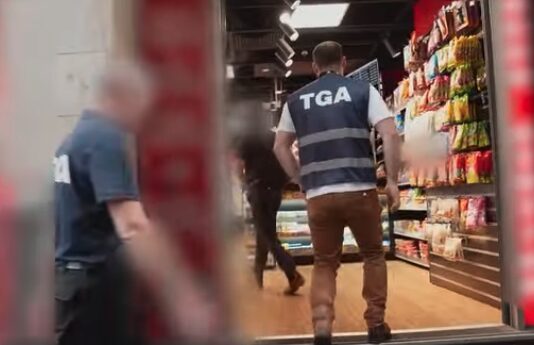
NSW Health has shut down five Inner West Sydney stores for 90 days after a major seizure of illicit cigarettes and illegal vapes, with two additional premises in Northern NSW also served closure notices. The action forms part of a broader crackdown that has seen 66 stores closed since new laws took effect in late 2025, with NSW Health warning further enforcement — including prosecution — may follow.

Key points


  • Five shops in Sydney’s Inner West were issued 90-day closure notices after inspectors seized about 780,000 illicit cigarettes and 2,200 illicit vapes; two more premises in Northern NSW also received closure notices.
  • NSW Health says further investigations are ongoing and prosecutions may follow.
  • Since tougher powers commenced in November 2025, NSW Health and police have closed 66 stores.
  • 2025 enforcement: about 1,700 inspections, 16.2 million cigarettes seized, and 22 successful prosecutions.
  • alian dollars (approximately 28,100 US dollars) in fines imposed by the courts, and 23 cases are still pending.


2Firsts, Feb 9, 2026


According to NSW Health, inspectors in Sydney’s Inner West seized approximately 780,000 illicit cigarettes and 2,200 illicit vapes, issuing 90-day closure notices to five stores. Two additional premises in Northern NSW were also served closure notices.


NSW Health said further investigations will continue and additional enforcement action, including prosecution, may be pursued. Since tougher laws and closure powers targeting illicit tobacco and illegal vapes began in November 2025, NSW Health inspectors working with NSW Police have closed 66 stores.


Health Minister Ryan Park said enforcement efforts are being ramped up statewide, while Chief Health Officer Dr Kerry Chant reiterated that tobacco use remains a leading cause of preventable death and disease, and that teams will act swiftly against illicit trade.


NSW Health also highlighted key elements of the state’s reforms, including new offences for commercial possession and sale of illicit tobacco (with maximum penalties exceeding A$1.5 million or seven years’ imprisonment, or both), expanded closure order powers (up to 90 days short-term and 12 months long-term), penalties for breaching closure orders, lease termination powers for landlords, and offences covering false licensing claims, resisting seizure, and attempts to retake seized goods.


Enforcement statistics released by NSW Health show that from Jan 1 to Dec 31, 2025, inspectors conducted around 1,700 inspections, seizing more than 16.2 million cigarettes, over 2,650 kg of other illicit tobacco products, and around 215,000 illegal vaping goods, with an estimated combined street value of A$24.8 million (about US$16.86 million, using A$1 = US$0.68). Over the same period, NSW Health finalised 22 successful prosecutions, with courts imposing A$784,700 (about US$0.53 million) in fines.

Interim data for Jan 1–31, 2026 shows a further 131 inspections, seizures of around 560,000 cigarettes, 98 kg of other illicit tobacco and 6,000+ illegal vaping goods (estimated street value A$830,000, about US$0.56 million), alongside four finalised prosecutions and A$41,300 (about US$28,084) in fines, with 23 cases currently before the courts.


Image source: NSW Health.


We welcome news tips, article submissions, interview requests, or comments on this piece.

Please contact us at info@2firsts.com, or reach out to Alan Zhao, CEO of 2Firsts, on LinkedIn


Notice

1.  This article is intended solely for professional research purposes related to industry, technology, and policy. Any references to brands or products are made purely for objective description and do not constitute any form of endorsement, recommendation, or promotion by 2Firsts.

2.  The use of nicotine-containing products — including, but not limited to, cigarettes, e-cigarettes, nicotine pouchand heated tobacco products — carries significant health risks. Users are responsible for complying with all applicable laws and regulations in their respective jurisdictions.

3.  This article is not intended to serve as the basis for any investment decisions or financial advice. 2Firsts assumes no direct or indirect liability for any inaccuracies or errors in the content.

4.  Access to this article is strictly prohibited for individuals below the legal age in their jurisdiction.


Copyright


This article is either an original work created by 2Firsts or a reproduction from third-party sources with proper attribution. All copyrights and usage rights belong to 2Firsts or the original content provider. Unauthorized reproduction, distribution, or any other form of unauthorized use by any individual or organization is strictly prohibited. Violators will be held legally accountable.

For copyright-related inquiries, please contact: info@2firsts.com


AI Assistance Disclaimer


This article may have been enhanced using AI tools to improve translation and editorial efficiency. However, due to technical limitations, inaccuracies may occur. Readers are encouraged to refer to the cited sources for the most accurate information.

We welcome any corrections or feedback. Please contact us at: info@2firsts.com

Special Report | Vape bans and tougher rules: the South Caucasus takes different paths
Azerbaijan's sweeping e-cigarette ban has raised concerns over enforcement errors and the emergence of illicit sales, while neighboring Armenia is tightening technical rules and preparing higher excise taxes. Georgia, meanwhile, has resisted calls for broader vape restrictions and introduced preferential taxes for some domestically produced cigarettes. The divergent approaches across the South Caucasus highlight a regional policy dilemma: how to curb nicotine use and protect public health without encouraging black markets or creating unintended economic consequences for businesses and consumers.
Nov.03
PMI Launches Fourth IQOS Convenience-Store Discount of 2026 for Black Friday in Japan, Cutting ILUMA i ONE to About $19 After Ploom AURA Fell to About $9
Philip Morris Japan launched its fourth confirmed nationwide convenience-store discount campaign for IQOS ILUMA i devices in 2026 on October 26, cutting three models by as much as ¥2,000, or about $12.70. The campaign began one day after JT ended a promotion that reduced Ploom AURA to ¥1,480, or about $9.40. JT says Ploom's share of Japan's heated-products category rose from 10.9% in January 2024 to 18.3% in June 2026, a gain of 7.4 percentage points, while PMI says IQOS still held about 68% category share in the third quarter. At the same time, Japan's two-stage heated-tobacco tax adjustment has pushed stick prices higher, leaving device discounts as an increasingly important tool for lowering the upfront cost of customer acquisition.
Market
Oct.28
AIR Q3 Sales Rise 11%, but New Products Generate Just $2.1 Million in Nine Months as U.S. Vape Push Awaits FDA Review
AIR Global PLC (NASDAQ: AIIR), a producer of flavored shisha tobacco and next-generation nicotine products, reported an 11.1% increase in third-quarter 2026 revenue to $99.8 million and a 7.7% rise in adjusted EBITDA to $30.9 million. Revenue for the first nine months increased 6.0% to $306.7 million, but the company posted a $74.2 million net loss, affected by listing-related expenses and other costs. Its New Growth Categories (NGC) business generated $2.1 million in nine-month revenue and an adjusted EBITDA loss of $10.8 million. AIR maintained its 2026 revenue growth guidance of 4%–6%, while lowering its capital expenditure outlook and raising its year-end leverage forecast from approximately 2.1 times to 2.5 times. The company has submitted a U.S. PMTA for its Crown Switch pod vape, with future contributions from new products dependent on regulatory progress and commercialization.
Capital Markets
Nov.13
Why Does JPMorgan Favor BAT Over Philip Morris Despite Forecasting Slower Growth of 3.9% Versus 6.2%?
JPMorgan resumed equity research coverage of British American Tobacco (BAT), Philip Morris International (PMI) and Imperial Brands in November 2026, assigning BAT an Overweight rating and the other two companies Neutral ratings. The bank forecasts like-for-like sales growth of 3.9% for BAT and 6.2% for PMI in 2027, but estimates the two companies will trade at approximately 11 times and 21 times 2027 earnings, respectively. JPMorgan cited BAT's improving position in US nicotine pouches and vaping products as a driver of its investment outlook. BAT reported a 220% constant-currency increase in US modern oral nicotine revenue in the first half of 2026, while PMI's ZYN US shipments returned to growth in the third quarter. Imperial expects NGPs to represent 4% to 5% of sales and has expanded its oral portfolio through acquisitions.
Capital Markets
Nov.12
Product | BAT Launches VELO WRKS Nicotine Pouches in Sweden, Introducing Dual-Compartment Cans With Two Flavours
British American Tobacco (BAT)'s VELO brand launched the VELO WRKS nicotine pouch range in Sweden on November 2, 2026. The initial release features three Dual Can variants, each containing two separate flavours in a dual-compartment container. Each can holds 20 slim pouches with 8mg of nicotine per pouch and retails for SEK 52.99. According to VELO, the first release, Drop 1, is limited to 75,000 cans and will remain available until February 2027 or while stocks last. VELO positions WRKS as a platform for testing new product concepts and has introduced an online consumer feedback survey. EU trademark records show BAT applied to register VELO WRKS in March 2026 under Class 34, covering nicotine pouches, e-cigarettes, heated tobacco products and other tobacco-related goods.
product
Nov.03
Swedish Match Faces Broader Labeling Order After ZYN Inspection, Documents Obtained by 2Firsts Show
Documents obtained by 2Firsts show that Sweden's Public Health Agency ordered Swedish Match to revise ingredient labels beyond the five ZYN products inspected. The dispute centers on whether flavoring ingredients must be individually disclosed, with Swedish Match citing trade-secret protection and the regulator insisting on full ingredient disclosure. The company faces a conditional penalty of SEK 2 million per month for noncompliance. As of October 22, the agency had received no appeal, despite the company's stated intention to challenge the decision.
Oct.22