Overview
Altria recently reported a series of setbacks that have left some investors considering the previously unthinkable: the possibility of a dividend cut. Its investment in JUUL has nearly evaporated. However, an overall assessment of dividend safety (beyond the ordinary dividend ratio) shows that its dividends remain at a very safe level. The investment in JUUL has never helped or harmed its dividend safety. A comparison with Philip Morris International further highlights the fundamental reasons for safety: strong cash flow and extremely low capital expenditure requirements.
Body of the article
The tobacco industry has recently come under significant pressure, with its two major players falling behind the overall market since reporting their first-quarter earnings about three months ago. As shown in the chart below, Altria (NYSE: MO) has seen a total loss of over 14% in the past three months, while Philip Morris International (NYSE: PM) has experienced a total loss of over 9.5%. In comparison, the market has remained relatively stable (actually experiencing a slight increase of 0.4% during the same period).
Comparison of total returns between two companies. Source: Seeking Alpha.
Of course, there are valid reasons why the industry and these leading stocks are facing pressure. For decades, the industry has been dealing with a long-term decline in demand for its traditional cigarettes. As seen in the chart below, as we speak, the decline is still continuing.
According to a report by MO, their smoking division saw a 4.5% decline in the first quarter of 2022, followed by a 10% decline in the second quarter, resulting in a 9% drop in the first half of the year. The overall industry saw a similar trend, with a 5% decrease in total demand in the first quarter of 2022 and an 8.5% decrease in the second quarter, resulting in a 7.5% drop in the first six months of 2022.
The Q2 2022 earnings report was obtained from Seeking Alpha.
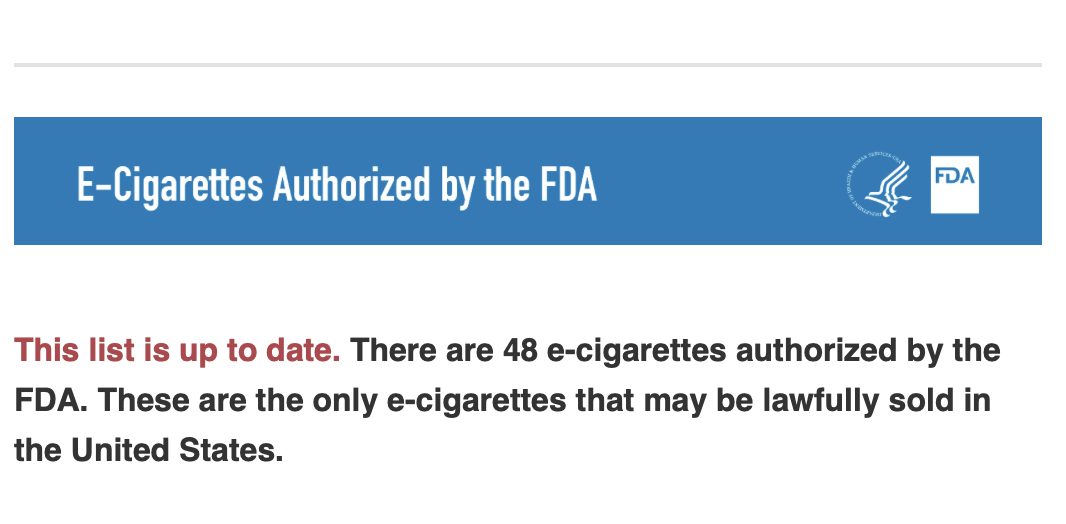
Against this overall backdrop, MO is facing additional challenges, particularly in terms of regulation. The US FDA recently announced plans to ban JUUL from selling its e-cigarettes in the US. As a result, MO's investment in JUUL has almost completely evaporated. The investment in JUUL was acquired in 2018-2019 for a price of $13 billion, and as of the second quarter of 2022, management now values it at only $450 million. To make matters worse, the FDA has approved competitor British American Tobacco (BTI)'s Vuse e-cigarette, putting MO in a more disadvantaged position in the future segmented market.
Due to all these issues, some investors in MO are starting to consider the unthinkable possibility of cutting dividends. After all, MO is a prime example of a dividend growth stock with its dividends having continuously increased for over 53 years.
Therefore, the purpose of this article is to evaluate this possibility. I will conduct a comprehensive assessment on the safety of dividends that exceed the ordinary dividend yield. The evaluation will fully consider its cash flow, debt, current cash situation, and capital expenditures. In addition, you will see from the results that its dividends are still at a very safe level. Whether good or bad, JUUL's investment has never helped or harmed its dividend safety.
In order to provide further insight and context, a comparison with the PM industry will also be analyzed side by side. This comparison can indeed help clarify the fundamental reasons for the safety and resilience of the industry, which include a strong cash flow, extremely low capital expenditure requirements, and pricing power.
PM vs MO: Focus on Dividend Safety
The following two charts demonstrate the dividend payout ratios of MO and PM in terms of earnings and cash flow. As long-time dividend payers, PM and MO have consistently managed their dividend payments.
In terms of payout ratio, the long-term average for PM is 89%, while MO is 68%. It is worth noting the consistency here. For the majority of the past decade, PM's dividend payout ratio has remained near the average with hardly any fluctuations, currently standing at 88%. MO has shown similar consistency, except for a significant deviation from the average in 2016 and 2017, but in a positive (i.e. lower) direction. Its current payout ratio is around 75%, slightly higher than the average but within the normal range of random fluctuations.
In terms of cash payment ratio, the situation is very similar. The long-term average of PM is 73%, while MO is 84%. Currently, PM's ratio is 62%, slightly lower than the average by about 11%. Meanwhile, MO's current dividend payout ratio of 79% is slightly lower than the long-term average by about 5%. Again, the deviation is well within the normal range of fluctuations, and the deviation is in a good (lower) direction.
Next, we will go beyond a simple dividend yield and consider factors such as dividend safety, cash position, debt, and capital expenditures to assess overall investment potential.
The comparison of payment yield and cash payment rate between two companies was sourced from Seeking Alpha.
PM vs MO: Dividend Coverage Ratio
As detailed in my previous article, the main limitations of the above simple dividend rate are twofold:
The simplistic dividend ratio overlooks the current assets on a company's balance sheet. It is clear that two companies with equal earnings capability, the company with more cash on their balance sheet should have a higher level of dividend safety.
2. The simple dividend yield also overlooks upcoming financial obligations. It is evident that two companies with the same profit potential should have different dividend safety levels if one has lower financial obligations (such as pension, debt, and capital expenditure) than the other.
The above simplistic dividend yield overlooks all of these important nuances. For a more advanced analysis of dividend stocks, we find that the so-called dividend coverage ratio is an effective tool. A detailed description of this concept can be found in Brian M Nelson's book titled Value Trap. Here is a brief excerpt:
The dividend coverage ratio is a measure of a company's ability to pay future dividends, calculated by dividing the sum of the company's existing net cash (total cash minus total long-term debt) and expected future free cash flow (operating cash flow minus all capital expenditures) for the next five years by the expected future cash dividends for the same period (including expected growth, if applicable). If this ratio is significantly higher than 1, it is our estimate that the company generally has sufficient financial capacity to pay its expected future dividends. A higher ratio is better, all other conditions being equal.
Please note that we have made a modification to the aforementioned method in our analysis. We did not subtract the total long-term debt, but rather subtracted the total interest expenses over the past five years. The reason for this modification is to adjust for the status of businesses like PM and MO. Mature companies such as these may never need to repay all their debt at once, but they do need sufficient income to repay their debt (i.e. pay interest expenses). Against this backdrop, we have calculated the dividend coverage ratios for PM and MO and displayed them as follows.
It can be observed that in recent years, PM has maintained an average dividend coverage ratio of around 1.42x, while MO has had a slightly lower coverage ratio of 1.27x. Both ratios have consistently remained above 1, which is considered the threshold for safe dividend stocks. Once again, consistency is key here. It can be seen that PM's coverage ratio has remained close to the 1.42 average line for many years. Despite the large-scale acquisition of JUUL in 2018, MO's coverage ratio has actually increased gradually from around 1.12x in 2016 to the current 1.38x. Currently, PM's coverage ratio stands at 1.52, slightly higher than its historical average of 1.42. MO's current coverage ratio is 1.38, also higher than its historical average.
Additionally, you can see that both currently have a buffer ratio close to their peak levels since 2016. Going forward, we will see that this security fundamentally stems from their strong cash flow, minimal capital expenditure requirements, and pricing power.
In recent years, both companies have buffered their dividend payouts, according to an analysis by Seeking Alpha.
PM versus MO: Business Prospects
Looking ahead, as mentioned earlier, MO and PM anticipate that their sales of traditional products will remain steady or even decline. For PM specifically, due to its international business, sales are expected to slightly increase by 1.5% to 2.5%.
However, due to their demonstrated long-term pricing power, both companies expect healthy growth on their two lines. In the case of PM, it spent net revenue growth within the range of 6% to 8%. Additionally, it also spent a margin expansion of up to 50 basis points. Overall, earnings per share guidance ranges from $5.23 to $5.34, representing a significant growth rate of 10-12%.
MO has consistently demonstrated its ability to set prices and maintain stable profit margins. As previously mentioned, in the first half of 2022, the shipment volume of its non-combustible products decreased by about 9%. However, the revenue of its combustible products division actually increased by about 2.9% year-on-year, from $5.16 billion in the first half of 2021 to $5.3 billion in the first half of 2022. Its operating profit margin also increased slightly by 1.3 basis points, from 58.0% in the first half of 2021 to 59.3% in the first half of 2022.
Looking ahead to the future, MO (company name) reaffirmed its guidance for full-year earnings per share in 2022, which is expected to range between $4.79 and $4.93. This range represents a healthy growth of 4% to 7% from earnings per share of $4.61 in 2021.
PM reports earnings for Q2 2022.
Final thoughts and other risks.
Certainly, MO and other companies in the industry are facing many setbacks. Due to its single market exposure in the United States, its risk profile is slightly higher. However, I have not seen any danger signals from dividend investors about the safety of their dividends. In fact, despite JUUL's expensive and failed venture, its dividend coverage ratio has now reached its highest level since 2016.
The comparison with the PM highlights its dividend security. The results reveal that their dividend security has been consistent over the long term, and continues to be so. Despite a drop in their shipment volumes, their revenue is expected to maintain a healthy growth rate (from single-digit to double-digit) due to their minimal capital expenditure requirements and pricing power.
Finally, there are risks. In addition to the long-term decline of combustible tobacco products, both MO and PM face other risks. As mentioned earlier, MO has a higher concentration of risks due to its primary market being in the United States. Investors looking to diversify this risk may consider PM or British American Tobacco. Both MO and PM are actively investing in non-combustible and healthier new products. However, the path may be winding, and the timeline for success is currently uncertain. As mentioned earlier, the recent FDA approval of BTI's Vuse e-cigarette puts MO at a disadvantage in this emerging market. Finally, both companies face macroeconomic risks. The current Russian/Ukrainian geopolitical issues present significant risks. PM has also suffered some disruptions in its global supply chain.
Statement
This article is compiled from third-party information and is only intended for industry communication and learning.
This article does not represent the views of 2FIRSTS, and 2FIRSTS is unable to confirm the authenticity and accuracy of the article's content. The compilation of this article is solely intended for industry exchange and research purposes.
Due to limitations in translation ability, the translated article may not accurately reflect the original content. Please refer to the original article for accuracy.
2FIRSTS maintains complete alignment with the Chinese government on all domestic, Hong Kong, Macau, Taiwan and foreign-related positions and statements.
The copyright of compiled information belongs to the original media and authors. If there is any infringement, please contact us for removal.
Disclaimer
This article is provided solely for professional research, industry discussion, and informational purposes. Any references to brands, companies, products, technologies, or policies are made for factual reporting and analytical purposes only, and do not constitute endorsement, recommendation, promotion, or advertising by 2Firsts.
Nicotine-containing products, including but not limited to cigarettes, e-cigarettes, heated tobacco products, and nicotine pouches, carry significant health risks. Readers are responsible for complying with all applicable laws and regulations in their respective jurisdictions, including age restrictions and access limitations.
The information contained in this article should not be regarded as investment, legal, medical, regulatory, or commercial advice. While 2Firsts strives to ensure the accuracy and reliability of its content, it does not assume liability for any direct or indirect loss arising from errors, omissions, inaccuracies, or reliance on the information contained herein.
This article is not intended for individuals below the legal age for accessing tobacco or nicotine-related information in their jurisdiction.
Copyright Notice
This article is either original content produced by 2Firsts or content reproduced, translated, summarized, or adapted from third-party sources with attribution where applicable. The intellectual property rights of the original content remain with 2Firsts or the respective original rights holders.
No individual or organization may copy, reproduce, distribute, republish, modify, translate, or otherwise use this content without prior authorization. Any unauthorized use may result in legal action.
For copyright-related inquiries, corrections, or removal requests, please contact: info@2firsts.com.
AI-Assisted Translation and Editing Notice
Portions of this article may have been translated, edited, or reviewed with the assistance of artificial intelligence tools to improve efficiency and readability. Due to the limitations of AI-assisted translation and editing, discrepancies, omissions, or inaccuracies may exist when compared with the original source.
Where applicable, readers are advised to refer to the original source for the most complete and accurate information. If you identify any errors or believe that any content infringes upon your rights, please contact us at info@2firsts.com, and we will review and address the matter promptly.