Australian State Targets Illegal Tobacco Retailers With Tougher Closure Powers

Jun.05
Australian State Targets Illegal Tobacco Retailers With Tougher Closure Powers
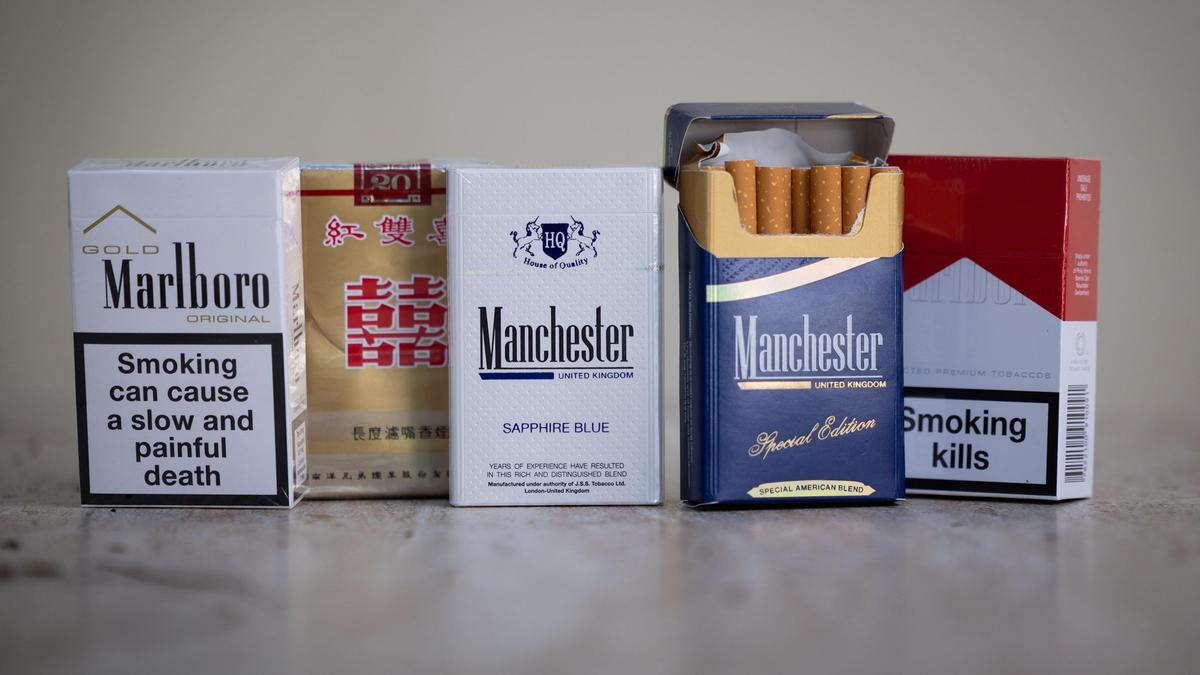
According to Reuters, Australia’s state of Victoria introduced legislation to give police and the state tobacco licensing regulator stronger powers to shut businesses selling illegal tobacco, with non-compliant operators facing fines of more than A$2.4 million and up to 20 years in prison.

Key Points

● Victoria targets illegal tobacco shops;

● Fines may exceed A$2.4 million;

● Nicotine use rose 40% since 2017;

● Black market share estimated at 80%.


2Firsts

June 4, 2026 — According to Reuters, the Australian state of Victoria introduced legislation on June 4 to give police and the state tobacco licensing regulator stronger powers to shut businesses selling illegal tobacco.

Under the proposed law, police and Victoria’s tobacco licensing regulator would be able to issue closure notices and seek court orders to shut businesses for longer periods.

Businesses that fail to comply with the orders could face fines exceeding A$2.4 million (approximately US$1.71 million) and up to 20 years in prison.

“If you are selling illicit tobacco in Victoria, we are closing the door on your business,” said Enver Erdogan, Victoria’s minister for casino, gaming and liquor regulation.

“The illicit tobacco trade puts Victorians in harm’s way. It funds organised crime and requires a coordinated effort across borders to stamp it out,” Erdogan said.

Reuters noted that Australia charges a federal tax of about A$1.50 (approximately US$1.07) on each individual cigarette to discourage smoking.

As a result, a pack of cigarettes in Australia can cost more than A$60 (approximately US$42.8).

The report said high prices have been blamed in part for fuelling a rise in illegal tobacco products.

The legislation came one day after the Australian Bureau of Statistics (ABS) released data showing that nicotine consumption across the country rose by 40% between 2017 and 2025, far outpacing population growth of 14%.

ABS said the increase was driven by rising use of illegal tobacco as well as e-cigarettes.

The bureau estimated that 80% of cigarettes and other nicotine products consumed by Australians in 2025 came from the black market.

ABS also found that prices of illegal tobacco products have remained relatively constant since December 2016, while prices for more expensive legal products have almost tripled due to annual tobacco excise increases.

Industry observers said Victoria’s stronger enforcement push reflects how Australia’s illicit tobacco market has evolved beyond tax losses into a broader issue involving retail regulation, public safety and organised crime.

Cover Image source: thewest.com.au


Disclaimer

This article is provided solely for professional research, industry discussion, and informational purposes. Any references to brands, companies, products, technologies, or policies are made for factual reporting and analytical purposes only, and do not constitute endorsement, recommendation, promotion, or advertising by 2Firsts.

Nicotine-containing products, including but not limited to cigarettes, e-cigarettes, heated tobacco products, and nicotine pouches, carry significant health risks. Readers are responsible for complying with all applicable laws and regulations in their respective jurisdictions, including age restrictions and access limitations.

The information contained in this article should not be regarded as investment, legal, medical, regulatory, or commercial advice. While 2Firsts strives to ensure the accuracy and reliability of its content, it does not assume liability for any direct or indirect loss arising from errors, omissions, inaccuracies, or reliance on the information contained herein.

This article is not intended for individuals below the legal age for accessing tobacco or nicotine-related information in their jurisdiction.


Copyright Notice

This article is either original content produced by 2Firsts or content reproduced, translated, summarized, or adapted from third-party sources with attribution where applicable. The intellectual property rights of the original content remain with 2Firsts or the respective original rights holders.

No individual or organization may copy, reproduce, distribute, republish, modify, translate, or otherwise use this content without prior authorization. Any unauthorized use may result in legal action.

For copyright-related inquiries, corrections, or removal requests, please contact: info@2firsts.com.


AI-Assisted Translation and Editing Notice

Portions of this article may have been translated, edited, or reviewed with the assistance of artificial intelligence tools to improve efficiency and readability. Due to the limitations of AI-assisted translation and editing, discrepancies, omissions, or inaccuracies may exist when compared with the original source.

Where applicable, readers are advised to refer to the original source for the most complete and accurate information. If you identify any errors or believe that any content infringes upon your rights, please contact us at info@2firsts.com, and we will review and address the matter promptly.

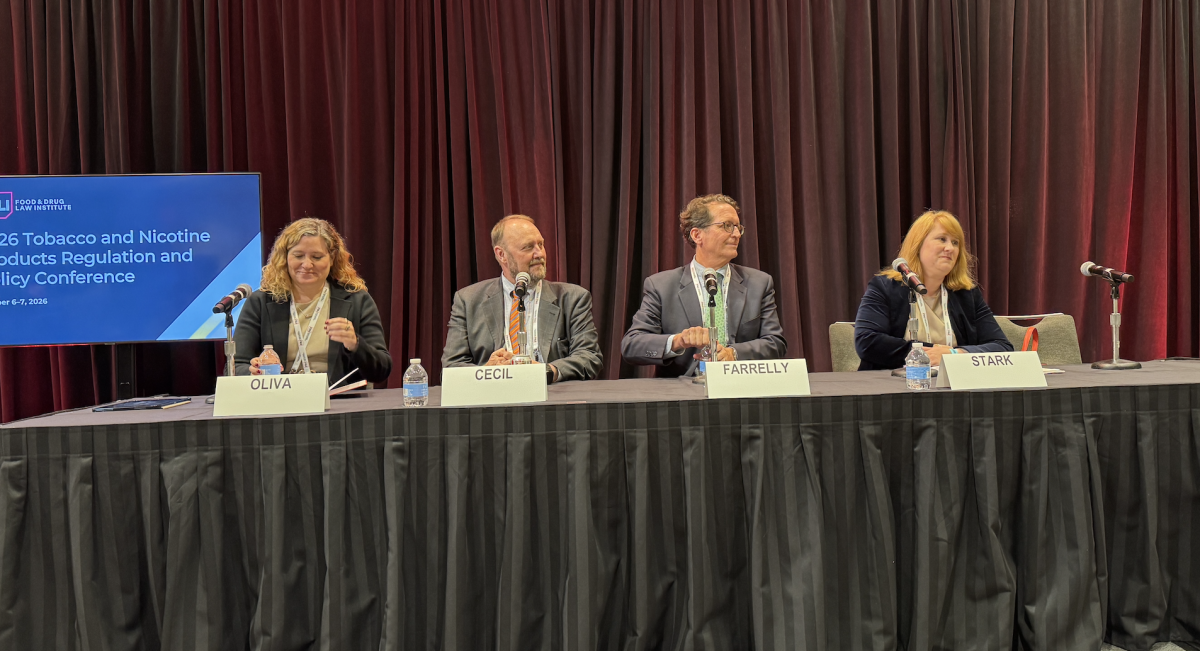
On-Site Report | CTP Details PMTA Backlog, 180-Day Review Goal and sPMTA Process
FDA’s Center for Tobacco Products detailed new PMTA review data and process changes at the 2026 FDLI conference. Pending PMTAs fell from about 450,000 at the start of 2025 to 135,000 by September 2026. CTP also discussed its 180-day review goal, current sPMTA pilot, alternate-supplier planning, more than 50,300 pending SE reports, and lessons from the nicotine pouch pilot already being applied to ENDS review.
Regulations
Oct.07
JUUL Purchasers Ask Ninth Circuit to Preserve Antitrust Classes in Case Over Altria’s $12.8 Billion Investment
Private antitrust litigation stemming from Altria's 2018 $12.8 billion investment for a 35% economic interest in JUUL is advancing before the U.S. Court of Appeals for the Ninth Circuit. Direct purchasers, indirect purchasers and indirect resellers of JUUL products filed answering briefs this week seeking to preserve class certifications granted by a California federal court in February. Altria and JUUL argue that individual consumers and large distributors differ too much in purchasing terms to remain in a single direct-purchaser class, while a separate dispute concerns whether California antitrust law can apply to indirect purchasers across 27 jurisdictions. A September trial has been put on hold during the appeal.
Sep.23
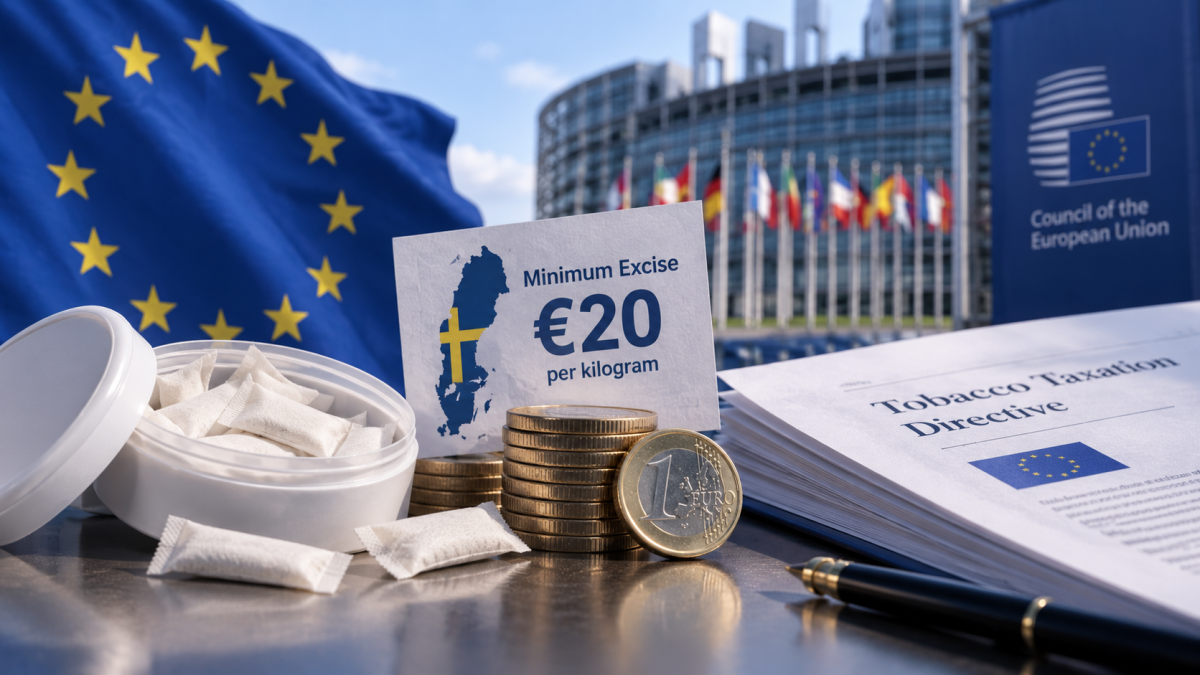
EU Tobacco Tax Reform Targets November Push as Sweden Holds Nicotine-Pouch Minimum at €20 per Kilogram
The Irish presidency of the Council of the European Union is using bilateral talks to push the bloc’s Tobacco Taxation Directive toward a political agreement in November. According to Law360, citing an EU official, Sweden is unwilling to accept a minimum excise threshold above €20 per kilogram for nicotine pouches. Council negotiations have already lowered the European Commission’s original proposal, but a May 2026 presidency compromise still set the minimum at 10% of the tax-inclusive retail price or €30 per kilogram in 2028-29, with higher levels later.
Market
Sep.17 by 2Firsts Perspectives
Retail Case Study | Wisconsin Vape Market One Year After New Regulations: Johnny Vapes Reports 80% Sales Decline as Consumers Shift Online and Across State Lines
According to WNCY on August 24, 2026, some independent vape retailers in Wisconsin say they have faced significant business pressure one year after new vape regulations took effect. Johnny Vapes, a retailer operating in northeast Wisconsin, said its store count fell from seven locations to four, sales declined by about 80%, and roughly 90% of its inventory was affected. Retailers said some consumers have shifted to online purchases or traveled to neighboring Michigan to buy vape products. The case highlights how local regulations can reshape retail operations, inventory management and consumer purchasing patterns.
Aug.28
Australia Extends Illicit Tobacco Crackdown From Tougher Penalties to Customs and Logistics Supply Chains
Australia's federal government introduced a new illicit tobacco enforcement bill on September 10 that would strengthen evidentiary presumptions, representative sampling, seizure and forfeiture procedures, proceeds-of-crime powers and obligations for customs and logistics operators. The proposal follows the Combatting Illicit Tobacco Act 2026, which took effect in August and increased penalties while expanding investigative and asset-recovery tools. Together, the reforms extend Australia's crackdown from tougher criminal sanctions into import, logistics and evidentiary enforcement.
Sep.14
Charlie’s Bets on Age-Gating and 678 PMTA Assets as U.S. Vape Enforcement Landscape Shifts
Charlie’s Holdings said in its latest shareholder letter that it is moving to commercialize PACHA products and monetize its PMTA assets as the FDA changes enforcement priorities for unauthorized ENDS products. Thirty PACHA SKUs were previously tentatively identified for a proposed public list of products that the FDA generally does not intend to prioritize for enforcement. Charlie’s is also preparing test-market sales of age-gated flavored disposables and says it currently holds 678 PMTA-related product assets while seeking additional strategic transactions and partnerships.
Sep.11