Bloomberg: JTI's 2023 Cigarette Shipment Volume Rises, the Only in 3 Tobacco Giants

JTI by 2FIRSTS
Feb.19.2024
Bloomberg: JTI's 2023 Cigarette Shipment Volume Rises, the Only in 3 Tobacco Giants
The difference in sales highlights JTI's differences in strategy. As PMI and BAT shift more research and marketing resources towards alternative products including e-cigarettes, heated tobacco, and nicotine pouches, JTI is more inclined to try to increase market share and sales in traditional cigarettes.

Japan Tobacco International (JTI), the parent company headquartered in Geneva, announced during the release of its annual financial report that the total sales volume of JTI's cigarette brands Winston and Camel increased by 2.3% in 2023.


For comparison, Philip Morris International Inc. transported approximately 613 billion cigarettes in 2023, a decrease of 1.3% from the previous year. British American Tobacco Plc manufactured and transported approximately 555 billion cigarettes last year, a decrease of 8.2% from 2022.


Philip Morris International (PMI) has reported that about one-third of its revenue now comes from smoke-free alternatives, and it plans to increase this proportion to half by 2025. In its recent annual performance report, PMI announced that net revenue from its IQOS heated tobacco product surpassed its flagship brand, Marlboro, in the fourth quarter.


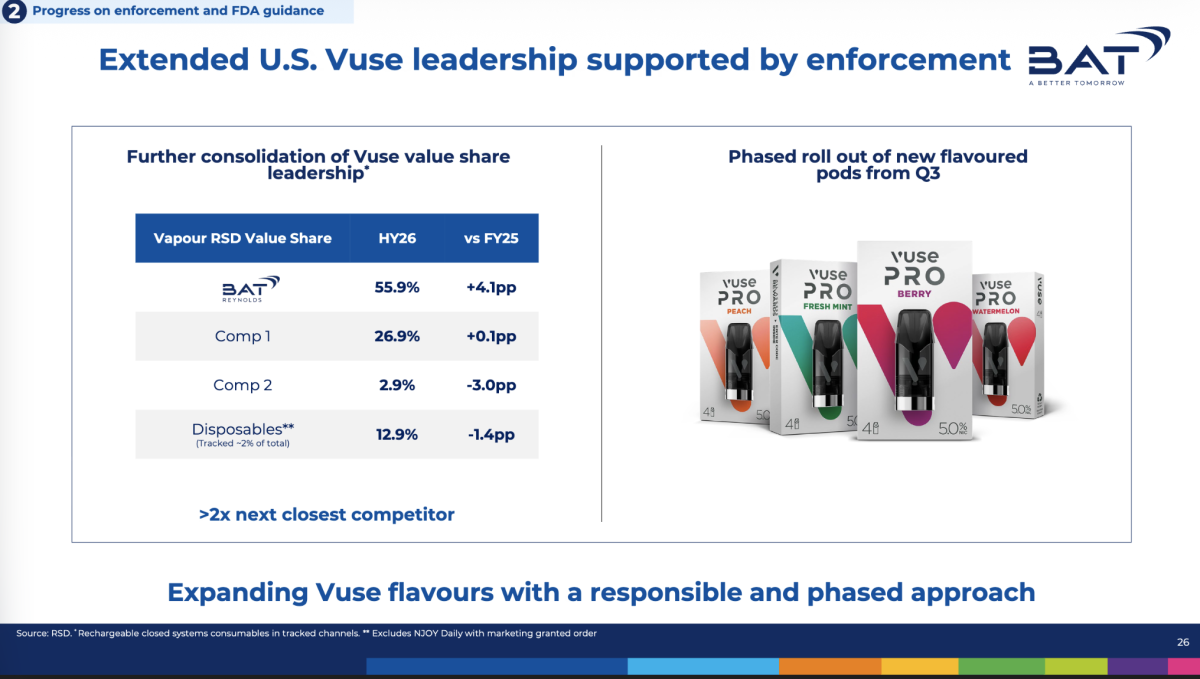
British American Tobacco (BAT) revealed in its annual performance report that its alternative products, including Vuse e-cigarettes and Velo nicotine pouches, are now profitable earlier than previously expected.


We welcome news tips, article submissions, interview requests, or comments on this piece.

Please contact us at info@2firsts.com, or reach out to Alan Zhao, CEO of 2Firsts, on LinkedIn


Notice

1.  This article is intended solely for professional research purposes related to industry, technology, and policy. Any references to brands or products are made purely for objective description and do not constitute any form of endorsement, recommendation, or promotion by 2Firsts.

2.  The use of nicotine-containing products — including, but not limited to, cigarettes, e-cigarettes, nicotine pouchand heated tobacco products — carries significant health risks. Users are responsible for complying with all applicable laws and regulations in their respective jurisdictions.

3.  This article is not intended to serve as the basis for any investment decisions or financial advice. 2Firsts assumes no direct or indirect liability for any inaccuracies or errors in the content.

4.  Access to this article is strictly prohibited for individuals below the legal age in their jurisdiction.


Copyright


This article is either an original work created by 2Firsts or a reproduction from third-party sources with proper attribution. All copyrights and usage rights belong to 2Firsts or the original content provider. Unauthorized reproduction, distribution, or any other form of unauthorized use by any individual or organization is strictly prohibited. Violators will be held legally accountable.

For copyright-related inquiries, please contact: info@2firsts.com


AI Assistance Disclaimer


This article may have been enhanced using AI tools to improve translation and editorial efficiency. However, due to technical limitations, inaccuracies may occur. Readers are encouraged to refer to the cited sources for the most accurate information.

We welcome any corrections or feedback. Please contact us at: info@2firsts.com

Bringing Tax and Insurance Into Nicotine Regulation: Insights From a Tobacco Harm-Reduction Report
A smoke-free nicotine policy report argues that tobacco harm reduction should move beyond product bans and health warnings into tax policy, insurance pricing and risk-based regulation. While some projections remain open to debate, the report highlights a wider challenge: nicotine products, technologies and consumer behavior have changed sharply over the past decade, and regulatory systems may need new tools to better align tobacco control with harm-reduction goals.
Jun.08
UK Vape Brands Face White-Packaging and Flavour-Name Curbs in Youth-Appeal Crackdown
The UK government and devolved administrations have launched a 12-week consultation on proposals to make vapes less appealing to children, including plain white packaging, limits on device colours, restrictions on flavour names and changes to how products are displayed in shops.
Jul.10
Malaysian Court Rules Liquid Nicotine Exemption Irrational, Renewing Vape Regulation Debate
Malaysia’s High Court ruled that the government’s earlier decision to remove liquid nicotine from the country’s Poisons List was “irrational,” reigniting debate over vape regulation, illicit trade, and youth protection.
Regulations
May.18
  South Korea Reopens Cigarette Tax Debate as 63% Back Higher Tobacco Taxes
South Korea Reopens Cigarette Tax Debate as 63% Back Higher Tobacco Taxes
South Korea’s cigarette tax debate has resurfaced after the Ministry of Health and Welfare said tobacco price policy needed review, with a poll showing 63% of respondents support higher tobacco taxes.
Regulations
Jun.22
PMI to Launch IQOS in Argentina by End-2026 After Regulatory Shift, Targeting About 7 Million Smokers
Philip Morris International (PMI) has confirmed plans to bring its IQOS heated tobacco device to Argentina by the end of 2026, after the Argentine government lifted long-standing restrictions and created a regulatory framework for heated tobacco, e-cigarettes and nicotine pouches.
News
Jun.26 by 2Firsts Perspectives
India Seizes $14 Million Worth of Illegal Vaping Products Imported From China
India’s Directorate of Revenue Intelligence (DRI) seized approximately 300,000 illegal e-cigarettes and vaping devices worth more than ₹120 crore (approximately $14 million) during coordinated multi-state enforcement operations.
Regulations
May.22