British Columbia Sues Juul Over Youth Nicotine Addiction

Dec.15.2025
British Columbia Sues Juul Over Youth Nicotine Addiction
British Columbia has filed a civil lawsuit against Juul Labs, alleging the company fuelled youth nicotine addiction through highly addictive products and deceptive marketing practices. The claim was submitted to the B.C. Supreme Court under the newly enacted Vaping Product Damages and Health Care Costs Recovery Act.

Key Points


  • British Columbia has filed a civil claim against Juul Labs
  • The lawsuit is based on the new Vaping Product Damages and Health Care Costs Recovery Act
  • The province alleges deceptive marketing targeting youth
  • Juul denies the allegations and cites regulatory compliance
  • This is the first lawsuit filed under the new legislation


2Firsts, December 15,2025 – According to the Canadian Broadcasting Corporation (CBC), British Columbia has filed a civil lawsuit against e-cigarette company Juul Labs, alleging the company developed highly addictive nicotine products and fuelled youth addiction through deceptive marketing practices.


Attorney General Niki Sharma announced that the claim was filed in the B.C. Supreme Court under the newly enacted Vaping Product Damages and Health Care Costs Recovery Act. The legislation is modelled after laws previously used to pursue tobacco and opioid companies and allows the government to seek compensation for public health harms.


The lawsuit is the first civil claim launched under the new law. Sharma stated that other manufacturers and wholesalers are also being considered for potential litigation.


The province alleges that Juul was an early and significant player in the vaping market and prioritized profits over health by promoting products that appealed to young people, including through the use of nicotine salts and flavours.


Juul Labs denied the allegations, stating that its mission is to help adult smokers transition away from combustible cigarettes. The company noted that the U.S. Food and Drug Administration authorized the sale of several of its products earlier this year.


The B.C. Centre for Disease Control said vaping continues to pose serious public health concerns, particularly for youth, noting that e-cigarettes can contain harmful chemicals and contribute to nicotine addiction.


Premier David Eby stated that British Columbia is the first province in Canada to introduce legislation holding vape companies accountable. He referenced Canada’s tobacco settlement of 32.5 billion Canadian dollars (approximately 24 billion U.S. dollars), under which B.C. will receive 3.6 billion Canadian dollars (approximately 2.7 billion U.S. dollars) over 18 years, including an initial payment of nearly 1 billion Canadian dollars (approximately 740 million U.S. dollars).


Image source: CBC


We welcome news tips, article submissions, interview requests, or comments on this piece.

Please contact us at info@2firsts.com, or reach out to Alan Zhao, CEO of 2Firsts, on LinkedIn


Notice

1.  This article is intended solely for professional research purposes related to industry, technology, and policy. Any references to brands or products are made purely for objective description and do not constitute any form of endorsement, recommendation, or promotion by 2Firsts.

2.  The use of nicotine-containing products — including, but not limited to, cigarettes, e-cigarettes, nicotine pouchand heated tobacco products — carries significant health risks. Users are responsible for complying with all applicable laws and regulations in their respective jurisdictions.

3.  This article is not intended to serve as the basis for any investment decisions or financial advice. 2Firsts assumes no direct or indirect liability for any inaccuracies or errors in the content.

4.  Access to this article is strictly prohibited for individuals below the legal age in their jurisdiction.


Copyright


This article is either an original work created by 2Firsts or a reproduction from third-party sources with proper attribution. All copyrights and usage rights belong to 2Firsts or the original content provider. Unauthorized reproduction, distribution, or any other form of unauthorized use by any individual or organization is strictly prohibited. Violators will be held legally accountable.

For copyright-related inquiries, please contact: info@2firsts.com


AI Assistance Disclaimer


This article may have been enhanced using AI tools to improve translation and editorial efficiency. However, due to technical limitations, inaccuracies may occur. Readers are encouraged to refer to the cited sources for the most accurate information.

We welcome any corrections or feedback. Please contact us at: info@2firsts.com

India Steps Up Nicotine Pouch Enforcement as ZYN, White Fox Circulate and Drug Panel Urges Halt to New Nicotine Formulations
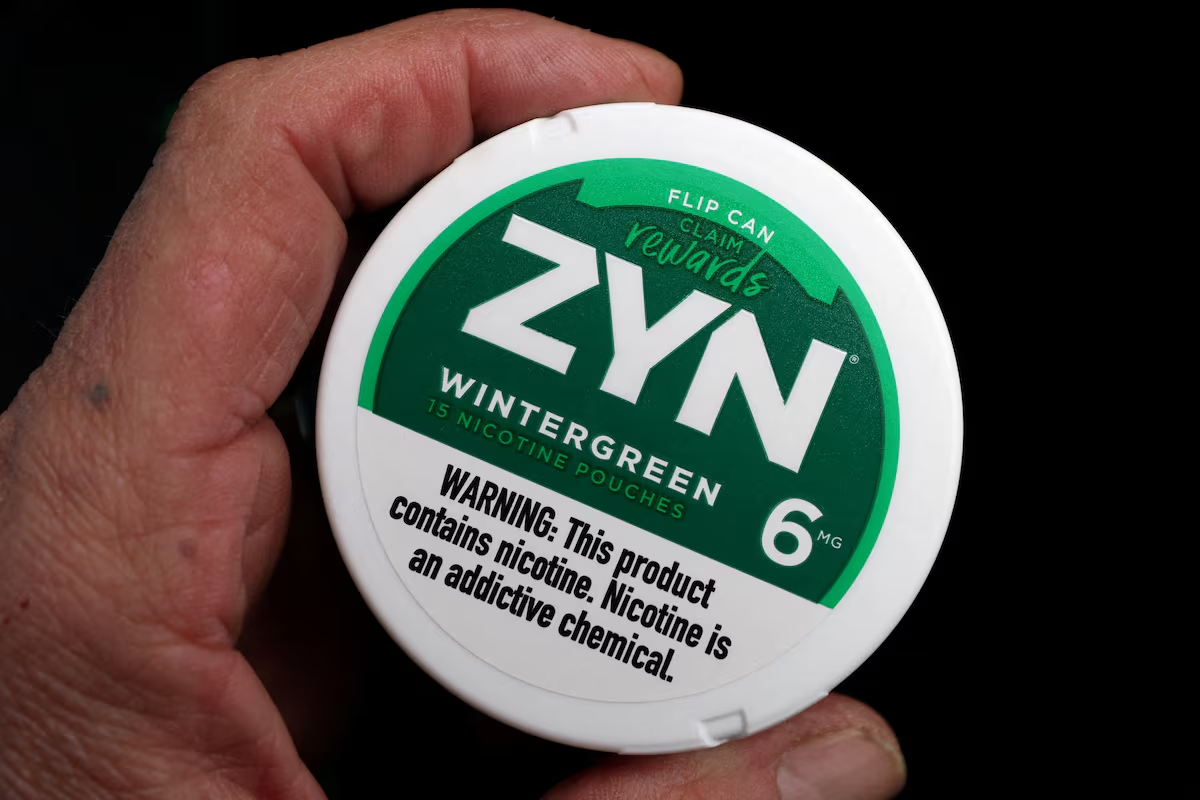
India's Ministry of Health and Family Welfare has directed states to step up enforcement against nicotine pouch sales, citing increased availability through online and offline channels and concern about nicotine exposure among children. Reuters reported that international brands including ZYN and White Fox are being sold in India. A study led by ICMR-NICPR found pouches in seven of 10 surveyed locations and identified 68 brands and 445 flavors online. Separately, India's Drugs Technical Advisory Board recommended in August that no new nicotine formulation be approved.
Regulations
Sep.28 by 2Firsts Perspectives
DATA|UK Retail Research Group IGD Says Convenience Tobacco and Vape Sales Fell 10.6%, With 15.4% Market Share Versus Alcohol's 15.1%; Top Rank at Risk in 2027
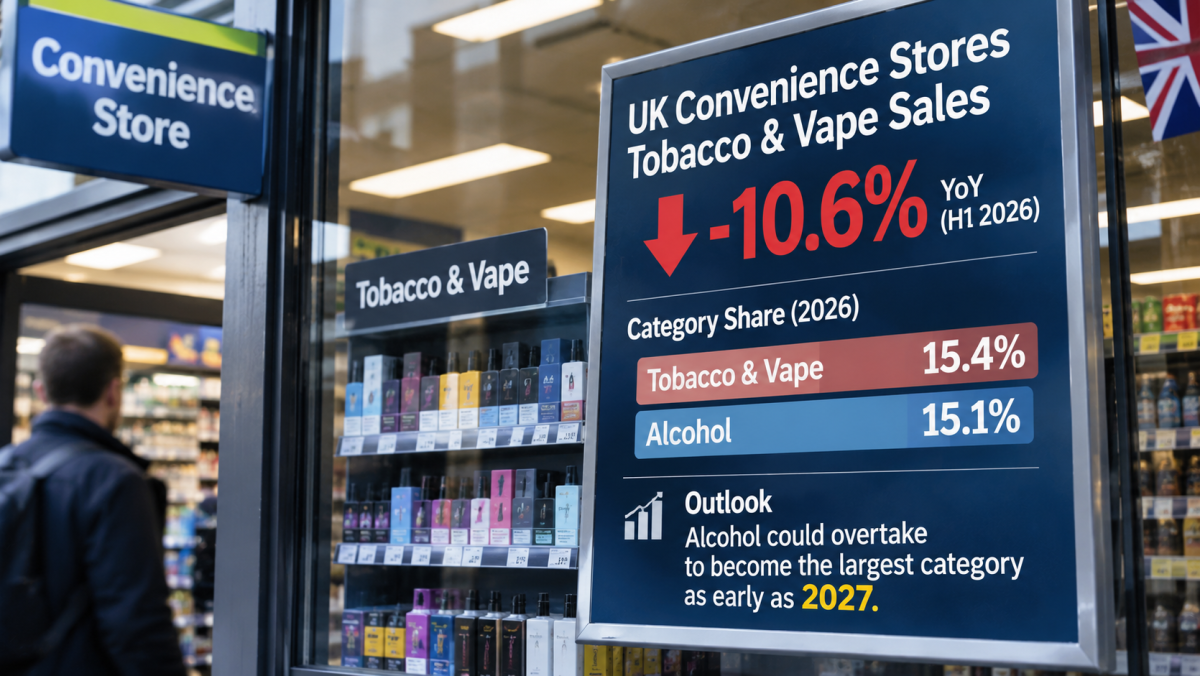
Combined tobacco and vaping sales in UK convenience stores fell 10.6% year over year in the first half of 2026, making the category a major drag on channel performance, according to retail research organization IGD. Total convenience sales declined 1.2%, while sales excluding tobacco and vaping increased 0.7%. IGD's 2026 category-share figures show tobacco and vaping accounting for 15.4% of convenience sales, compared with 15.1% for alcohol. The organization forecasts alcohol could overtake tobacco and vaping as the largest category by sales value as early as 2027 if current trends continue. IGD expects the convenience market to increase from £48.6 billion in 2026 to £54.9 billion in 2031, a 2.5% compound annual growth rate, or 3.4% excluding tobacco and vaping.
DATA
Nov.11
Canada Recalls Nearly 25,000 GTMBAR Vapes Over Child-Resistant Packaging Violations; Brand Linked to Shenzhen GTM Bar, with LK Vape as Importer and Distributor
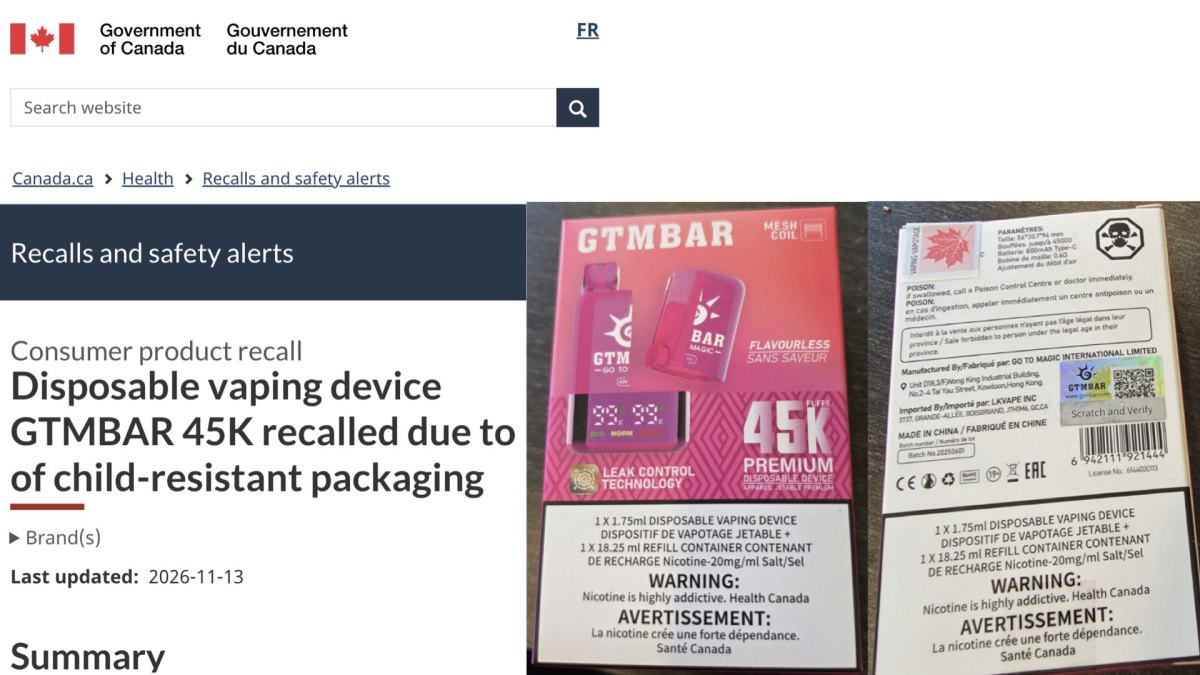
Health Canada announced a recall of 24,950 China-made GTMBAR 45K disposable vaping devices on November 13, 2026, citing non-compliance with child-resistant packaging requirements. The devices were sold in Canada between December 2024 and October 2026 and feature a 20mL e-liquid system with a nicotine concentration of 20 mg/mL. No related incidents or injuries had been reported as of November 12. Quebec-based LK Vape is the Canadian importer and distributor, while Shenzhen GTM bar Electronic Technology Co., Ltd. holds the GTMBAR trademark registration in the United Kingdom.
Regulations
Nov.16
South Korea Fully Reviews Nicotine-Analog and Nicotine-Free Vape Liquid Imports, With Over 99% From China and Chinese Supply-Chain Documents Under Scrutiny
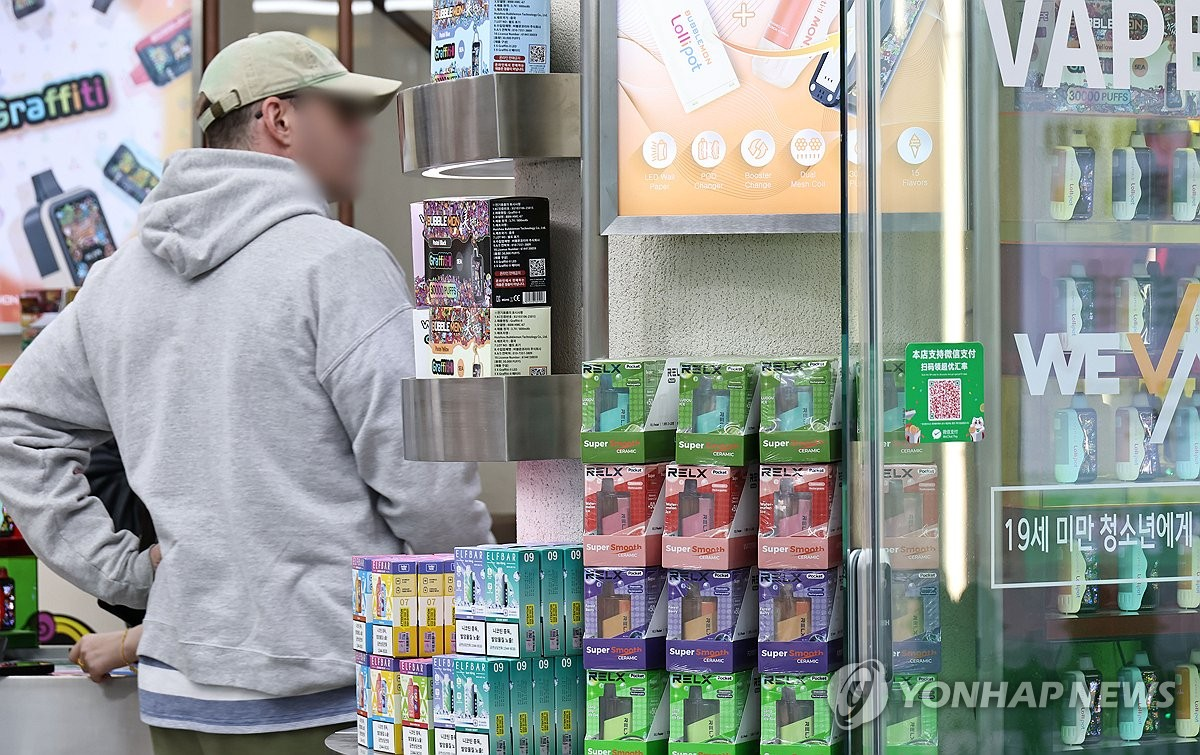
Korea Customs Service has tightened import controls on nicotine-analog and nicotine-free e-cigarette liquids, placing the products under 100% document review and subjecting all e-cigarette liquid import declarations to pre-clearance ingredient analysis. As of September 20, 2026, South Korea had imported about 15 metric tons of nicotine-analog liquids, 99.99% from China, and about 316 metric tons of nicotine-free liquids, including roughly 315 metric tons, or 99.7%, from China. The measures follow South Korea's April expansion of its tobacco definition to include synthetic nicotine products and include new checks on Chinese manufacturing, transaction and export documentation.
Sep.24
Wall Street Journal: U.S. FDA Plans Faster Vape and Nicotine Pouch Reviews, Revisit of 2021 PMTA Rule
The Trump administration is preparing changes intended to accelerate FDA market authorization reviews for e-cigarettes and nicotine pouches, according to The Wall Street Journal. The FDA is expected to revisit its 2021 PMTA rule and may simplify some scientific study requirements and shorten review times. The agency has not formally announced the changes. Over the past year, the FDA has already accelerated nicotine-pouch reviews, expanded ENDS authorizations and upgraded its CTP Portal NextGen application system. As of August 2026, 43 nicotine pouch products and 48 e-cigarette products had received FDA marketing authorization.
Sep.24
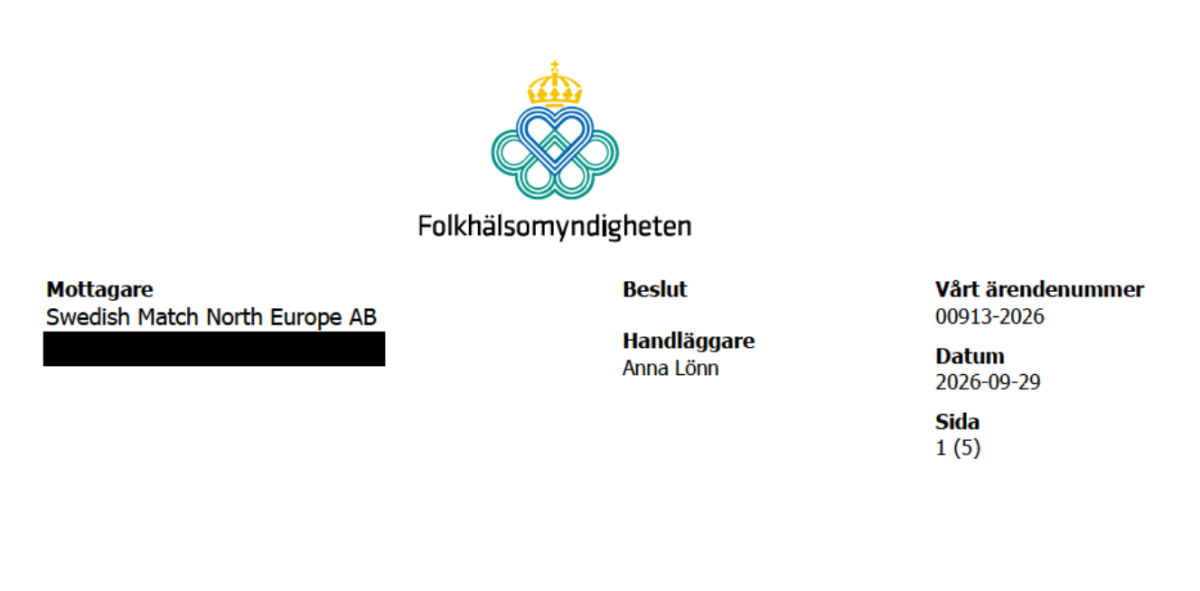
Swedish Match Faces Broader Labeling Order After ZYN Inspection, Documents Obtained by 2Firsts Show
Documents obtained by 2Firsts show that Sweden's Public Health Agency ordered Swedish Match to revise ingredient labels beyond the five ZYN products inspected. The dispute centers on whether flavoring ingredients must be individually disclosed, with Swedish Match citing trade-secret protection and the regulator insisting on full ingredient disclosure. The company faces a conditional penalty of SEK 2 million per month for noncompliance. As of October 22, the agency had received no appeal, despite the company's stated intention to challenge the decision.
Oct.22