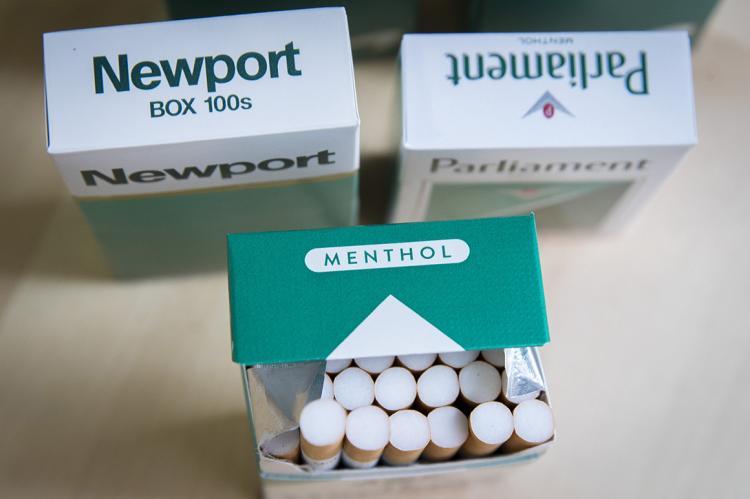
According to a report from Politico, after California's ban on menthol cigarettes and other flavored tobacco products in December last year, R.J. Reynolds Tobacco's "California Compliant" new cigarettes have been warmly welcomed by smokers.
A new type of cigarette containing a synthetic chemical compound called ethyl menthane carboxamide (also known as WS3) has been introduced. This chemical provides a cooling and soothing effect similar to traditional menthol cigarettes, but has a lighter odor compared to menthol. The sales of these "imitation menthol" cigarettes are currently rising in California.
New cigarettes are replacing nearly half of the menthol cigarettes.
According to an expert who tracks cigarette sales trends, by March, the sales volume of this new cigarette had already replaced nearly half of last year's sales volume of mint cigarettes.
According to Alex Liber, Assistant Professor in the Department of Oncology at Georgetown University School of Medicine, R.J. Reynolds Tobacco Company has sold 2.8 million packs of Camel Crush cigarettes and 2 million packs of Newport menthol cigarettes in California.
This year, the company has sold 1.4 million packs of Camel cigarettes that comply with California regulations and around 800,000 packs of Newport cigarettes that also meet California's standards.
Mint-flavored cigarettes account for nearly 40% of the cigarette market in the United States.
Liber stated that this is definitely a market test; tobacco companies need new methods to offset the losses caused by the ban. Although Renault's new cigarettes have not completely replaced the collapsed menthol market in the state, sales are rapidly increasing.
According to Renault, these new products do not violate California law because they do not have any identifiable flavors or aromas other than tobacco.
Currently, menthol cigarettes account for almost 40% of cigarette sales in the United States and are particularly popular among ethnic minority groups. It is estimated that 90% of African American smokers use menthol products.
Related reading:
The ban on flavored tobacco in California, USA, became effective on December 21st.
Interview with American distributor: California Flavor Ban Has No Impact on E-cigarette Sales, Biggest Challenge Comes from Disposable Products.
A federal court in the United States has rejected a lawsuit by the tobacco industry against California's ban on flavored products.
The California tobacco "endgame" bill has been put on hold.
References:
R.J. Reynolds Tobacco Company has chosen California as a testing ground for selling menthol cigarettes before the upcoming nationwide ban takes effect.
Disclaimer
This article is provided solely for professional research, industry discussion, and informational purposes. Any references to brands, companies, products, technologies, or policies are made for factual reporting and analytical purposes only, and do not constitute endorsement, recommendation, promotion, or advertising by 2Firsts.
Nicotine-containing products, including but not limited to cigarettes, e-cigarettes, heated tobacco products, and nicotine pouches, carry significant health risks. Readers are responsible for complying with all applicable laws and regulations in their respective jurisdictions, including age restrictions and access limitations.
The information contained in this article should not be regarded as investment, legal, medical, regulatory, or commercial advice. While 2Firsts strives to ensure the accuracy and reliability of its content, it does not assume liability for any direct or indirect loss arising from errors, omissions, inaccuracies, or reliance on the information contained herein.
This article is not intended for individuals below the legal age for accessing tobacco or nicotine-related information in their jurisdiction.
Copyright Notice
This article is either original content produced by 2Firsts or content reproduced, translated, summarized, or adapted from third-party sources with attribution where applicable. The intellectual property rights of the original content remain with 2Firsts or the respective original rights holders.
No individual or organization may copy, reproduce, distribute, republish, modify, translate, or otherwise use this content without prior authorization. Any unauthorized use may result in legal action.
For copyright-related inquiries, corrections, or removal requests, please contact: info@2firsts.com.
AI-Assisted Translation and Editing Notice
Portions of this article may have been translated, edited, or reviewed with the assistance of artificial intelligence tools to improve efficiency and readability. Due to the limitations of AI-assisted translation and editing, discrepancies, omissions, or inaccuracies may exist when compared with the original source.
Where applicable, readers are advised to refer to the original source for the most complete and accurate information. If you identify any errors or believe that any content infringes upon your rights, please contact us at info@2firsts.com, and we will review and address the matter promptly.