Chief Maulana Tayab Qureshi Urges Action Against E-Cigarette Usage

Regulations by 2FIRSTS.ai
Feb.04.2024
Chief Maulana Tayab Qureshi Urges Action Against E-Cigarette Usage
Chief Maulana Tayab Qureshi urges action against e-cigarette use, emphasizing its dangers and addictiveness in Khyber Pakhtunkhwa province.

According to Pakistani media outlet UrduPoint's report on February 3rd, Chief of the Khyber Pakhtunkhwa province, Maulana Tayab Qureshi, made a strong statement urging action to address the use of e-cigarettes, emphasizing their dangers and addictive nature.


Qureishi, not only the chief of the Mahabat Khan Mosque and the Jamma Ashrafia Seminary, but also issued a call to all regional chiefs and prayer leaders in the province. This important initiative was announced during a press conference on Saturday. He urged them to educate their communities and gain a deeper understanding of the dangers of nicotine products.


This initiative comes as a response to a two-month ban under article 144 imposed by the government of Khyber Pakhtunkhwa, prohibiting the sale of e-cigarettes and tobacco products to individuals below the age of 21 as well as within a 50-meter radius of educational institutions.


In his letter addressed to regional chieftains and prayer leaders, Kurexi not only expressed his support for this ban, but also emphasized the imperative need to enhance public awareness regarding the dangers posed by e-cigarettes and other harmful substances such as nicotine, tobacco, methamphetamine, and cannabis.


Kurexi emphasized that the consumption of these substances goes against Islamic teachings and poses a significant threat to social health and well-being. Kurexi commended the role of civil society organizations in the Kapur province in raising awareness about this urgent issue. He called for a comprehensive ban on the sale and use of e-cigarettes across the entire province, believing it would serve as a strong counterattack against the tobacco industry's marketing efforts to promote these products as alternatives to traditional smoking.


We welcome news tips, article submissions, interview requests, or comments on this piece.

Please contact us at info@2firsts.com, or reach out to Alan Zhao, CEO of 2Firsts, on LinkedIn


Notice

1.  This article is intended solely for professional research purposes related to industry, technology, and policy. Any references to brands or products are made purely for objective description and do not constitute any form of endorsement, recommendation, or promotion by 2Firsts.

2.  The use of nicotine-containing products — including, but not limited to, cigarettes, e-cigarettes, nicotine pouchand heated tobacco products — carries significant health risks. Users are responsible for complying with all applicable laws and regulations in their respective jurisdictions.

3.  This article is not intended to serve as the basis for any investment decisions or financial advice. 2Firsts assumes no direct or indirect liability for any inaccuracies or errors in the content.

4.  Access to this article is strictly prohibited for individuals below the legal age in their jurisdiction.


Copyright


This article is either an original work created by 2Firsts or a reproduction from third-party sources with proper attribution. All copyrights and usage rights belong to 2Firsts or the original content provider. Unauthorized reproduction, distribution, or any other form of unauthorized use by any individual or organization is strictly prohibited. Violators will be held legally accountable.

For copyright-related inquiries, please contact: info@2firsts.com


AI Assistance Disclaimer


This article may have been enhanced using AI tools to improve translation and editorial efficiency. However, due to technical limitations, inaccuracies may occur. Readers are encouraged to refer to the cited sources for the most accurate information.

We welcome any corrections or feedback. Please contact us at: info@2firsts.com

Special Report | How Capital Is Reassessing the Global Tobacco and Modern Nicotine Industry: Lessons from a New York Forum
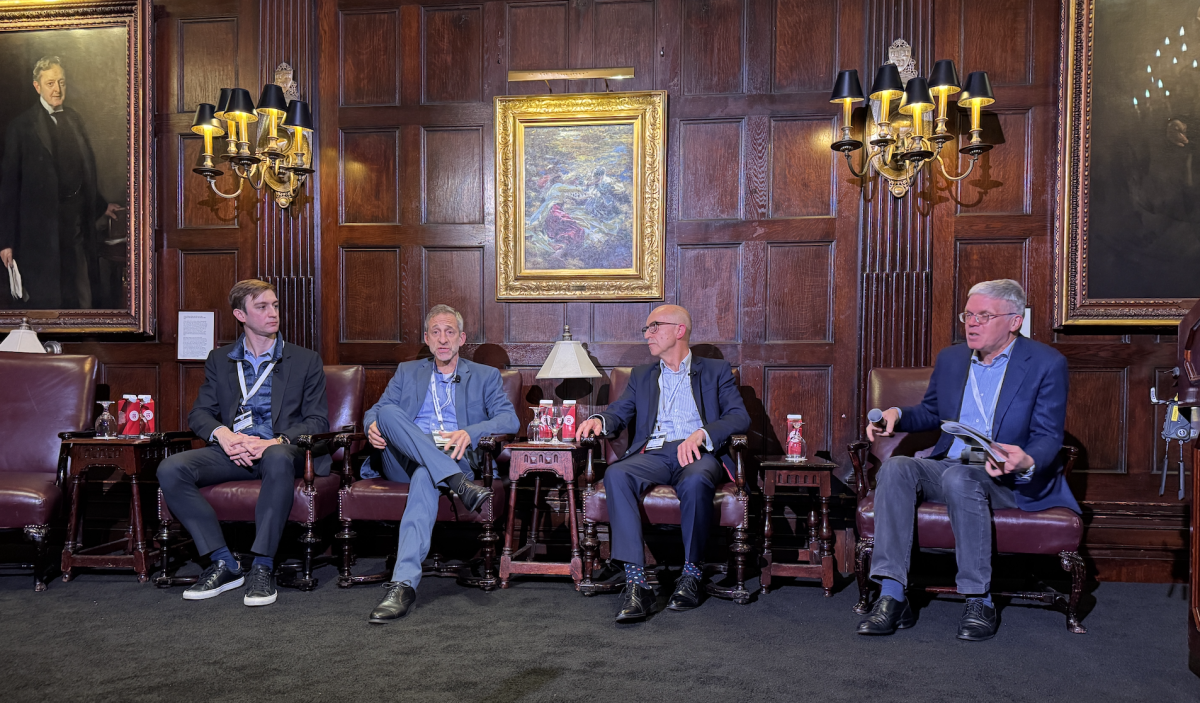
Capital is reassessing the global tobacco and modern nicotine industry as heated tobacco, vaping and nicotine pouches reshape demand, profitability and regulation. At the 2026 New Approaches Summit in New York, investors and analysts examined whether smoke-free growth can sustain earnings, how regulation shapes startup value, and whether shareholder engagement can be more effective than divestment. The debate points to a broader shift: tobacco transition is increasingly becoming a capital-allocation, governance and valuation question.
Capital Markets
Oct.05
Japan Tobacco Reshuffles Leadership for 2027, Names New Domestic Tobacco CEO and Moves Incumbent to Corporate Strategy, Business Development and Governance
On November 27, Japan Tobacco (JT) announced its 2027 executive appointments, naming Yoshiyuki Orita, a former general manager of JTI Vietnam with experience in international markets including Iran and Canada, as the next CEO of its domestic tobacco business. Takashi Araki, the incumbent, will move to a corporate role overseeing strategy, business development and governance. JT also revised the responsibilities of six executive officers, removing corporate communications from its finance executives' portfolios. In the first nine months of 2026, Ploom volume in Japan increased 34.3% year on year, while JT's share of the domestic heated tobacco category reached 17.4% in the third quarter.
company
Nov.27
Imperial Brands Plans to Cut Nearly 18% of Workforce as German Plant Closure and Polish Outsourcing Drive Restructuring
Imperial Brands disclosed on November 17, 2026, that its global manufacturing and organisational restructuring is expected to reduce between 4,200 and 4,600 roles by the end of 2030, equivalent to approximately 16%–18% of its workforce at the end of 2025. The first phase covers 2,100 roles with departures confirmed or subject to consultation, while a further 2,100–2,500 positions are expected to be eliminated by 2030. The company is proceeding with the closure of its Langenhagen factory in Germany, has sold its manufacturing facility in Taiwan, and has transferred selected finance, procurement and supply-chain operations in Poland to Capgemini. The restructuring programme is expected to cost approximately £740 million, with Imperial targeting at least £320 million in annual cost savings by 2030.
company
Nov.18
Virginia Tobacco Retail Permit Takes Effect October 1, Covering Vapes as More Than 3,000 Businesses Apply in September
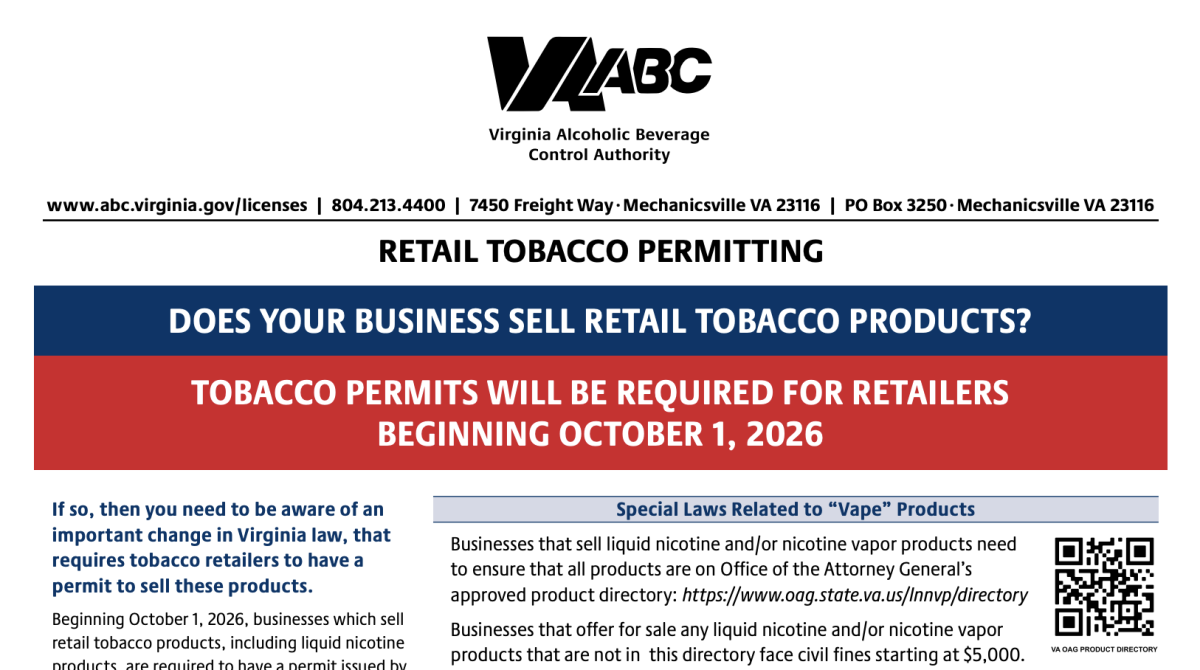
Virginia's new retail tobacco permit system took effect October 1, requiring sellers of vapes, nicotine products and related devices and accessories to obtain a Retail Tobacco Permit for each business location. Virginia ABC said more than 3,000 businesses applied in September alone, creating a processing backlog. Qualifying applicants that filed before October 1 may temporarily operate under a Letter of Authorization. The new store-level permit also sits alongside Virginia's existing vape product directory, where sales of unlisted liquid nicotine or nicotine vapor products can trigger civil penalties starting at $5,000.
Regulations
Oct.03
New York Permanently Bars Two Vape Shop Operators; NYC Survey Finds Banned Flavors at 40% of Sellers as City Weighs Expanded Shop-Sealing Powers
On Nov 20, 2026, New York’s Attorney General announced a state court permanently barred two repeat-offending vape shop operators and three affiliated companies from specified vaping businesses, with $534,550 in penalties, outstanding fines and court costs. The operators had continued trading under successive company names and at different locations after earlier enforcement. Separately, a Nov 18 New York City Council investigation found 40% of 121 surveyed e-cigarette retailers offered identifiable prohibited flavors. Among businesses without active e-cigarette retail licenses in the report’s enforcement-record review, about $1.12 million in penalties was recorded, versus net payments of just 0.5%. The Department of Consumer and Worker Protection also found newly incorporated LLCs used to evade enforcement. City lawmakers are considering expanded premises-sealing authority for repeat e-cigarette retail violations.
Enforcement
Nov.25
FDA Rescinds Denials for 280 Charlie’s Vape and E-Liquid Products; Court Vacates MDOs for Five Other Firms on Same Day
The U.S. Food and Drug Administration (FDA) rescinded marketing denial orders (MDOs) covering 280 e-cigarette and e-liquid products owned by Charlie’s Holdings on November 18, 2026. The products include 248 PACHA Syn disposable vapes and 32 Charlie’s Chalk Dust and Pachamama e-liquids. On the same day, the U.S. Court of Appeals for the Fifth Circuit vacated MDOs involving five other vaping companies and remanded their cases to the FDA. Both actions were linked to the court’s August ruling in NicQuid. Charlie’s affected PMTAs have returned to review without receiving marketing authorization. The company reported retaining 678 PMTA assets, while third-quarter 2026 net revenue fell 55.9% year over year.
product
Nov.24